Ukraine strikes on Russian refineries trigger widening fuel shortages
Fuel rationing has spread to 56 Russian regions as Ukraine’s drone war cuts refinery output and pushes shortages into farms, transport and daily life.
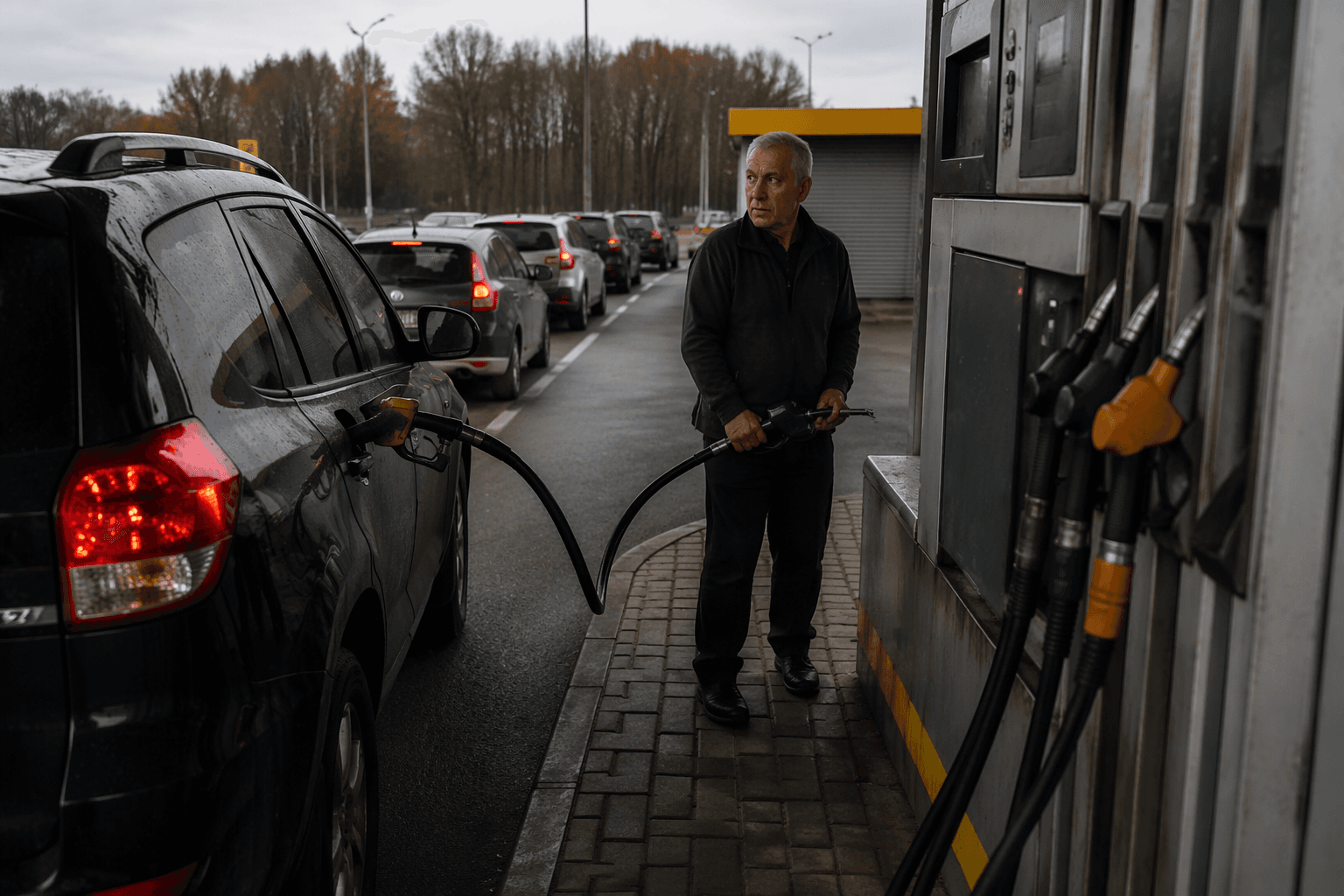
Fuel shortages in Russia have moved from refinery damage into daily life, with farmers in the grain belt warning that harvests could be disrupted if diesel remains tight. On June 28, Vladimir Putin held a Kremlin meeting on domestic fuel supply and said Russia needed uninterrupted and stable deliveries for motorists, businesses, enterprises and socially significant organisations.
The Kremlin transcript said major refineries were running at full capacity, with maintenance shortened or postponed to lift output. Putin also said Russia had temporarily imposed a complete ban on petrol and aviation fuel exports and was considering a full ban on diesel exports. He described the shortage as temporary and not critical, while pledging to strengthen air defences against drones.

The squeeze has already spread far beyond one region. Mediazona said on June 26 that fuel restrictions had reached 56 Russian regions, with binding local-authority limits in 18 and partial restrictions in 38 more. In Crimea and Sevastopol, public sales had effectively been halted after a complete ban on open sales to individuals began on June 21, and both territories declared a state of emergency on June 26 to bring order to matters of an economic nature.
Other regions have introduced hard caps that show how tight supply has become. Mediazona cited limits of 30 litres per car in some places, 20 litres of gasoline plus 50 litres of diesel in Dagestan, and 20 filling stations suspended in Karelia. Those restrictions are landing in a country that is ordinarily a major energy exporter, turning the war’s pressure on infrastructure into a domestic logistics problem for drivers, traders and rural producers.
The strain on agriculture is especially sharp in Russia’s grain regions, where harvesting depends on a steady flow of diesel. Reuters-linked reporting cited in other verified coverage said Russia had lost around 25% of petrol production capacity and refining volumes had fallen to their lowest level in 21 years. That loss is helping explain why fuel is harder to find just as seasonal fieldwork becomes urgent.
The damage reflects a sustained campaign against Russia’s refining network. By the end of May, Reuters reporting cited by Meduza said no major refinery in the European part of Russia had escaped a Ukrainian drone attack. As of June 29, only two of Russia’s largest refineries had not been struck: the Omsk Oil Refinery, the biggest in the country, and the Angarsk Petrochemical Company.
That pattern matters because the attacks are doing more than knocking out military logistics. By hitting refineries and depots, Ukraine is forcing costs deeper into the Russian economy, into farms waiting on diesel, into regional transport networks and into households that depend on stable fuel prices and supply.
This article was produced by Prism’s automated news system from verified source data, official records, and press releases, then run through automated quality and moderation checks before publishing. The system is built and supervised by the people who set the standards it runs under. Read our full AI policy.
Did this article answer your question?