China allows Alibaba, Tencent and ByteDance to prepare Nvidia H200 orders
Chinese regulators let Alibaba, Tencent and ByteDance prepare orders for Nvidia H200 AI chips, a move that could speed access to top-tier accelerators and reshape cloud AI competition.
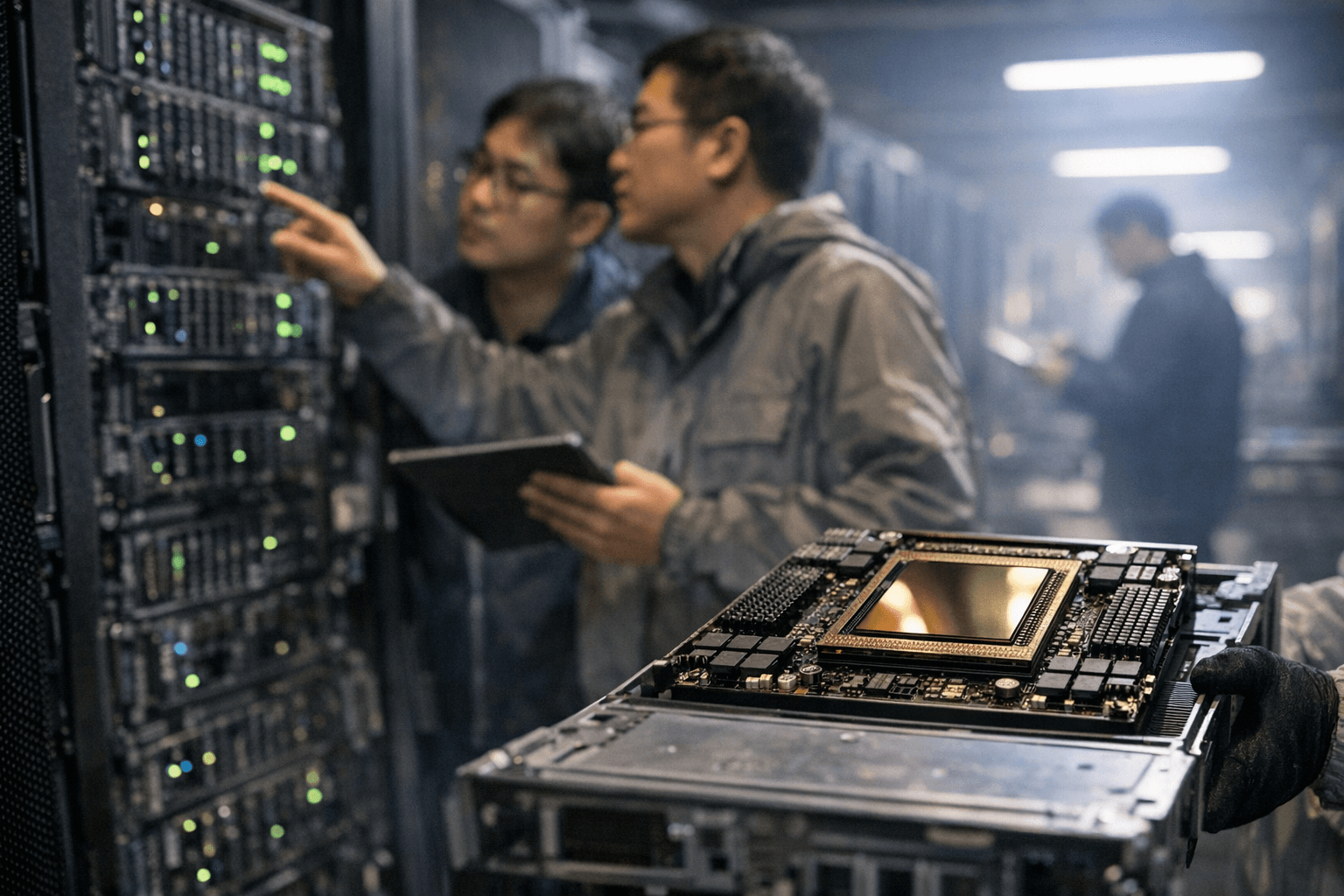
Chinese regulators have given in-principle permission to some of the country’s largest cloud and internet firms to prepare orders for Nvidia’s H200 AI accelerator chips, a development that could accelerate the adoption of high-end hardware in mainland data centers and intensify an already fierce race in generative AI.
The approval affects major players including Alibaba, Tencent and ByteDance, signaling Beijing’s willingness to allow commercial preparations for procurement even as strategic sensitivities around advanced semiconductors persist. In-principle permission typically lets companies begin contract negotiations, capacity planning and integration testing, but it does not itself authorize imports or final shipments. Those steps remain subject to export controls, vendor compliance and the intricacies of global supply chains.
Nvidia’s H200 is positioned as a successor to earlier accelerators widely used for large language model training and inference. Access to such hardware can materially reduce the time and cost of developing sophisticated generative AI services, offering a competitive edge to cloud providers that can scale clusters of accelerators. For Chinese firms, which have been racing to match Western advances in foundation models, the ability to plan for H200 deployments could shorten development timelines for new products and services.
The decision comes against a background of tightened export controls from the United States and allied partners aimed at limiting the most advanced AI chips flowing to China. Those restrictions have forced companies and governments to navigate a fragmented regulatory landscape where approvals from multiple jurisdictions, as well as technical workarounds and local sourcing strategies, are often necessary. Even with domestic approval to prepare orders, Chinese buyers will face the practical constraint that final shipments require adherence to international licensing regimes and supplier assessments.
Beyond corporate planning, the move underscores broader strategic dynamics. China has invested heavily in indigenous semiconductor development and in expanding domestic data center capacity, yet high-performance accelerators from foreign vendors remain an important part of the technology stack for cutting-edge AI. Allowing companies to prepare for H200 purchases may reflect a calibrated approach by regulators to balance economic competitiveness with national security concerns. It also highlights the interdependence of global technology ecosystems, where commercial demand, regulatory policy and geopolitical considerations interact.
The implications for consumers and enterprises could be substantial. Faster access to more powerful accelerators can improve the performance and cost-efficiency of cloud-based AI services, boosting capabilities in natural language processing, image generation and other compute-intensive applications. For startups and research labs, improved hardware availability could lower barriers to experimentation and model training.
Uncertainties remain. The timetable for any actual deliveries will hinge on export licensing, Nvidia’s export compliance decisions and potential new policy responses from other governments. Domestic regulators may also impose conditions on how the hardware is used, monitored or localized. For now, the green light to prepare orders marks a significant procedural step that could reshape the competitive landscape of cloud AI in China while keeping key strategic questions unresolved.
This article was produced by Prism’s automated news system from verified source data, official records, and press releases, then run through automated quality and moderation checks before publishing. The system is built and supervised by the people who set the standards it runs under. Read our full AI policy.
Did this article answer your question?