China approves Merck chicken bronchitis vaccine for giant poultry industry
China cleared Merck’s chicken bronchitis vaccine for a poultry flock of more than 5 billion birds, a move that could ripple through egg, meat and trade markets.
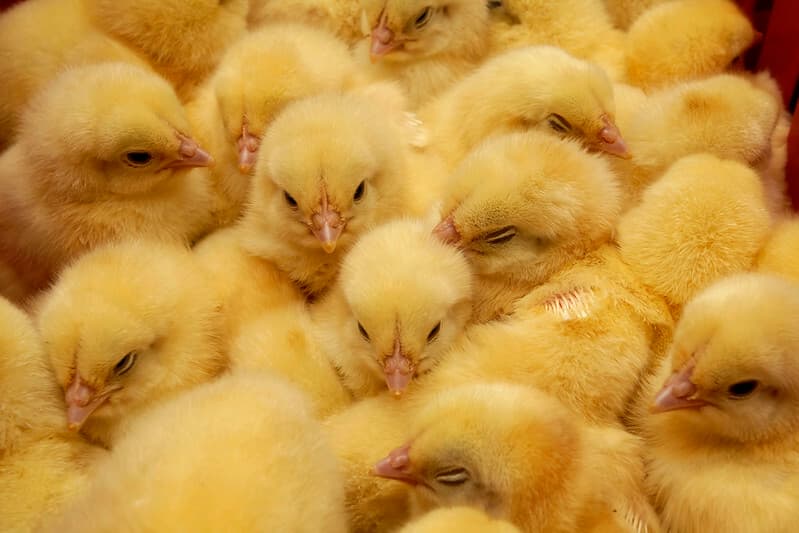
China’s agriculture ministry has approved Merck’s vaccine against infectious chicken bronchitis for use in the country’s vast poultry industry, giving the U.S. drugmaker access to a market that sits at the center of global protein supply. In a country home to more than 5 billion birds, even a modest improvement in disease control can matter for farm productivity, egg output and export competitiveness.
The approval covers a vaccine aimed at strain 4-91, a highly contagious chicken coronavirus first identified in Britain in the early 1990s. Merck said the product can be used on chicks starting one day after hatching, meaning birds that hatch today would be eligible for vaccination from Thursday onward. Merck’s poultry materials describe the 4-91 vaccine family as a live attenuated product for 1-day-old chicks and older chickens.
Infectious bronchitis is not typically measured only by mortality. It is an acute upper respiratory disease that can trigger coughing, depress egg production and cut egg quality, all while moving rapidly through flocks. Control is complicated because different antigenic types do not cross-protect well, leaving producers to manage a virus that can slip around immunity and keep evolving inside large commercial systems.
That evolution is a central reason the approval matters in China. Zhang Guozhong, a professor at China Agricultural University, has warned that the disease mutates quickly and spreads fast, creating severe and complex epidemic risks across flocks. Recent Chinese research reinforces that concern. A 2025 study found the GI-19 genotype was the dominant type in sampled infectious bronchitis virus strains collected from 2020 to 2024, while another 2025 paper reported the continued emergence of variants in China with widespread mutations in the S1 gene.

A separate 2024 and 2025 study said the virus’s rapid mutation and recombination keep generating variants that spread around the world. That makes the Chinese approval more than a routine veterinary decision. It signals a broader push to industrialize disease prevention in agriculture, using vaccines as a tool to defend dense livestock systems against shocks that can quickly become food-security problems.
For Merck, the move strengthens a veterinary business that already markets multiple poultry vaccines worldwide and gives the company a foothold in the largest chicken-rearing nation on earth. For China, it adds another layer of protection as chicken production continues to rise, albeit more slowly than previously estimated by the U.S. Department of Agriculture Foreign Agricultural Service. In a sector this large, disease control is not a niche concern. It is a supply-chain issue with consequences that reach far beyond Beijing.
This article was produced by Prism’s automated news system from verified source data, official records, and press releases, then run through automated quality and moderation checks before publishing. The system is built and supervised by the people who set the standards it runs under. Read our full AI policy.
Did this article answer your question?