China bars exports to seven European firms over Taiwan arms sales
China cut seven European firms off from dual-use exports over Taiwan arms links, its first Europe-targeted blacklist move in the island’s defense dispute.
China escalated its Taiwan dispute into Europe’s industrial supply chains on April 24, banning exports of dual-use items to seven European entities and placing them on its export-control list with immediate effect. The named firms were HENSOLDT AG, FN Browning, OMNIPOL a.s., EXCALIBUR ARMY spol. s.r.o., SPACEKNOW INC., odstepny zavod s.r.o., VZLU AEROSPACE a.s. and FN Herstal, listed as Fabrique Nationale de Herstal. Beijing said the companies had taken part in arms sales to Taiwan or had collaborated with Taiwan, and Bloomberg said this was the first time China had used its export-control blacklist against companies in Europe in a Taiwan-related case.
The practical disruption is broader than a simple shipping ban. The European Union defines dual-use items as goods, software and technology that can serve both civilian and military applications, which means the Chinese order can reach components, technical data and software embedded in cross-border supply chains, not just finished weapons. China also said overseas organizations and individuals were barred from transferring or providing China-origin dual-use items to the listed firms, while exceptional approvals could still be sought case by case, showing the measure was designed as leverage rather than a blanket trade break.
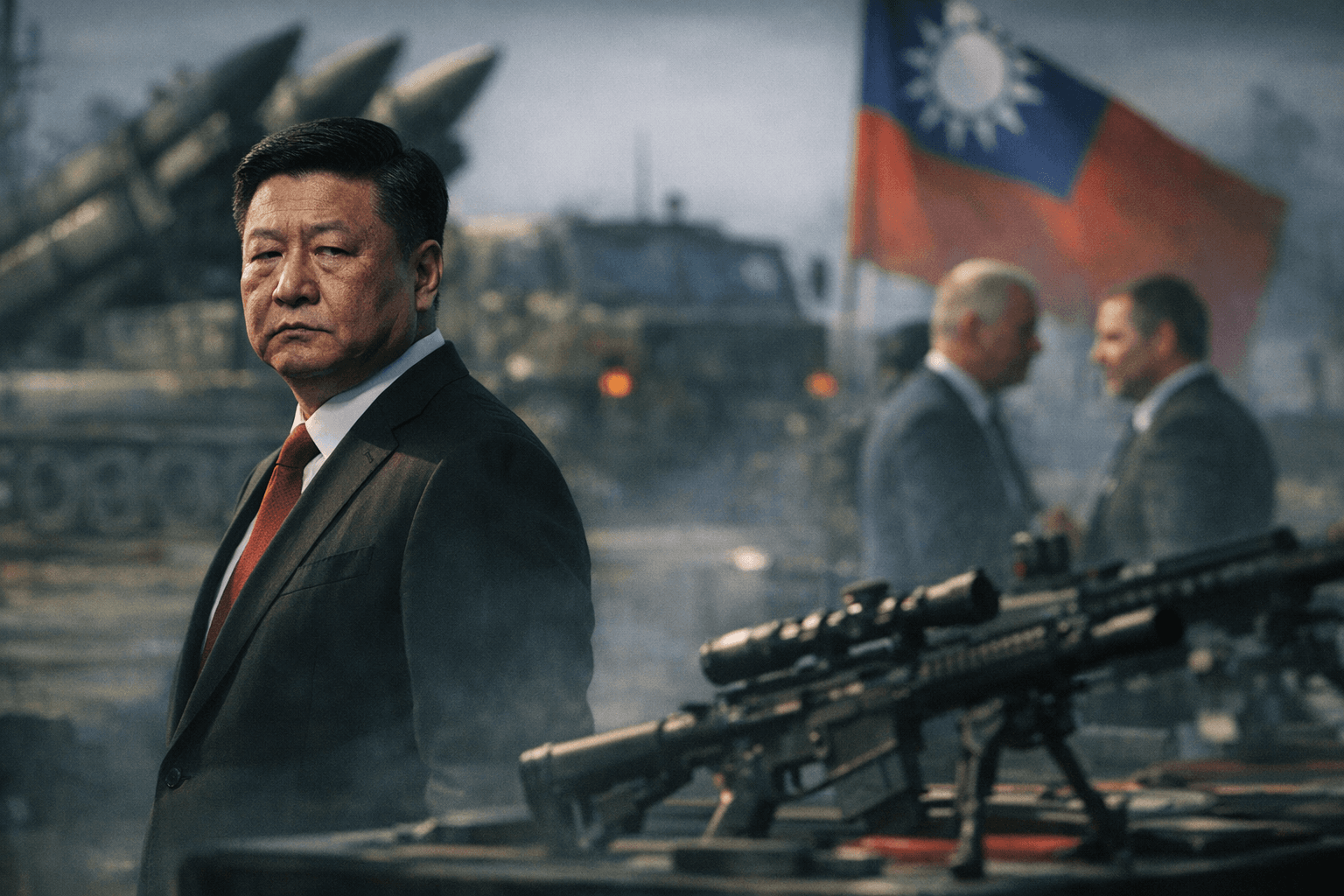
The move landed in a sensitive corner of Europe-China economic relations because it links a Taiwan defense dispute to European manufacturers that sit inside advanced industrial and aerospace networks. HENSOLDT said it was verifying the facts and would assess the situation later. Beijing also said it had informed the European Union through a bilateral export-control dialogue mechanism before the announcement and that normal trade exchanges between China and Europe would continue unaffected, an effort to confine the retaliation to the named firms rather than widen it into a broader commercial clash. Europe has not sold big-ticket arms such as fighter jets to Taipei for about three decades, reflecting long-running caution about provoking Beijing.
The episode also fits a wider pattern of Chinese retaliation over Taiwan arms links, but one with a new European address. Reuters-linked reporting in late 2025 said Washington approved an $11.1 billion arms package for Taiwan, the largest U.S. weapons sale to the island, and China has repeatedly answered such moves with diplomatic pressure and sanctions. What makes this step different is that it extends Beijing’s response beyond the United States and into Europe, even as the Council of the European Union updated its arms-export-control framework in April 2025 and its Working Party on Non-Proliferation and Arms Exports coordinates the bloc’s policy work. That combination suggests China is increasingly willing to use trade controls against European actors tied to Taiwan’s defense links, while still trying to keep the broader China-Europe commercial relationship intact.
This article was produced by Prism’s automated news system from verified source data, official records, and press releases, then run through automated quality and moderation checks before publishing. The system is built and supervised by the people who set the standards it runs under. Read our full AI policy.
Did this article answer your question?