China, Canada and Western allies urge citizens to evacuate Iran as U.S. fleets deploy
Multiple governments instruct nationals to leave Iran immediately, citing a "rapidly intensifying" security situation and a U.S. military build-up with aircraft carriers now in the region.
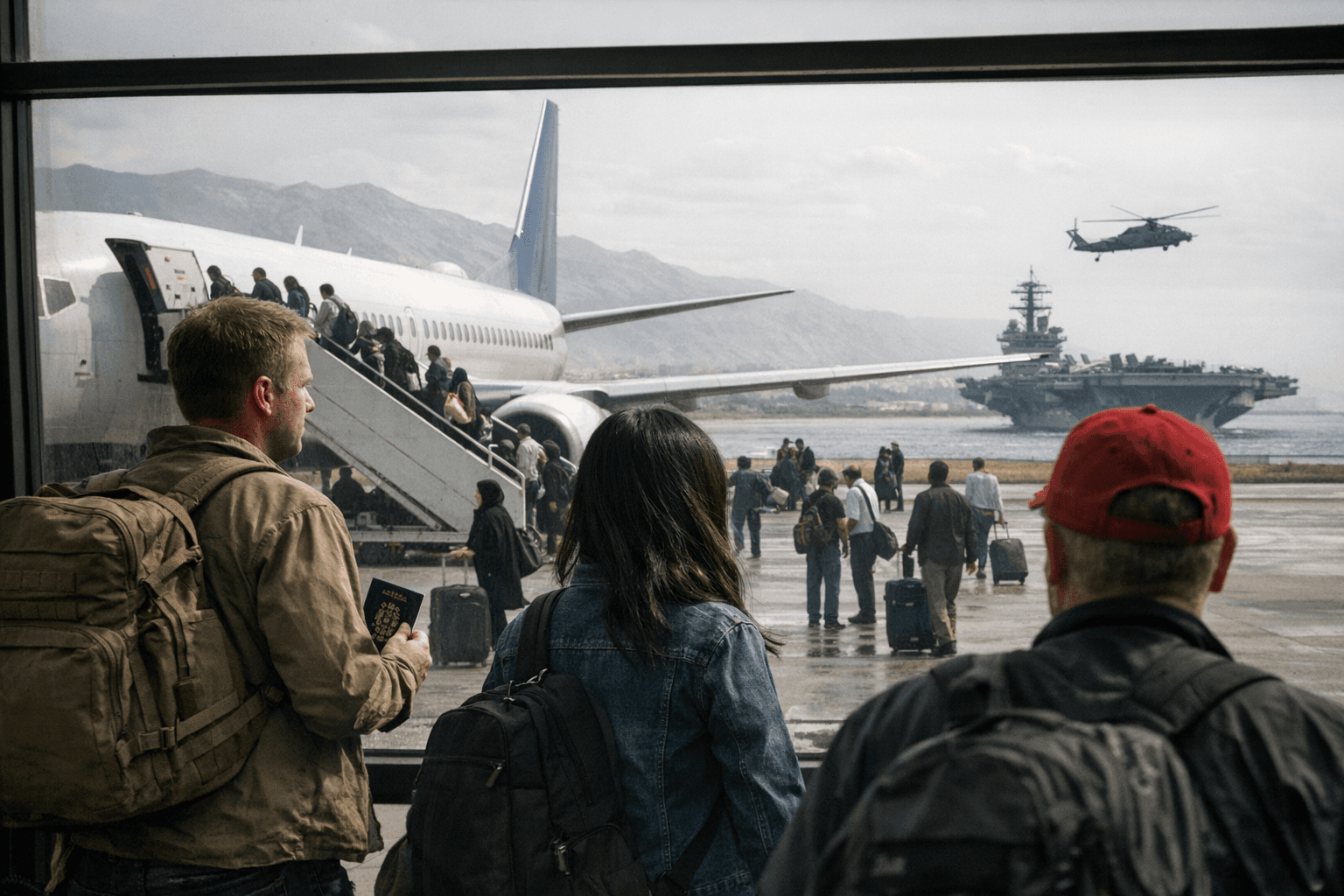
China, Canada, Poland and a string of other governments have urged their citizens to leave Iran immediately or avoid travel there, citing a "rapidly intensifying" security situation and a significant U.S. military build-up that includes the aircraft carriers USS Abraham Lincoln and USS Gerald Ford in nearby waters.
China's state news agency Xinhua told Chinese nationals to "leave Iran as soon as possible and to avoid traveling there," and officials urged citizens to strengthen safety precautions and depart "while commercial routes remain available." Canada issued an advisory urging nationals to "leave Iran without delay," advising travellers to ensure passports are current and to be prepared for emergency situations. Poland's prime minister Donald Tusk told Poles to "please leave Iran immediately and under no circumstances travel to this country," adding, "I do not want to alarm anyone, but we all know what I am referring to. The possibility of a conflict is very real."
Other governments joining evacuation warnings include Australia, India, Germany, South Korea, Serbia, Brazil, Singapore, the United Kingdom and the United States, alongside "at least six" unnamed European nations that have restricted travel. India advised students, pilgrims and business owners to "exercise due caution" and to "leave Iran by any means available." Serbia called on citizens not to travel "in the coming period" and urged those inside Iran to "leave immediately." The U.K. has evacuated staff from its embassy in Tehran, and Australia has urged its citizens to leave "as soon as possible" while ordering dependents of diplomats in Israel and Lebanon to depart.
The diplomatic warnings follow a surge in U.S. military posture in the Middle East and Mediterranean, which officials say is linked to stalled indirect talks in Geneva and rising tensions over Iran's nuclear program and a long-running regional "shadow war." U.S. Central Command briefed the U.S. president on military options after the most recent round of talks; the CENTCOM briefing was delivered to the president by Admiral Bradly Cooper, and options under consideration range from limited strikes on missile or nuclear-related sites to a larger sustained campaign, with coordination with Israel under discussion.
Practical evacuations are already under way. The U.S. embassy in Israel shifted to "authorized departure," allowing nonessential personnel and family members to leave at government expense, and an embassy email at 10:24 a.m. local time told staff that those who want to leave "should do so TODAY," adding "There is no need to panic" but urging people to "focus on getting a seat to anyplace from which you can then travel to DC, but the first priority will be getting expeditiously out of country." The email warned that the move "will likely result in high demand for airline seats today."
The immediate economic effects are likely to be visible in travel and logistics: sudden spikes in airline ticket prices and strained commercial routes as nationals scramble for seats; insurance and freight costs could rise if shipping lanes or regional stability deteriorate. Governments face direct fiscal costs in transporting and hosting evacuees, and a sustained escalation would pressure energy markets and regional trade. Longer term, officials warn, a new cycle of retaliation and proxy attacks could harden security postures, raising defense budgets and disrupting investment flows across the Middle East.
Authorities and diplomats stressing the narrow window for safe departure note that evacuation corridors and commercial flights can close fast if conflict begins, making prompt departures essential for those heeding the advisories.
Know something we missed? Have a correction or additional information?
Submit a Tip

