China expands hiring push as record 12.7 million graduates seek jobs
China ordered state firms and internet giants to open more jobs as 12.7 million graduates entered a labor market where youth unemployment was still 16.3% in April.
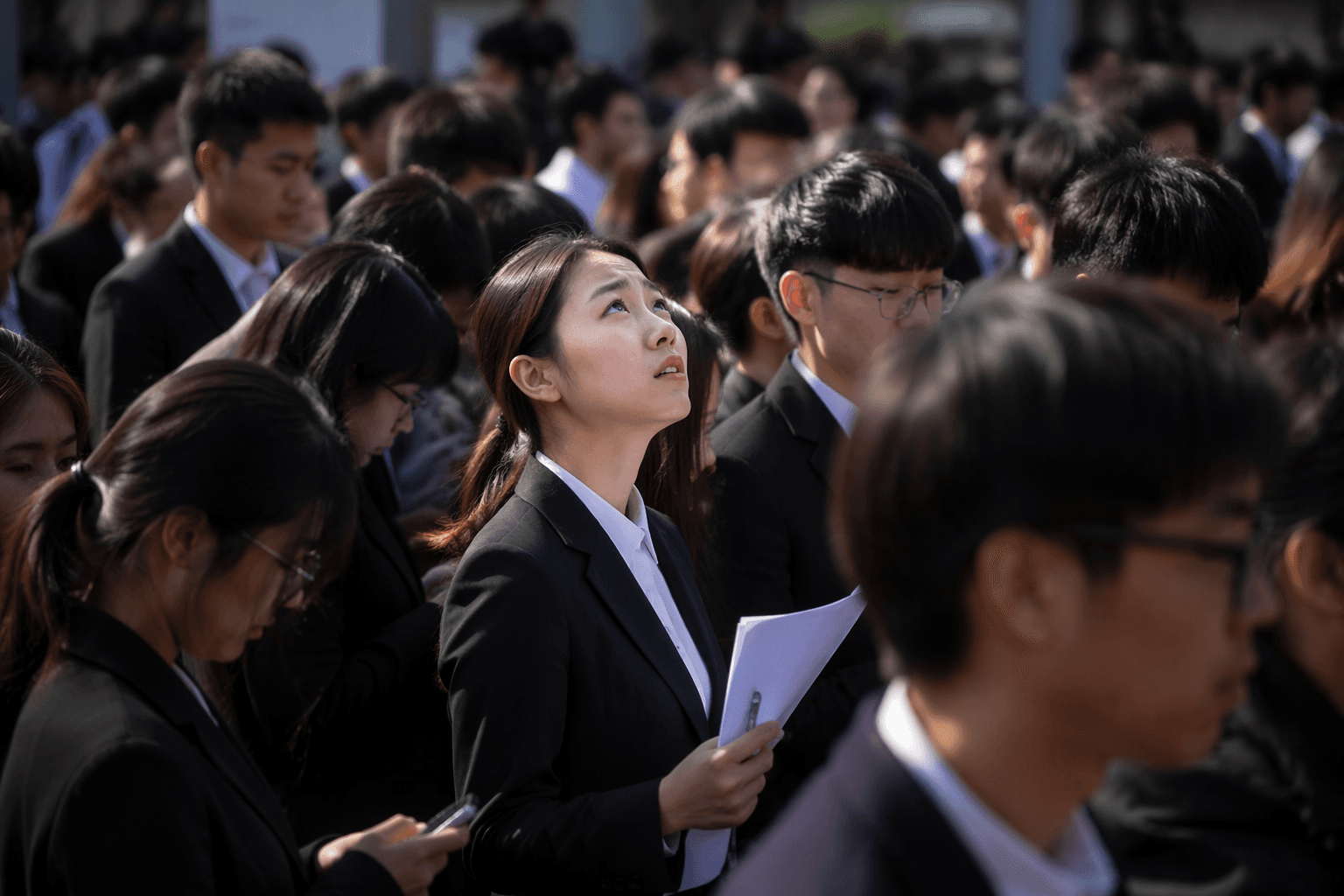
China has moved to push hiring harder just as a record 12.7 million college graduates begin looking for work, a scale that is testing whether state-directed recruitment can absorb the class or only cushion a deeper weakness in private hiring. The latest campaign shows Beijing treating graduate employment not just as a labor-market problem, but as a matter of stability.
The Ministry of Human Resources and Social Security issued a notice on May 28 launching an Internet companies cloud recruitment month from June 1 to June 30, aimed at internet employers and college graduates and other young people. The plan called for online job fairs, live-streamed recruitment sessions and special fairs in hubs such as the Beijing-Tianjin-Hebei region, the Yangtze River Delta, the Pearl River Delta and the Chengdu-Chongqing region. Local employment and talent services were told to visit large and fast-growing internet firms to inventory vacancies and keep recruitment information current, while the China Public Recruitment Network was designated as one of the main platforms for the campaign.
The internet push sits inside a broader 100-day campus employment service action that the Ministry of Human Resources and Social Security and the Ministry of Education launched on April 3 for the 2026 graduating class. That program runs from April 1 to July 10 and tells provinces with large graduate populations to organize at least 100 recruitment events. It also puts special emphasis on graduates from low-income households, zero-employment households, households at risk of returning to poverty and students with disabilities, while provincial education departments are required to begin transferring information on graduates who remain unemployed after leaving campus by the end of June.
The policy response matches the size of the problem. China’s Ministry of Education said in November 2025 that 2026 graduates would total about 12.7 million, roughly 480,000 more than the 12.22 million who graduated in 2025. At the same time, the urban youth unemployment rate for 16- to 24-year-olds excluding students stood at 16.3% in April 2026, down from 16.9% in March but still high enough to keep pressure on officials to show results.
The campaign underscores how China is increasingly using state-owned enterprises, major internet companies, online hiring and livestream recruitment as tools of labor policy. It also reveals the gap at the heart of the graduate market: not simply whether enough jobs exist, but whether the jobs being created match the expectations, skills and career ambitions of a record-sized class entering a still-uneven economy.
This article was produced by Prism’s automated news system from verified source data, official records, and press releases, then run through automated quality and moderation checks before publishing. The system is built and supervised by the people who set the standards it runs under. Read our full AI policy.
Did this article answer your question?


