China factory activity returns to expansion on AI-driven demand surge
AI-linked exports pushed China’s manufacturing PMI to 50.3 in June, while new export orders rose back above expansion and domestic demand stayed fragile.
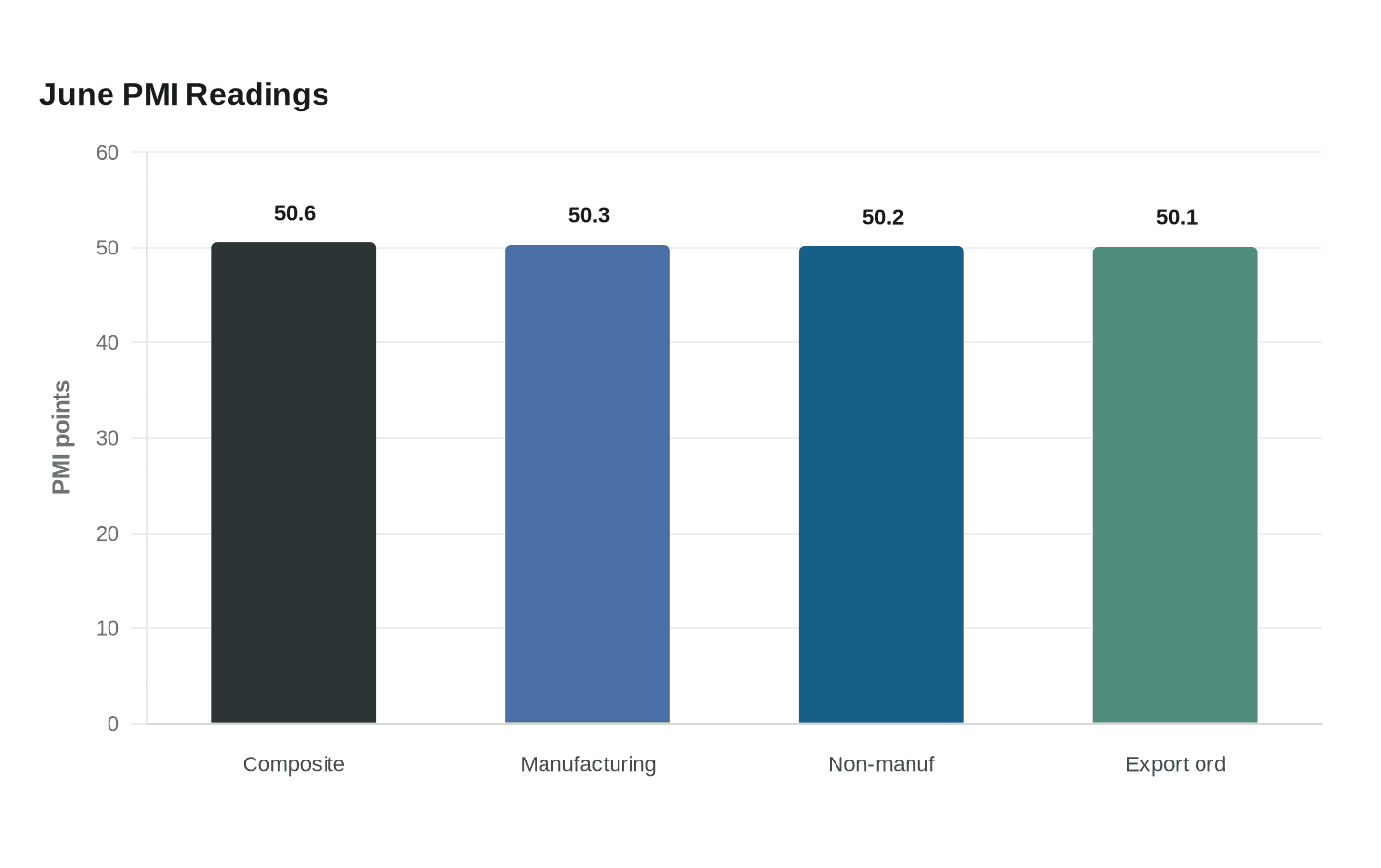
China’s factory activity returned to expansion in June, with the official manufacturing purchasing managers’ index rising to 50.3 from 50.0 in May and posting the second-highest reading of the year. New export orders also moved back above the 50-point expansion line, climbing to 50.1 from 48.6, a sign that overseas demand helped pull industry higher even as parts of the domestic economy stayed soft.
The gain was broad enough to lift China’s composite PMI to 50.6 from 50.5, while the non-manufacturing PMI edged up to 50.2 from 50.1. Huo Lihui, a statistician at the National Bureau of Statistics, said overall economic activity picked up in June. Manufacturing output and demand both expanded, with especially strong performance in agricultural and sideline food processing, special-purpose equipment, and computers, communications and other electronic equipment manufacturing.
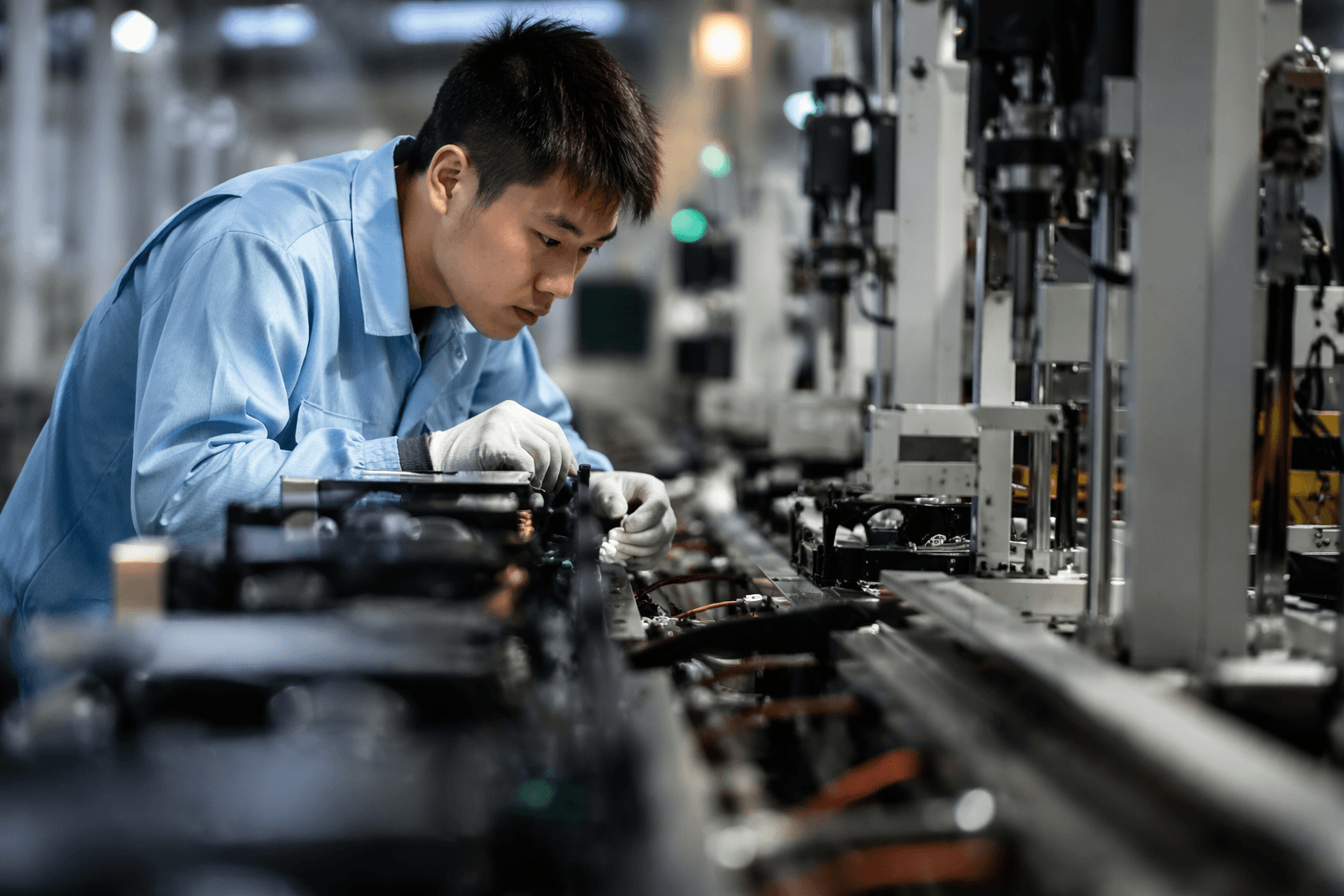
The clearest support came from technology-heavy exports tied to artificial intelligence. Demand for chips, computers and other AI-related products helped offset weakness elsewhere, and exporters also rushed shipments to the United States before new tariffs took effect. Lower upstream costs added another tailwind, and China’s manufacturers were already benefiting from the global AI investment cycle.
The rebound still looked uneven. Factory-gate prices fell again, employment remained soft and domestic demand was still fragile, leaving the recovery more dependent on external orders than on a durable consumer-led upswing.
That pattern fits the wider manufacturing picture in 2026. In May, high-tech manufacturing PMI stood at 52.9 and equipment manufacturing at 52.1, while high-tech manufacturing had remained in expansion for 16 consecutive months. Industrial output in May rose 4.5% year on year, with high-tech manufacturing up 15.1% and equipment manufacturing up 9.5%; production of 3D printing equipment, lithium-ion batteries and industrial robots also jumped sharply.
The export strength is likely to continue because global AI investment remains firm, with more policy support, including faster fiscal spending and room for monetary easing, also expected.
This article was produced by Prism’s automated news system from verified source data, official records, and press releases, then run through automated quality and moderation checks before publishing. The system is built and supervised by the people who set the standards it runs under. Read our full AI policy.
Did this article answer your question?