China launches first Hong Kong astronaut on Shenzhou-23 mission
Hong Kong’s first astronaut rode Shenzhou-23 into orbit, a scientific milestone that Beijing is also likely to present as proof of tighter national integration.
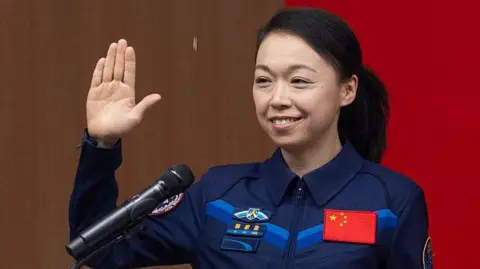
Hong Kong’s first astronaut lifted off aboard Shenzhou-23, a mission that carries both scientific ambition and clear political symbolism. Lai Ka-ying, also rendered Li Jiaying, a 43-year-old police superintendent, mother of three and doctorate holder in computer science and computer forensics, flew as the payload specialist on the launch from northwestern China’s Jiuquan Satellite Launch Centre.
Lai was selected in 2024 as part of China’s fourth batch of astronauts, one of two payload specialists drawn from Hong Kong and Macau. She completed about 1,700 hours of training before passing her flight qualification assessment, a path that put a Hong Kong resident inside a space program long dominated by mainland personnel. Her launch marks the first time a Hong Kong resident has flown on a Chinese space mission and the first time a woman from Hong Kong has entered orbit.
The Long March-2F rocket carrying Shenzhou-23 blasted off at 11:08 p.m. local time on May 24, 2026, from the Gansu province site. Mission control declared the launch a success about 20 minutes later, and the crew was expected to reach the Tiangong space station in about 3.5 hours. The spacecraft’s commander is Zhu Yangzhu, who previously flew on Shenzhou-16, and the pilot is Zhang Zhiyuan.
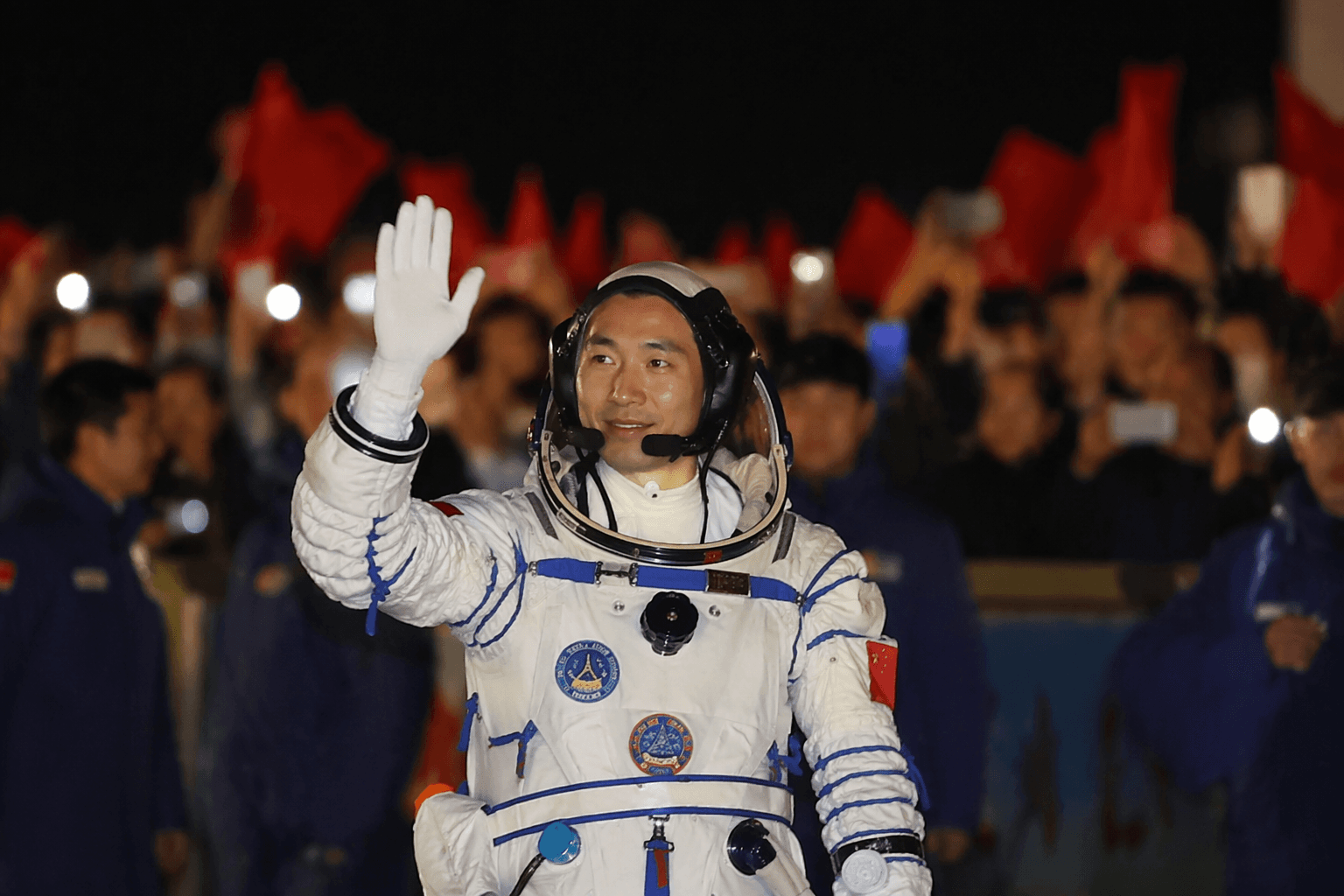
The mission is designed to do more than place another crew on Tiangong. One astronaut will spend a full year in orbit, the first such long-duration stay for China, to study the long-term effects of spaceflight on health and improve in-orbit medical support. The other two crew members are expected to remain for about six months. More than 100 scientific studies are planned, including experiments involving zebrafish, mice and artificial embryos.
For Beijing, the flight offers a highly visible example of the kind of national integration the central government has tried to promote since Hong Kong’s return to Chinese rule. Hong Kong Chief Executive John Lee congratulated Lai and the crew, thanked the country for its support and said Hong Kong could move from a “supporter” to an “executor” of national aerospace efforts. A Hong Kong government delegation led by Secretary for Innovation, Technology and Industry Sun Dong attended the send-off, joined by other officials, youth leaders, students and representatives from universities and industry.

Lai thanked the motherland, the Hong Kong SAR Government and citizens for their support. Her rise also carries a separate resonance in Hong Kong, where public identification with mainland national projects is often more complicated than on the mainland. As the fourth Chinese woman to enter the Chinese space station, she represents a scientific breakthrough and a political image of belonging, with Hong Kong now visible inside one of China’s most closely watched national programs.
This article was produced by Prism’s automated news system from verified source data, official records, and press releases, then run through automated quality and moderation checks before publishing. The system is built and supervised by the people who set the standards it runs under. Read our full AI policy.
Did this article answer your question?


