China law raises fears of cross-border crackdown on critics
Beijing’s new ethnic unity law took effect July 1, and a justice ministry official said it can reach people outside China’s borders. Rights groups fear diaspora critics could be chilled.

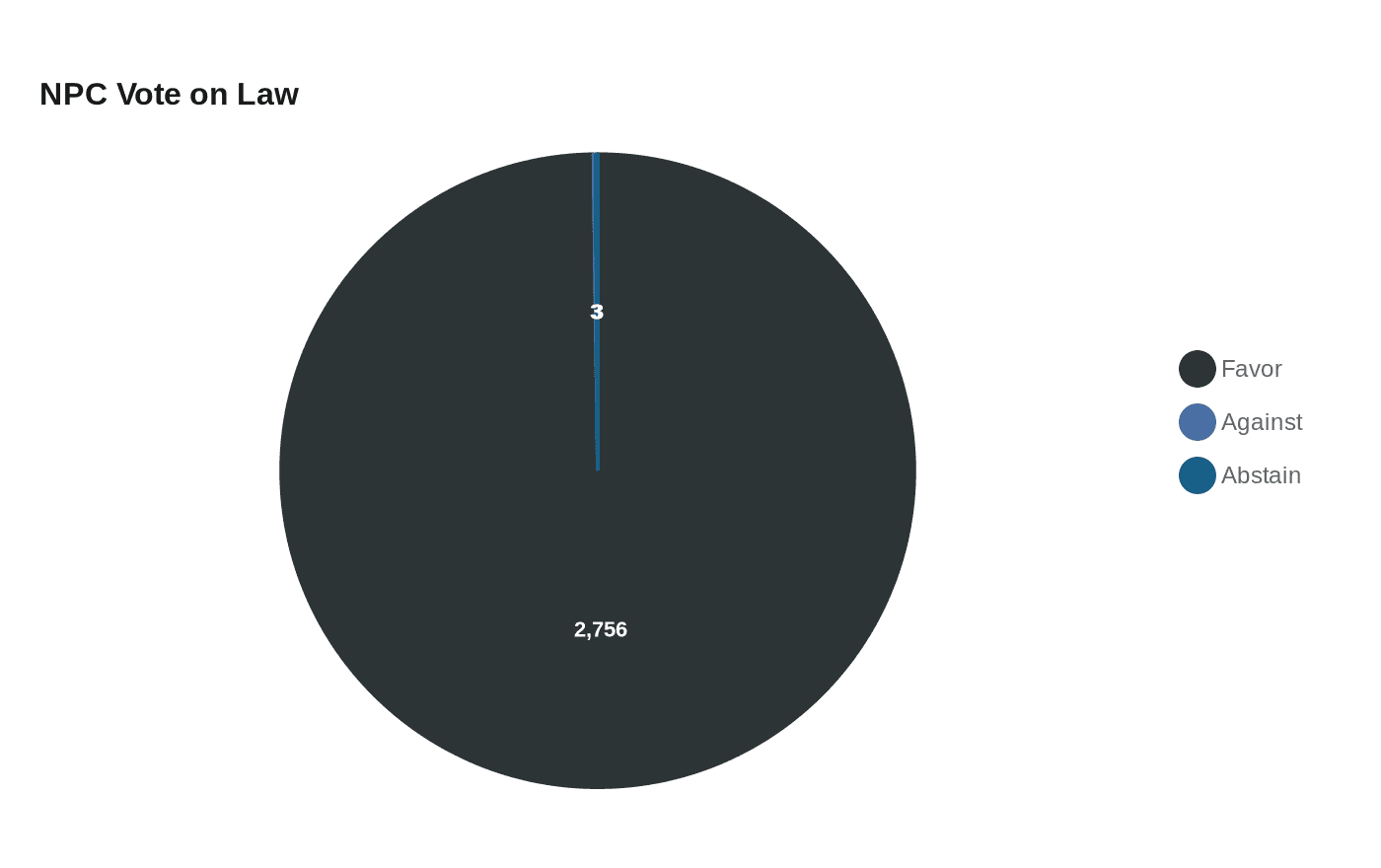
China’s Law on Promoting Ethnic Unity and Progress took effect on July 1 after the National People’s Congress adopted it on March 12 by 2,756 votes in favor, three against and three abstentions. A week earlier, Hu Weilie, a senior official in the justice ministry, said China has a right to target people outside its borders who violate the law and called that position legal, necessary and consistent with international practice.
The law says people and groups beyond the borders of the People’s Republic of China can be held legally accountable for undermining “ethnic unity and progress” or inciting “ethnic separatism.” That clause has raised concern in Taiwan, where critics fear it could give Beijing another legal basis to pursue people it labels separatists, and among rights groups, which warn the language could be used against activists, scholars and diaspora critics far from mainland China.

Amnesty International said the measure risks giving a stronger legal basis to transnational repression already seen in the form of surveillance of diaspora communities, harassment of overseas critics, intimidation of family members in China and pressure on foreign governments to return individuals. The group warned that peaceful advocacy for minority rights, including promoting minority languages, documenting human rights abuses or campaigning for prisoners, could be recast as undermining ethnic unity. Human Rights Watch warned in draft-stage criticism that the law could justify repression and forced assimilation, weaken minority language rights and expand ideological controls.
The law also requires government bodies, schools, enterprises and social organizations to promote a “strong sense of community for the Chinese nation.” That formalizes a years-long assimilation drive affecting China’s 55 recognized minority groups, including Uyghurs, Tibetans and Mongols, and gives legal cover to the push for Mandarin in education, public life and official business. Beijing has framed the measure as a tool for national cohesion, common prosperity, modernization and cultural protection.

Chinese authorities have rejected the criticism. At a briefing on June 25, Bayanqolu, a senior legislator, said accusations of assimilation were interference in China’s internal affairs. The State Council Information Office also said more than 700 motions and suggestions tied to the legislation had been submitted by National People’s Congress deputies since 2012.
Examples Beijing’s critics already cite include attempts to use Interpol red notices, the case of Uyghur academic Ilham Tohti, the detention of Uyghur ethnographer Rahile Dawut, the targeting of Tibetan religious leader Choktrul Dorje Ten Rinpoch and the case of Uyghur entrepreneur Ekpar Asat, who was detained after returning from a 2016 U.S. exchange program and later sentenced to 15 years in prison.
This article was produced by Prism’s automated news system from verified source data, official records, and press releases, then run through automated quality and moderation checks before publishing. The system is built and supervised by the people who set the standards it runs under. Read our full AI policy.
Did this article answer your question?