China Manufacturing Contracts Again, Services Cool Point to Dilemma
China's official manufacturing PMI remained below the 50 expansion threshold in November while services activity cooled, underscoring a slowing domestic economy at a sensitive policy moment. The data intensify Beijing's dilemma between pursuing structural reforms and deploying targeted stimulus to shore up demand, a choice with implications for global trade and commodity markets.
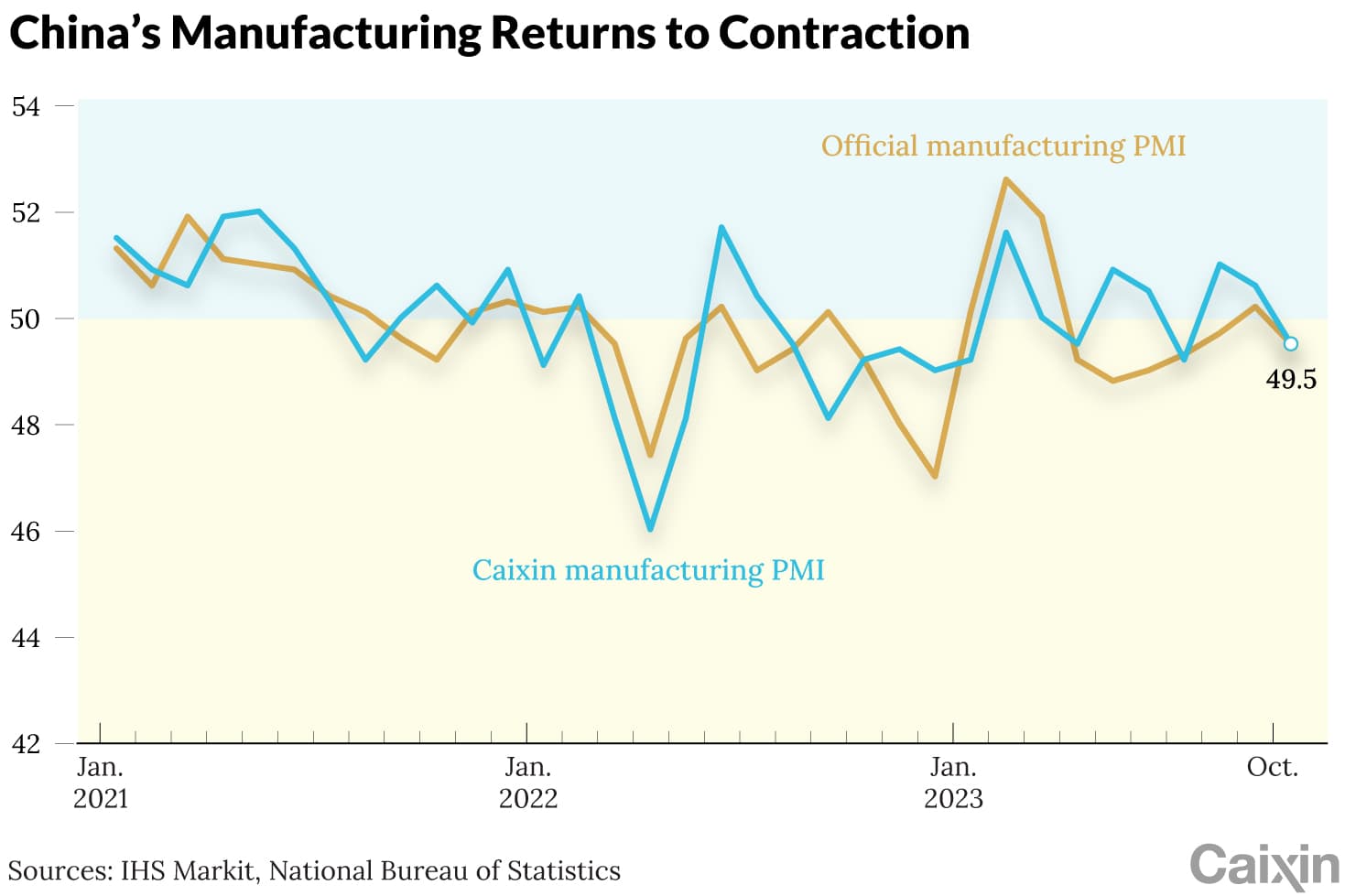
China's official manufacturing purchasing managers index stood at 49.2 in November, up slightly from 49.0 in October but still below the 50 threshold that separates expansion from contraction, the National Bureau of Statistics said after a survey conducted on November 29 and 30. The reading marked the eighth consecutive month that manufacturing has remained in contraction territory, a sustained signal that factories are under pressure even as authorities weigh policy responses. At the same time, services activity cooled according to the same survey, eroding one of the channels Beijing has relied on to rebalance the economy toward domestic demand.
Analysts cited by Reuters said the readings reflect weak household consumption and persistent headwinds for exporters amid tensions with major trading partners. Business sentiment appears subdued and export order trends remain fragile, the analysts added, pointing to a mix of soft domestic demand and uncertain external demand that is constraining firms across sectors. The twin soft patches in manufacturing and services complicate the near term growth outlook and raise questions about employment and corporate cash flow, particularly for small and medium sized enterprises that are more sensitive to domestic consumer swings.
For policymakers the data crystallize a familiar tradeoff. On one hand officials have signaled a commitment to structural reforms designed to reduce financial risk, reallocate capital toward higher productivity activities, and strengthen the role of market forces. On the other hand there is growing pressure to take targeted measures to buoy growth, as authorities weigh options short of the broad scale stimulus programs deployed in earlier cycles. Beijing has publicly debated carefully calibrated support for consumption, relief for liquidity constrained firms, and selective infrastructure or social spending to support demand while avoiding large scale additions to leverage.
The market implications extend beyond China. A prolonged stretch of sub 50 manufacturing readings would likely weigh on industrial commodity demand and global supply chains, while cooling services activity would undercut the hoped for domestic rebalancing that would otherwise offset weaker exports. For trading partners that rely on Chinese demand for exports and raw materials, a softer China matters for growth and price trajectories. Financial markets will watch policy signals closely, where announcements of targeted fiscal or liquidity measures could be interpreted as supportive without signaling a retreat from reform commitments.
Looking ahead the near term path for activity will hinge on whether consumption can recover and whether external demand stabilizes amid geopolitical tensions. Targeted policy measures could help bridge the gap and provide relief to stressed sectors, but they will test Beijing's ability to thread the needle between enabling short term recovery and preserving the long term objectives of reform. The November PMI readings make clear that balancing growth and reform remains the central economic challenge for China as it enters the last stretch of 2025.
This article was produced by Prism’s automated news system from verified source data, official records, and press releases, then run through automated quality and moderation checks before publishing. The system is built and supervised by the people who set the standards it runs under. Read our full AI policy.
Did this article answer your question?

