China rare-earth curbs ripple through Japan’s wider economy
China had cut Japan off from terbium and dysprosium oxide for months, and nearly 200 rare-earth filings warned of damage.
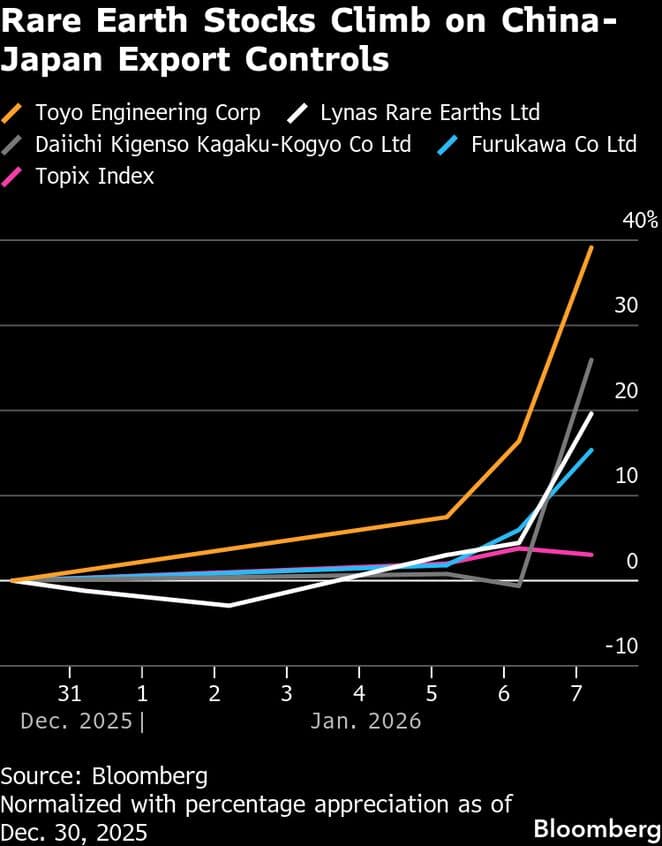
Exports of terbium and dysprosium oxide to Japan had stopped for months by late May, and warnings mentioning rare earths were surging across the Tokyo Stock Exchange. More than two-thirds of nearly 200 filings in May and June warned that export controls were already hurting businesses or could do so soon, a sign that the disruption was moving beyond metals traders into consumer and electronics companies.
After Sanae Takaichi told lawmakers on November 7 that a Chinese attack using warships and military force against Taiwan could create a “survival-threatening situation” for Japan, Beijing viewed the remark as provocative. The supply restrictions that followed hit materials that sit deep inside industrial production, from permanent magnets to components used in electric vehicles, factory equipment and weapons. Chinese customs data showed no exports to Japan of terbium or dysprosium oxide from November through May, while shipments of yttrium oxide stayed tiny from December onward.

The Ministry of Economy, Trade and Industry has been concerned since April 2025 about the impact of China’s rare-earth export controls on global supply chains, including Japan’s. A Center for Strategic and International Studies analysis linked China's 2025 restrictions on heavy rare earths and permanent magnets to fragile allied supply chains, and China had already used similar controls against Japan in 2026 as leverage over Taiwan.
China’s rare-earth restrictions cut about 0.9% from Japan’s gross domestic product in 2010. A Mizuho Research Institute economist said the current shock could bite harder because rare earths are embedded in far more supply chains today, especially as artificial intelligence hardware and electric-vehicle production push demand higher.
METI has been working on policies to secure stable supplies of rare earths and permanent magnets, while companies and policymakers have pushed recycling, material reduction and new extraction efforts. In January 2026, Japan extracted rare-earth-rich mud near Minami-Torishima Island.
This article was produced by Prism’s automated news system from verified source data, official records, and press releases, then run through automated quality and moderation checks before publishing. The system is built and supervised by the people who set the standards it runs under. Read our full AI policy.
Did this article answer your question?