China selects two Pakistani astronauts for landmark space training
China picked Muhammad Zeeshan Ali and Khurram Daud for astronaut training, putting Pakistan on track to send the first foreign flyer to Tiangong.
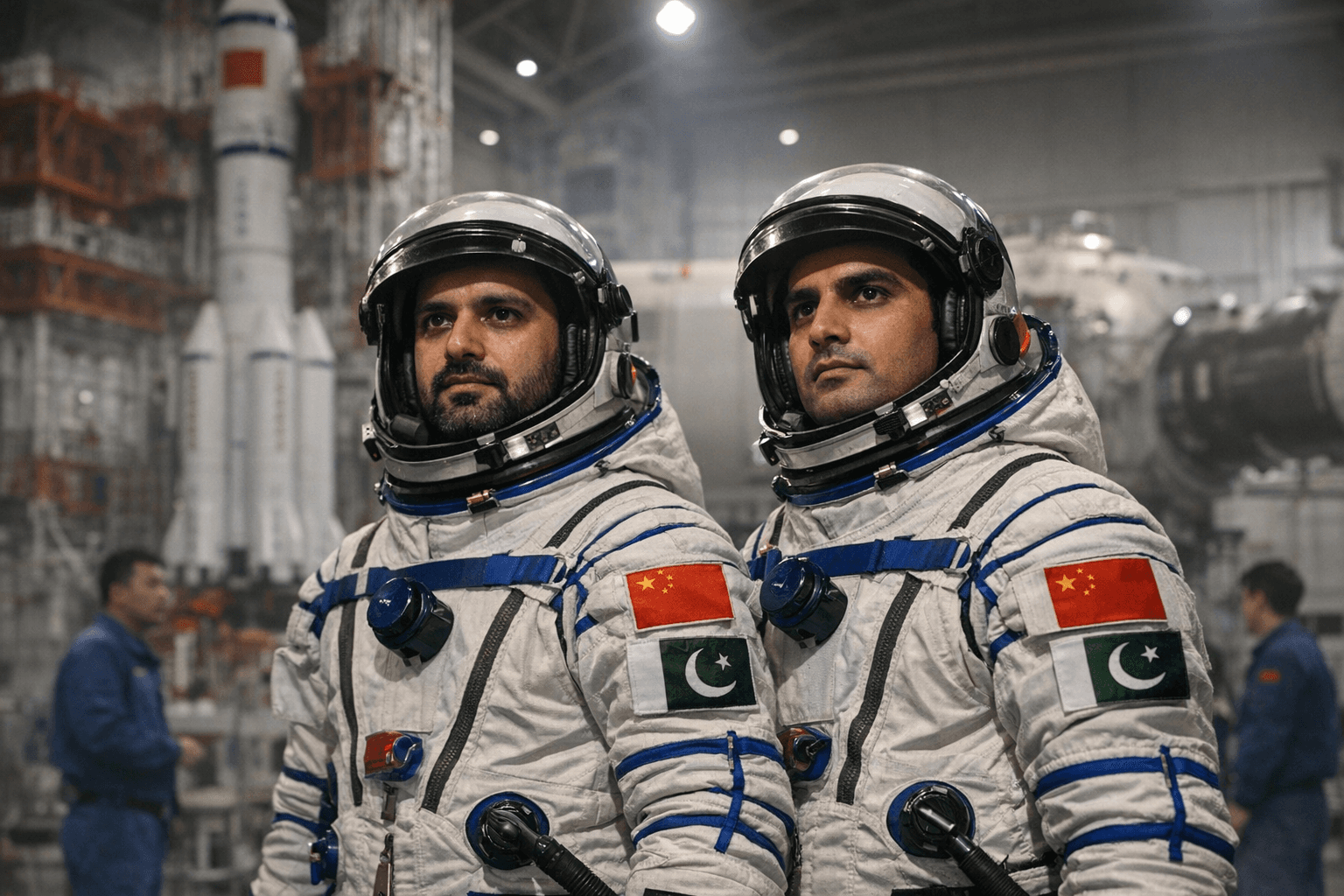
China selected two Pakistani astronauts for its manned space program, turning a spaceflight announcement into a pointed display of strategic alignment with Islamabad. Muhammad Zeeshan Ali and Khurram Daud will travel to China soon as reserve astronauts for training, and one of them is expected to fly later as a payload specialist aboard the Tiangong space station.
The choice followed a bilateral agreement signed in Islamabad in February 2025 on astronaut recruitment, training and participation in China’s space station program. Chinese state media said the Pakistani candidates went through preliminary screening, secondary evaluation and final selection before landing the final two slots. The training will take place at the Astronaut Centre of China, where the pair will join a comprehensive and systematic program that officials have framed as part of a broader partnership, not a one-off seat swap.
The symbolism is significant because Tiangong, completed in 2022, has so far flown only Chinese crews. If one of the Pakistani candidates completes the training and evaluations and then flies, that astronaut would become the first foreign astronaut to enter the Chinese space station. In practical terms, the mission would give Pakistan a rare place in a frontier-science program while giving Beijing a new way to present Tiangong as an international platform rather than a strictly national outpost.
Pakistan’s official and state-linked reporting described the selection as a major milestone in the country’s human spaceflight ambitions and its first planned participation in a space-station mission. For Islamabad, the program offers more than prestige: it creates a route to build technical experience through Chinese training without having to develop an orbital system of its own. For Beijing, it broadens the diplomatic value of its space program at a moment when the United States and its partners still dominate much of the international space architecture.
The timing also matters. By moving a Pakistani astronaut into China’s human spaceflight pipeline, Beijing is extending cooperation with a close regional partner into one of the most visible arenas of national power. Space stations, like satellites and launch systems, now serve as instruments of influence, and China’s willingness to bring Pakistan into Tiangong suggests it sees human spaceflight as a tool for building loyalty, scientific credibility and long-term strategic reach.
This article was produced by Prism’s automated news system from verified source data, official records, and press releases, then run through automated quality and moderation checks before publishing. The system is built and supervised by the people who set the standards it runs under. Read our full AI policy.
Did this article answer your question?