China starts production of home-grown DUV chipmaking tools
China began mass-producing home-grown immersion DUV tools, a step that could ease its chip-equipment dependence but still leaves key bottlenecks in place.
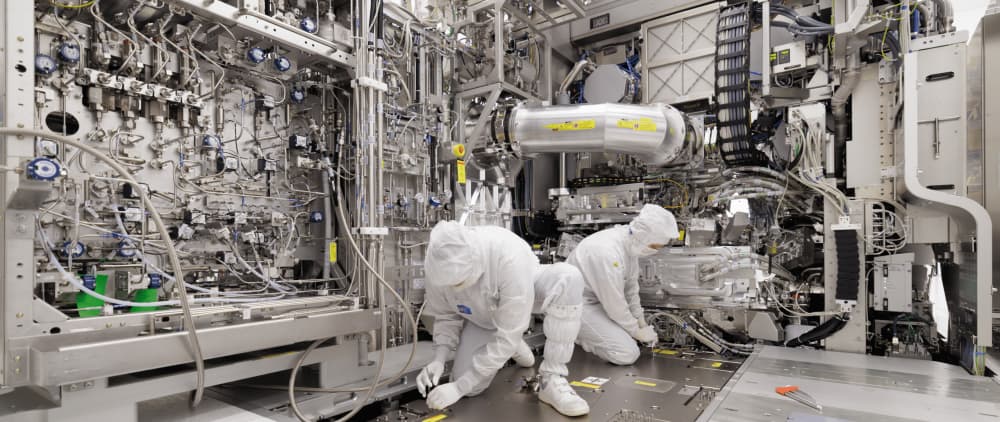
China began mass producing domestically developed immersion deep ultraviolet lithography machines, a key class of chipmaking equipment, in a new sign that Beijing is pushing to reduce its dependence on foreign suppliers. The tools matter because immersion DUV is crucial for advanced chip production, especially for many chips that are advanced but not at the very cutting edge.
The move does not eliminate China’s reliance on imported technology. The new machines sit below the most advanced lithography systems that remain constrained by U.S. and allied export controls, and the start of domestic production does not mean China has solved every bottleneck in semiconductor manufacturing. It does, however, give Chinese fabs another path toward keeping lines running as access to foreign equipment remains limited.
Washington and its partners have tightened controls on advanced chip tools to China in recent years, citing military and strategic risks. A House Select Committee on the CCP report dated May 2, 2025 said the U.S. Bureau of Industry and Security had achieved some success in impeding advanced production in the People’s Republic of China, but that the controls still had significant gaps. The same report said China spent $38 billion in 2024 on products and services from five leading semiconductor manufacturing equipment makers, equal to 39% of those toolmakers’ aggregate worldwide revenue.
That spending helps explain why domestic substitution has become a central industrial goal in Beijing. If Chinese firms can manufacture more DUV equipment at home, they can lower exposure to supply shocks and gradually reduce the amount of foreign machinery needed for mature-node chips used in consumer electronics, industrial parts and other high-volume products. The development also adds pressure on major equipment suppliers in the United States, Japan and the Netherlands, which have already seen the chip war reshape their markets.
For investors and policymakers, the production milestone is more symbolic than decisive, but not trivial. It suggests China’s semiconductor industry is moving from aspiration toward manufacturing capability in a category that is both strategically sensitive and commercially important. Even if domestic DUV tools trail top foreign systems in scale, yield or range, each step toward a home-grown equipment base narrows the gap export controls were meant to preserve.
This article was produced by Prism’s automated news system from verified source data, official records, and press releases, then run through automated quality and moderation checks before publishing. The system is built and supervised by the people who set the standards it runs under. Read our full AI policy.
Did this article answer your question?