China to launch three astronauts on year-long Tiangong mission
One astronaut will stay on Tiangong for a year, China’s longest crewed mission yet. The flight also puts Hong Kong’s first astronaut into orbit.
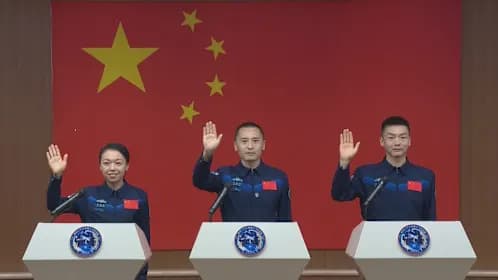
China sent three astronauts toward the Tiangong space station on Sunday, with Li Jiaying set to become the first astronaut from Hong Kong to join a Chinese space mission and one crew member preparing for a stay of a full year, the longest crewed mission in the country’s program.
The Shenzhou-23 spacecraft lifted off at 11:08 p.m. local time from the Jiuquan Satellite Launch Center in northwest China aboard a Long March-2F Y23 rocket. The crew was led by commander Zhu Yangzhu, with pilot Zhang Yuanzhi and payload specialist Li Jiaying. The mission was planned as part of China’s push to turn Tiangong from a symbol of reach into a platform for longer orbital endurance.
Li’s presence carried political as well as scientific weight. China’s space agency had said an astronaut from Hong Kong or Macao was expected to fly as early as 2026, and Hong Kong Chief Executive John Lee called Li’s selection a “historic moment.” Hong Kong government coverage said Li thanked the motherland, the Hong Kong SAR government and citizens for their support, a reminder that Beijing is using the space program to project both national unity and a wider sense of inclusion across its territory.
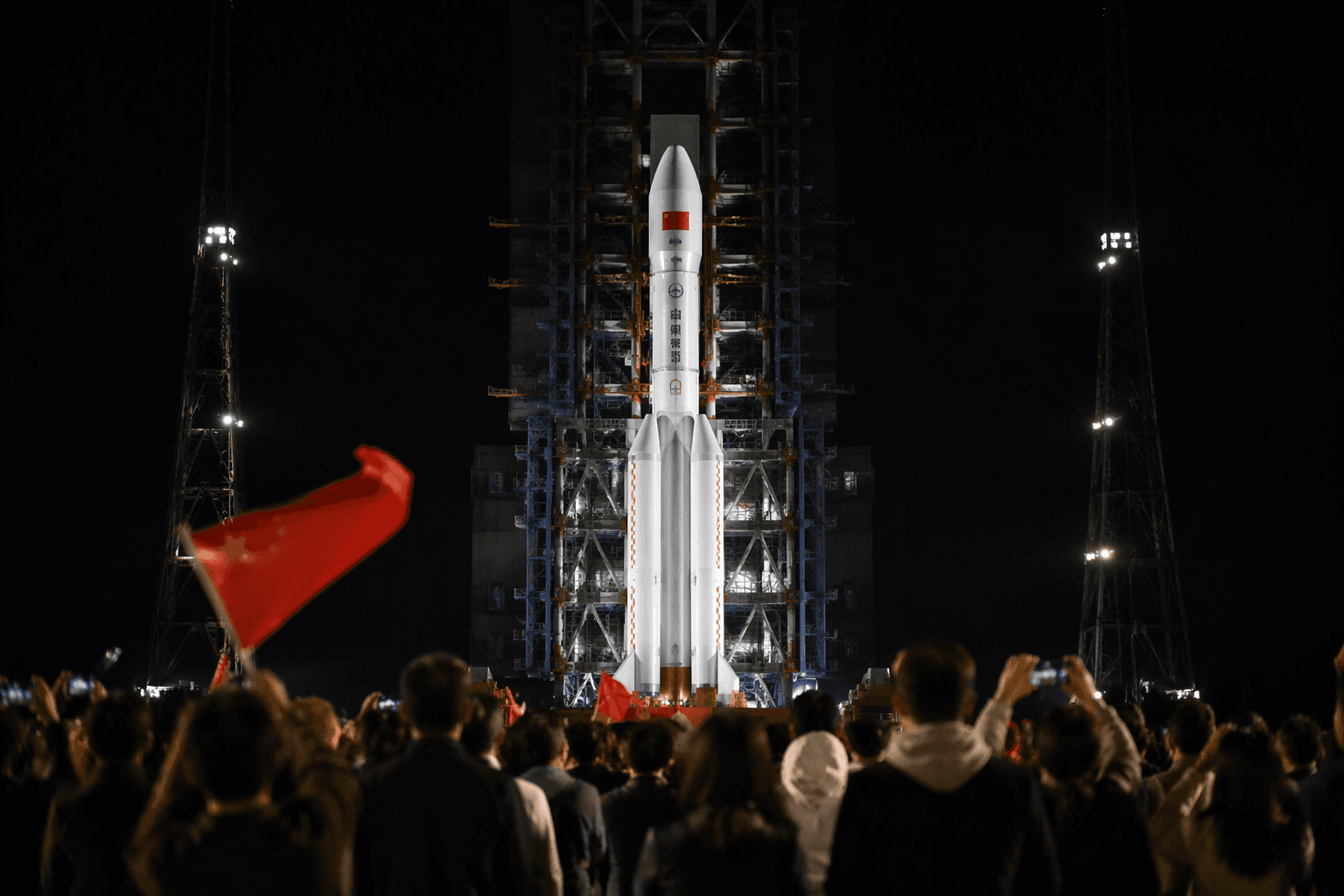
The year-long stay is meant to deepen China’s understanding of how the human body behaves under long-duration spaceflight, a question that will matter more as missions move beyond low Earth orbit. Tiangong has been continuously occupied since 2021, and China has already normalized roughly six-month rotations there. Reports in May said the Shenzhou-21 astronauts were finishing an extended seven-month mission, showing that China is already testing longer stays before pushing to a full year.
That matters in the global race to the moon. The United States has been advancing its Artemis program, including a crewed lunar trip around the moon in April 2026, while Russia’s earlier Salyut and Mir stations made it the classic model for long orbital habitation. China is now catching up on endurance, but it is also diverging: Tiangong is an independent station, and its missions are tied directly to a separate lunar road map rather than a multinational program.

China’s space officials have said the Shenzhou-23 flight is part of the country’s 2026 plan for two crewed missions and one cargo mission supporting station operations. They also described it as the 37th launch mission since the start of the manned space program and the 604th flight of a Long March rocket. That scale underscores the larger ambition behind the launch: a stepped buildup of hardware, crews and procedures for the crewed moon landing China says remains on track for 2030.
In April 2025, the official lunar program said the moon landing effort was progressing soundly, with the Long March-10 rocket, Mengzhou crew capsule, Lanyue lander, Wangyu spacesuit and Tansuo rover all under development. Shenzhou-23 is one more test of whether China can keep people alive, productive and politically visible in orbit long enough to make the leap to the moon.
This article was produced by Prism’s automated news system from verified source data, official records, and press releases, then run through automated quality and moderation checks before publishing. The system is built and supervised by the people who set the standards it runs under. Read our full AI policy.
Did this article answer your question?