China tweaks Marco Rubio transliteration, avoids lifting sanctions formally
China changed the characters in Marco Rubio’s surname, but it never formally lifted the 2020 sanctions. The tweak let Beijing keep diplomacy moving without admitting a reversal.

Online speculation got the story backwards: Beijing did not erase Marco Rubio’s sanctions by changing how his name was written. It appeared to make a narrower bureaucratic adjustment, swapping in a different Chinese character for the “lu” sound in Rubio’s surname shortly before he became secretary of state in January 2025, a change that let Chinese officials talk about him without formally undoing the penalty imposed in 2020.
The original sanctions dated to July 13, 2020, when China hit Rubio, Ted Cruz, Chris Smith, Sam Brownback and the U.S. Congressional-Executive Commission on China after Washington targeted senior Chinese officials over Xinjiang. At the time, the Chinese Foreign Ministry said the measures responded to U.S. “wrong moves” and were aimed at Rubio’s “words and deeds” on China. The sanction list stayed on the books, even as the politics around Rubio changed.
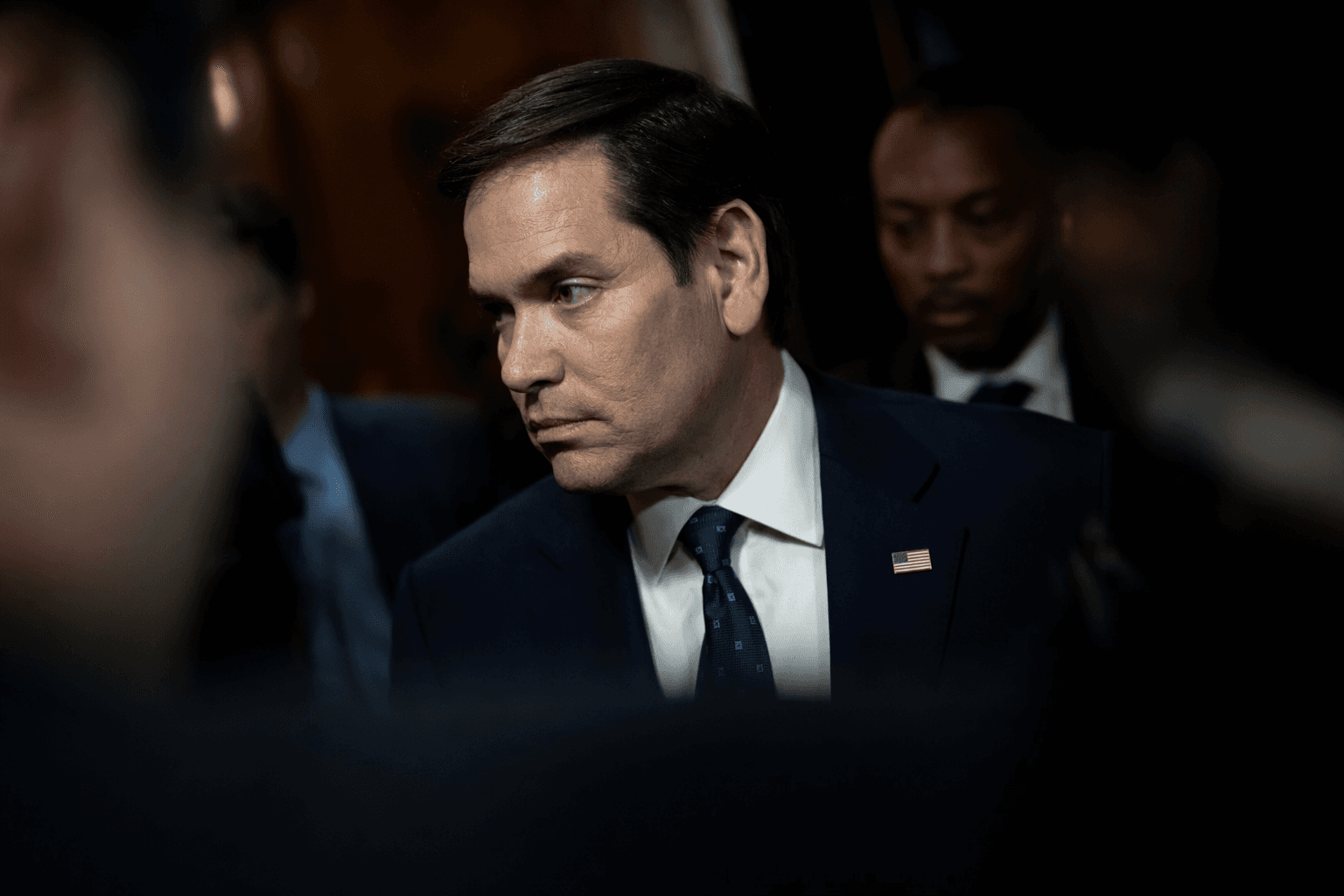
That distinction matters. A formal lift would have required Beijing to acknowledge that its 2020 response was over. Instead, multiple reports indicated that Chinese authorities and state media began using a different transliteration for Rubio’s surname around the time he took office in Donald Trump’s Cabinet. In practical terms, the workaround reduced the friction of mentioning a sanctioned official while preserving the legal fiction that the sanctions remained intact. Beijing could host Rubio, and the public could see the encounter, without a public retreat from the original punishment.
Chinese officials did not immediately spell out the shift. Foreign Ministry spokesperson Mao Ning said she had “not noticed” the transliteration issue and would look into it, while embassy spokesperson Liu Pengyu said the sanctions addressed Rubio’s conduct when he was a senator. Chinese social media and Baidu users also speculated in early 2025 about whether the sanctions would be removed, turning a technical language change into a public diplomacy problem.
The episode shows what sanctions often do, and what they do not do. They can freeze an official position, signal anger and preserve leverage; they do not always stop governments from doing business when diplomacy requires it. Beijing kept its sanctions list technically intact, adjusted the spelling on paper, and carried on with high-level dealings anyway.
This article was produced by Prism’s automated news system from verified source data, official records, and press releases, then run through automated quality and moderation checks before publishing. The system is built and supervised by the people who set the standards it runs under. Read our full AI policy.
Did this article answer your question?