China’s foie gras boom could challenge France’s dominance
China’s foie gras makers are scaling fast enough to rival France, turning a prestige import into a domestic luxury industry with global weight.
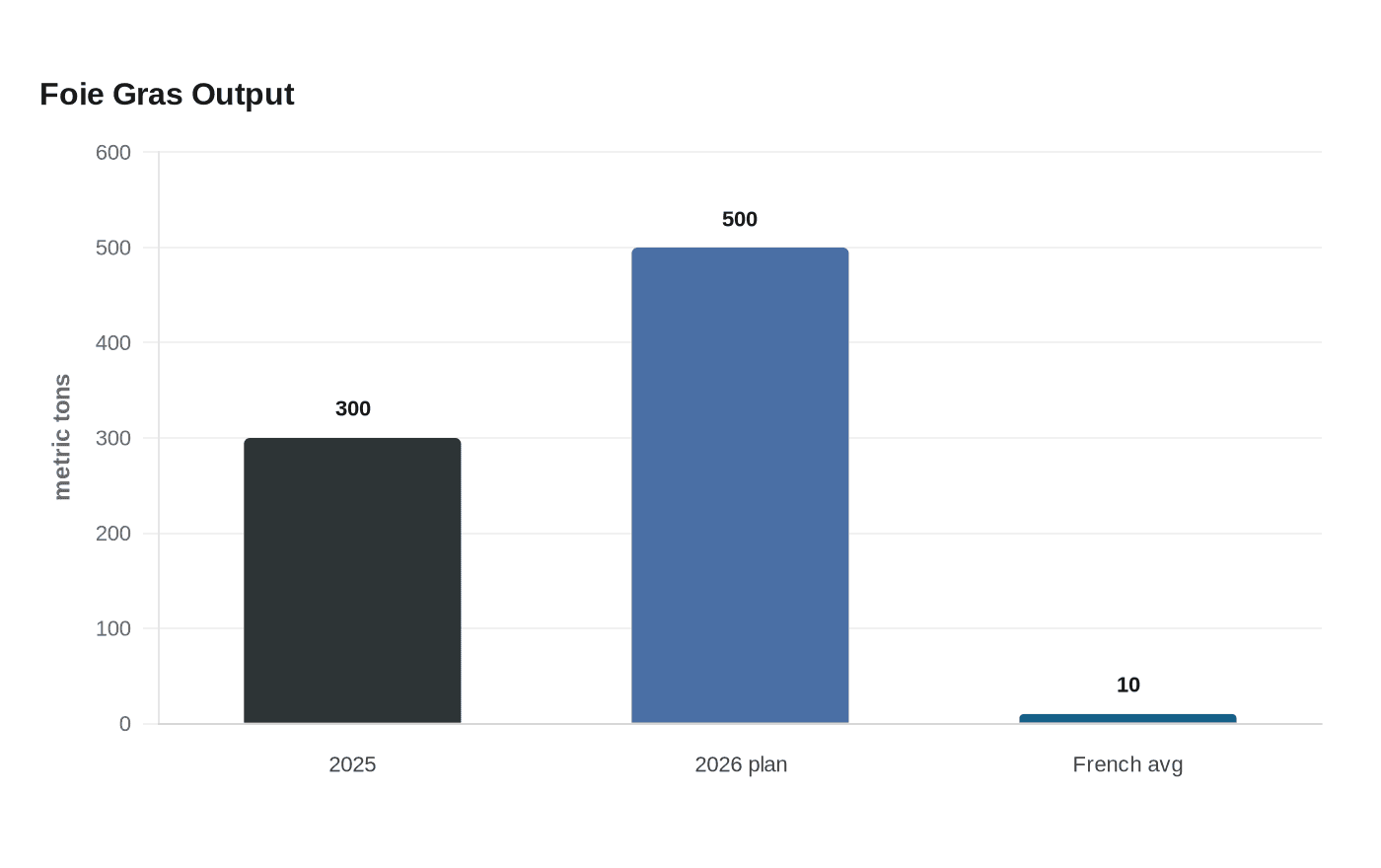
A luxury food once tied almost entirely to French tables is becoming a Chinese industrial story. In eastern China, Li Fengshan has gone from a childhood of one meal a day to driving a white Maserati SUV, financed by booming profits from his geese farm. His company, Changhao Biotechnology, produced 300 metric tons of foie gras in 2025 and plans 500 metric tons in 2026.
A farm that mirrors a national industry
Li’s rise is more than a personal success story. It captures how quickly China’s foie gras sector has moved from a niche curiosity into a scaled-up business with domestic demand strong enough to support large, specialized producers. Reuters contrasted his output with the average French producer, which makes about 10 tons a year, a gap that shows how industrialized China’s model has become.
The market has also broadened beyond a single luxury presentation. Chinese producers now sell foie gras in forms that fit everyday eating patterns, including foie gras fried rice, hotpot slices and dessert-style products flavored with cherry or rose. That shift matters because it suggests the product is no longer confined to elite dining rooms or imported holiday indulgence. It is being adapted into a wider premium-food category for Chinese consumers.
Li Fengshan, the Maserati and Changhao Biotechnology
Li is a vivid symbol of the new scale. Reuters’ profile of him shows how foie gras profits can support a fast-growing farm business in a country where premium foods are increasingly made at home rather than imported. Changhao Biotechnology’s 300 metric tons of output in 2025 already put it far above the typical French producer, and the plan to reach 500 metric tons in 2026 signals that the expansion is still accelerating.
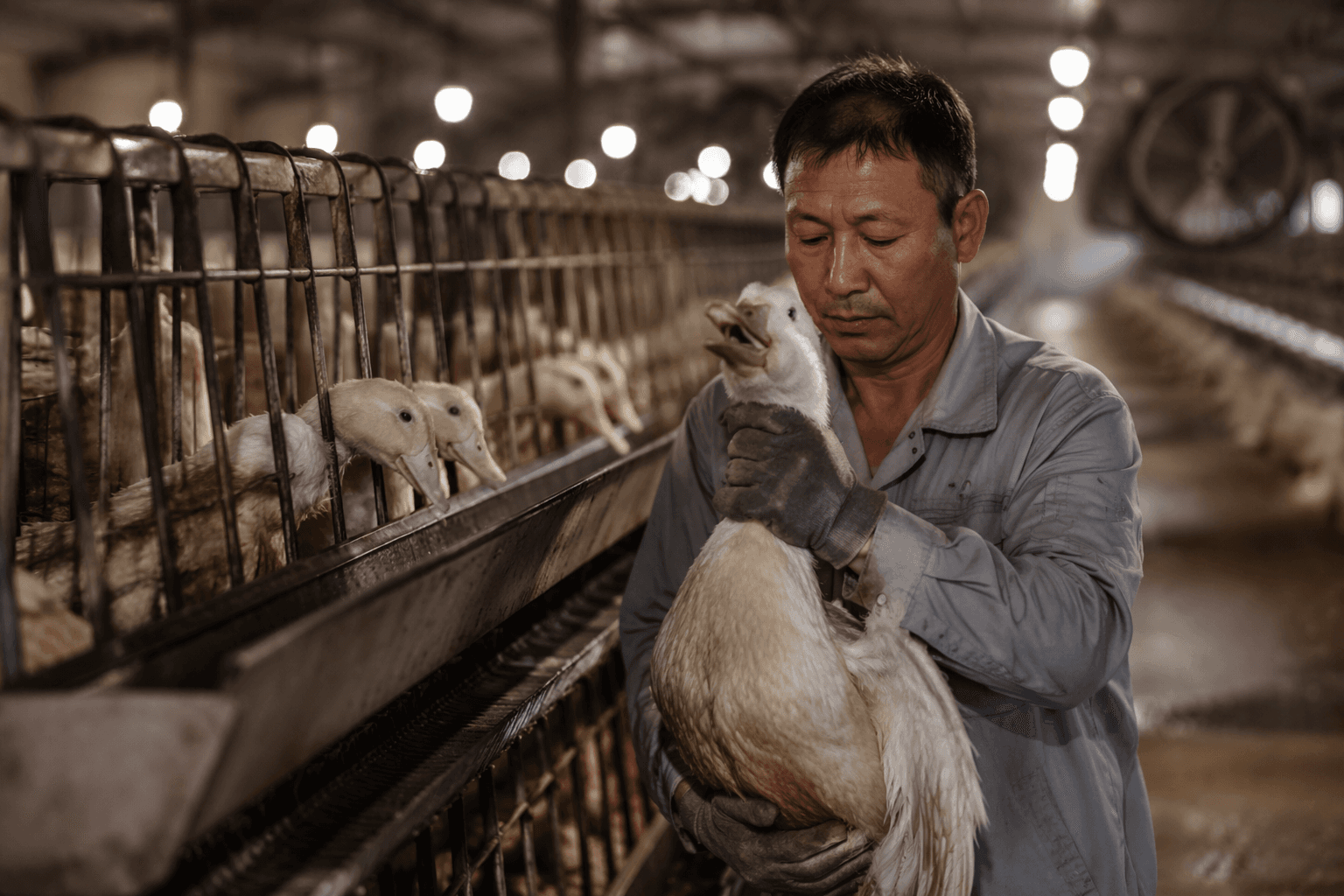
That growth also reflects a larger shift in consumer behavior. Reuters said China’s foie gras business has moved from a luxury niche to a widely available product in just a decade, driven by lower costs and rising domestic demand. In other words, China is not only taking share from France in production terms, it is also building its own prestige-food market from the inside.
Why exports remain a small piece of the story
For now, China’s foie gras boom is mostly a domestic phenomenon. Reuters said less than 5 percent of Chinese output was exported in 2025, in part because customs rules make shipments difficult. Farmers must prove the absence of some 300 chemicals after vaccination, a heavy compliance burden that limits how easily Chinese producers can reach foreign markets.
That means the real challenge is not yet export competition with France, but the creation of a large, self-sustaining home market. Official U.S. trade guidance on China shows how tightly regulated foods from disease-stricken areas can be, underscoring the wider trade friction that affects animal products. For Chinese foie gras producers, the immediate prize is not Paris or New York, but the expansion of domestic demand among Chinese consumers who increasingly want premium foods once associated with imports.
The Linqu County model shows how scale was built
China’s production base did not appear overnight. In Linqu County, Shandong, state media says producers began building the industry around French Landes geese in the 1980s. That county now produces about 5 million Landes geese a year and more than 5,000 tonnes of foie gras, accounting for roughly 70 percent of China’s domestic market and about one-fifth of global supply.
The numbers help explain why the sector can scale so quickly. Chinese industry reporting says the Linqu foie gras cluster has an annual value of about 8 billion yuan, backed by standardized feeding and epidemic-prevention systems. This is no longer a cottage industry; it is an organized supply chain with land, breeding, processing and disease-control systems built for volume.
France still leads, but the pressure is real
France remains the world’s leading foie gras producer, but its position is no longer unchallenged. Reuters cited estimates from five China-based industry analysts that Chinese output may have reached 14,000 tons in 2025, up roughly 30 percent from 2024 and far above about 2,000 tons a decade earlier. France, meanwhile, produced 15,044 tons in 2025, down 3 percent from the previous year, putting the two countries closer than many in the French industry would want.
The deeper context is France’s long struggle with avian influenza. FranceAgriMer said French raw foie gras production in 2023 was 7,740 tonnes, about 60 percent of global output, but also 60 percent below the 2011 to 2015 average after repeated outbreaks in 2016, 2017, 2020, 2021 and 2022. CIFOG says the sector rebounded to around 14,000 tons in 2024 and more than 16,800 tons in 2025, showing that French production is recovering strongly even as China expands.
Domestic demand remains central to France’s resilience. SCMP, citing French agriculture ministry data, reported that France consumed 7,275 tonnes of foie gras in 2023. CIFOG says 91 percent of French consumers say they eat foie gras, and a 2025 survey found 72 percent had already decided to eat it for the year-end holidays. That cultural attachment helps explain why France still sees foie gras as more than a commodity. It is a marker of national food identity.
A contest about prestige, not just tonnage
Together, France and China account for more than 80 percent of global foie gras output, so this is no small market skirmish. It is a symbolic power shift in a niche luxury category, where production scale, consumer taste and national identity all matter at once. China is no longer just a buyer of prestige foods from abroad; it is becoming a rival producer with domestic demand, lower-cost structures and an industrial base built for expansion.
France still owns the legacy and the brand image. China is now building the volume, the product range and, increasingly, the confidence to challenge that claim.
This article was produced by Prism’s automated news system from verified source data, official records, and press releases, then run through automated quality and moderation checks before publishing. The system is built and supervised by the people who set the standards it runs under. Read our full AI policy.
Know something we missed? Have a correction or additional information?
Submit a Tip