China's Gree runs AI-powered dark factory with 1,000 workers
Gree’s Zhuhai plant runs around the clock with hundreds of robots, trimming a 10,000-worker factory down to 1,000 and raising the stakes for U.S. manufacturers.
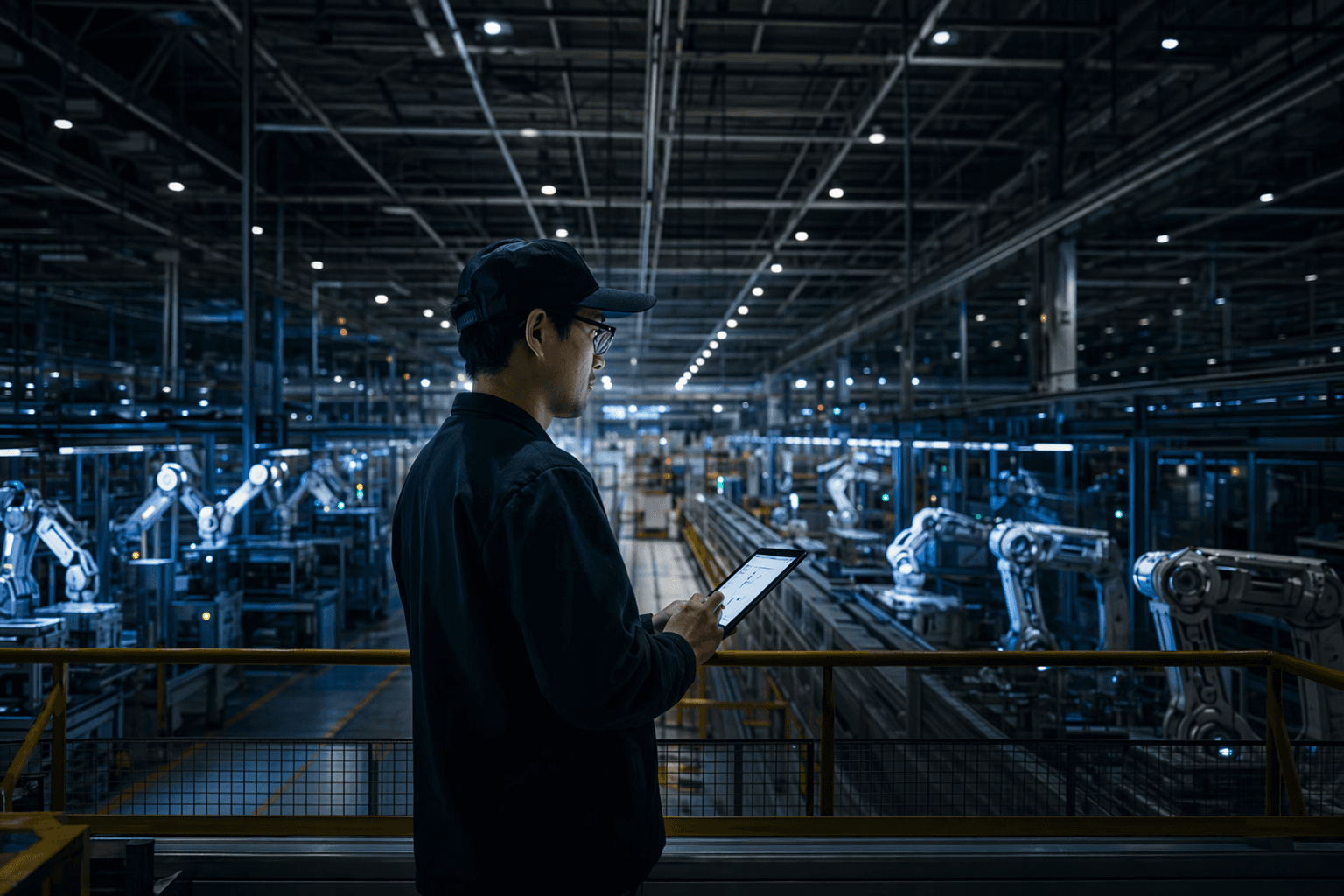
Inside a cavernous plant on the outskirts of Zhuhai, Gree is showing what industrial competition looks like when labor costs matter less than code. Hundreds of yellow robotic arms move in lockstep along a 1,500-foot assembly line that runs 24 hours a day, seven days a week, assembling about 4,000 components every 10 seconds for air conditioners. The company says a factory of that size would normally require about 10,000 workers. The AI-controlled version needs 1,000.
For Gree, China’s largest air conditioning maker, the point is not just speed. General manager Chen Huadong said the setup is “the future of manufacturing,” with “AI-supported robots everywhere” and production data flashing on giant screens at the plant’s command center. About one-third of the 1,000 workers are engineers, a sign of where the jobs are moving: away from repetitive line work and toward design, planning, installation, inspection and maintenance.
That shift carries direct implications for the United States. Gree says about 60% of its output is exported overseas, including significant sales in North America, and the company has advertised in Times Square in New York City. As Chinese producers automate faster, the advantage increasingly belongs to factories that can produce more with fewer hands, while still scaling exports into the world’s largest consumer market.
The competitive pressure is sharpened by China’s overall manufacturing footprint. CBS News noted that China already accounts for roughly 30% of global manufacturing output and that share is expected to rise to almost 50% over the next four years. The International Federation of Robotics reported 1,755,132 industrial robots working in China’s factories in 2023, up 17% from a year earlier, alongside 276,288 new installations, or 51% of global demand. On robot density, China moved ahead of Germany to rank third globally in 2023.
Gree said its smart production model began operating in 2023 and is slated to spread to 13 other air-conditioning bases in China, plus factories making other products. That matters because it points to a broader industrial template: if Washington pursues a Trump-aligned mix of tariffs, tax breaks and domestic investment incentives, it could encourage companies to build more in the United States, but also to build with more automation than before. The likely winners would be engineers, robotics suppliers and capital-heavy manufacturers. The likely losers would be assembly-line workers whose tasks can be reduced, standardized or replaced.
The lesson is not that factories will go silent, but that they will need fewer people to do more work. That tension has shadowed Chinese manufacturing for years, from Foxconn labor unrest to U.S. restrictions on imports from Xinjiang unless companies can prove goods were not made with forced labor. Gree’s dark factory shows where the industrial race is heading: not just toward more production, but toward production organized around machines, data and the shrinking role of human labor.
This article was produced by Prism’s automated news system from verified source data, official records, and press releases, then run through automated quality and moderation checks before publishing. The system is built and supervised by the people who set the standards it runs under. Read our full AI policy.
Did this article answer your question?

