China’s homeowners challenge developer control in neighborhood governance fight
Homeowners signed petitions, rallied and met over karaoke to weigh how far to push authorities in a dispute with a developer.
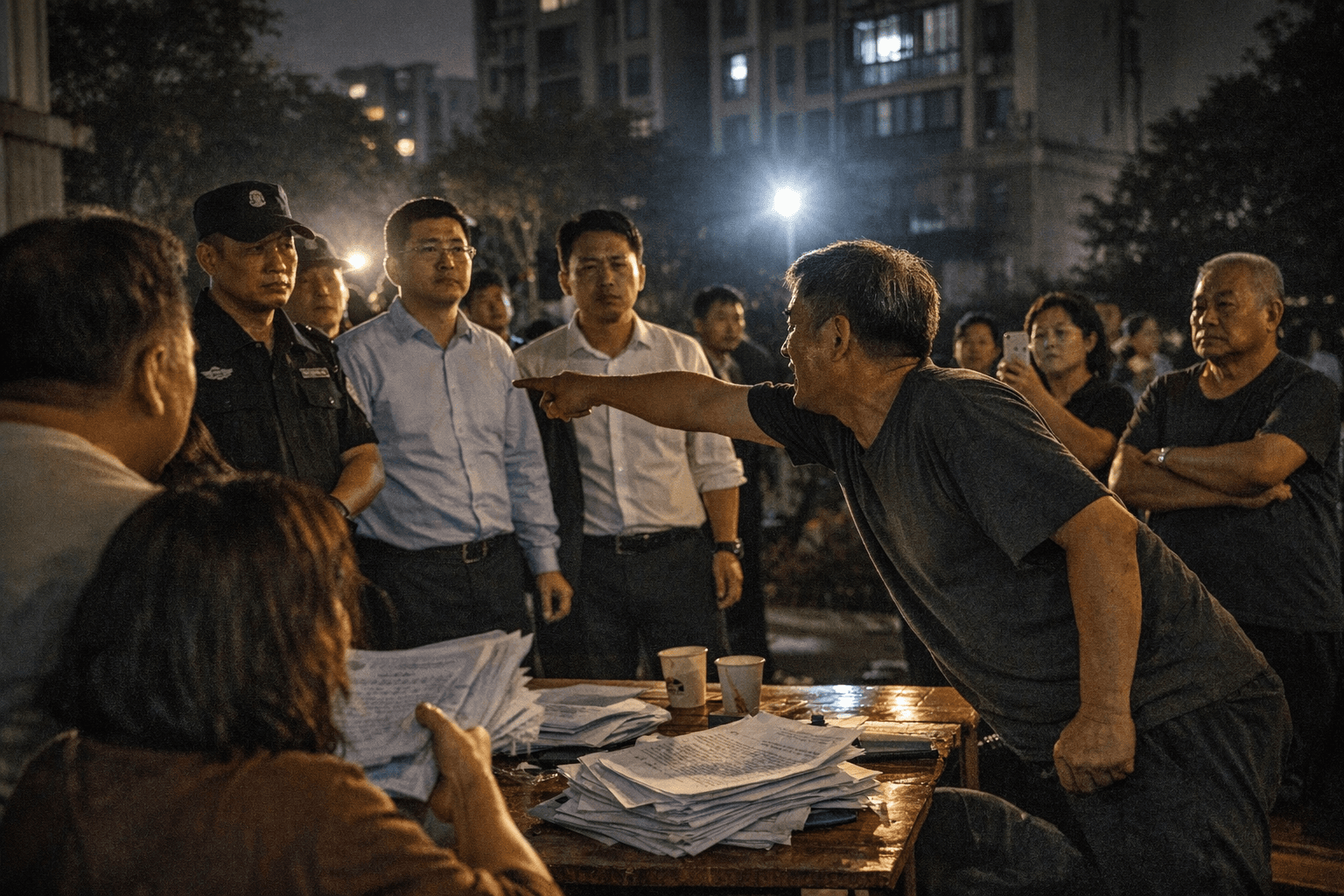
Homeowners signed petitions, staged rallies and met over karaoke to decide how hard to press their dispute with a developer. What began as a neighborhood fight over management and control has become a sharper test of how much collective power Chinese residents can assemble before formal authority closes in.
The conflict sits inside a system that gives owners title to their apartments but not the land beneath them, leaving developers, property managers and local officials with considerable influence over daily governance. China’s Property Law says the department concerned of the local people’s government shall give guidance and assistance to the formation of an owners’ assembly and the election of an owners’ committee, but practice has varied widely across cities and compounds. That gap has made homeowners’ committees and homeowners’ associations one of the few arenas where residents can press for say over common areas, parking spaces, shared facilities, fees and elections.
Scholarship on urban China traces this wave of activism to around 2005, when homeowners’ rights organizing began to take shape in major cities. In one Beijing case, activists gathered more than 180,000 signatures for a petition, a sign of how quickly neighborhood grievances could scale beyond a single compound. Researchers also found that effective collective action in Beijing, Shanghai and Shenzhen depended on strong leaders, a functioning homeowners’ committee, a united homeowner bloc, clear strategy and control over financial resources.
That mix helps explain why these disputes matter far beyond any one gate or apartment block. Other research argues that the Chinese state has viewed homeowners’ associations as useful for social stability at the grassroots level even as it has sought to regulate and contain them. The result is a narrow civic space in which residents can organize, but only under conditions that remain vulnerable to pressure from above.
The policy stakes have reached national review. In 2026, an official property-management review said a local rule barring homeowners’ committee candidates who had not paid property fees on time was inconsistent with the Civil Code and was amended. The episode showed that neighborhood governance disputes can rise from compound-level conflict to legal and policy correction.
The broader backdrop remains one of sustained dissent under tight controls. Freedom House’s China Dissent Monitor reported 6,396 dissent events in April-June 2024, underscoring that collective action remains frequent even when information and organizing are closely watched. For China’s homeowners, the local fight over a developer is also a measure of how far resident self-rule can go in cities where private property, collective action and state control collide.
This article was produced by Prism’s automated news system from verified source data, official records, and press releases, then run through automated quality and moderation checks before publishing. The system is built and supervised by the people who set the standards it runs under. Read our full AI policy.
Did this article answer your question?