China’s land grab in the South China Sea inspires rivals
China’s island-building has normalized a dangerous race across the South China Sea. Vietnam is now expanding too, raising the odds of a clash over trade lanes, law and U.S. interests.

How a legal defeat became a physical race
China’s effort to turn reefs into runways and ports did more than widen its own footprint. It taught every other claimant in the South China Sea that if law is not enforced at sea, concrete can become policy faster than diplomacy can keep up. The result is a regional scramble built on hardened facts on the water, with Vietnam now dredging aggressively, the Philippines under constant pressure, and the wider balance of power tilting toward whoever can build first.
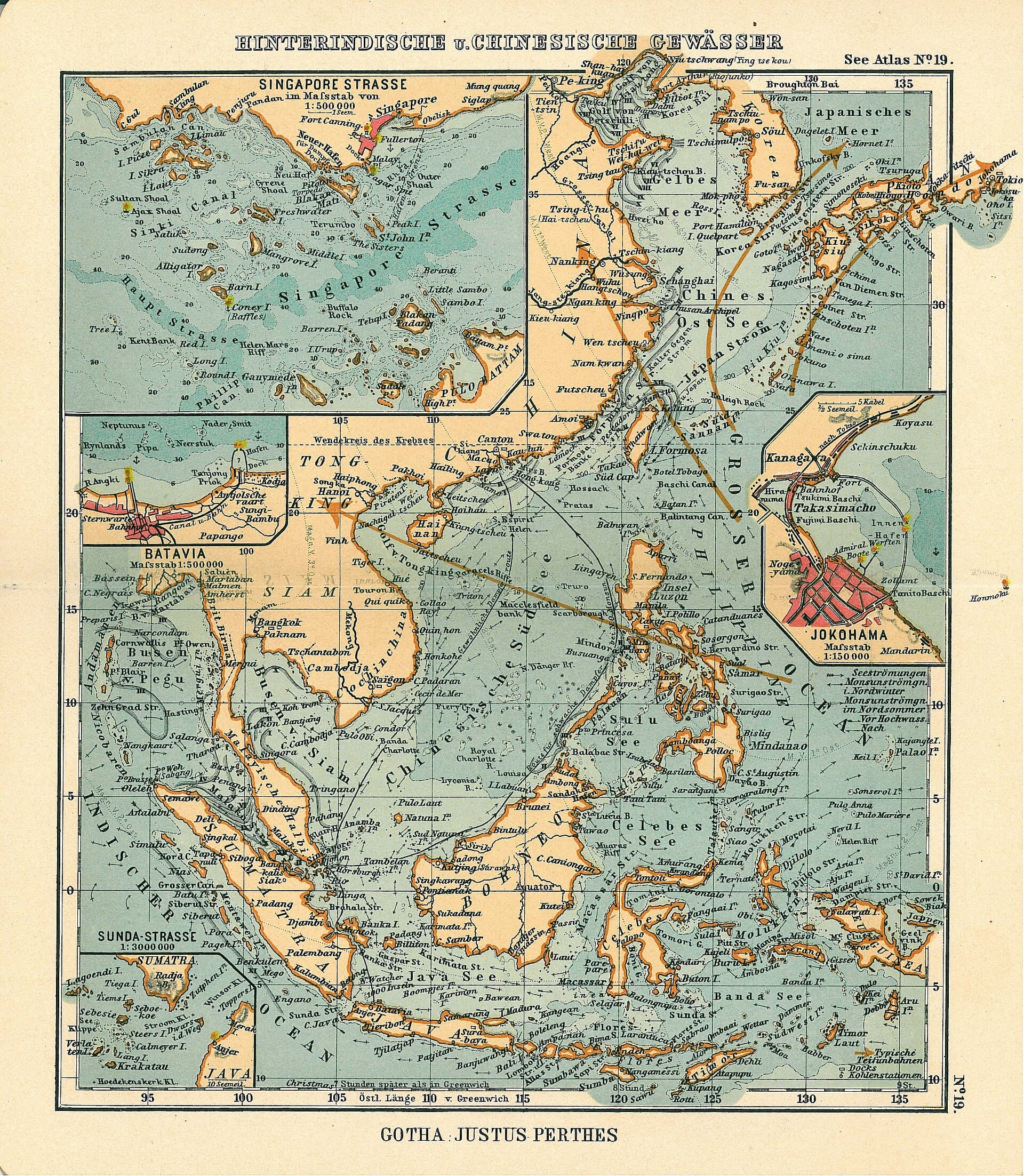
The South China Sea spans almost 3.5 million square kilometres and remains one of the world’s most consequential maritime spaces. It is not only a contested map of reefs and shoals, but also a major global shipping corridor, a route where freedom of navigation affects trade, energy flows and the credibility of international law. The sea is also believed to contain about 11 billion barrels of untapped oil and 190 trillion cubic feet of natural gas, which helps explain why the contest has never stayed a narrow sovereignty dispute.
China set the precedent
China, Vietnam, the Philippines, Malaysia, Brunei and Taiwan all assert overlapping claims across the sea. The contest began to harden as early as the 1970s, when states started staking out islands and zones in the Spratly Islands, a remote chain prized for rich fisheries and believed to sit atop major hydrocarbon reserves. Beijing has since built ports, military installations and airstrips in both the Paracel and Spratly Islands, and the Council on Foreign Relations says China maintains 20 outposts in the Paracels and seven in the Spratlys.
The biggest legal blow to Beijing came on July 12, 2016, when a Permanent Court of Arbitration tribunal ruled in favor of the Philippines under the United Nations Convention on the Law of the Sea and rejected key elements of China’s nine-dash-line claim. China has refused to accept the ruling, and that refusal has mattered far beyond the legal file. It signaled that a strong state could absorb an unfavorable judgment and keep changing the physical reality anyway.
That approach has now helped normalize a wider race to fortify occupied features. Five claimants occupy nearly 70 disputed reefs and islets in the South China Sea, and they have built more than 90 outposts on those contested features. Once one state proves that dredging can turn reef claims into permanent positions, others feel pressure to do the same or risk being left behind.
Vietnam is matching the method, even if not the scale
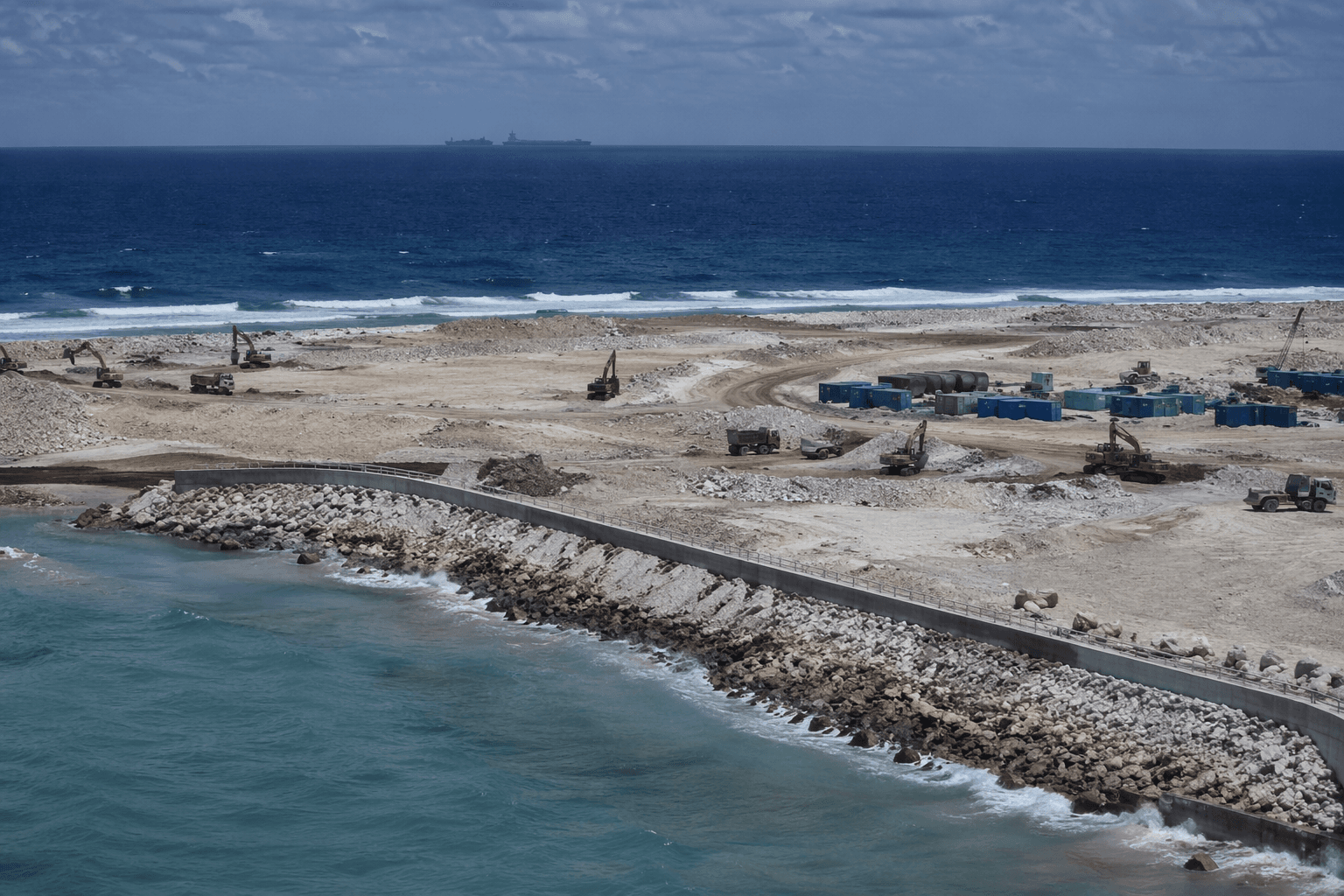
Vietnam has sharply accelerated its own dredging and landfill work in the Spratly Islands. A Chatham House analysis said the activity, identified in 2022, expanded dramatically in 2024 and is centered on six key reefs, a pattern the think tank described as worsening regional tension. Satellite imagery has shown large-scale reclamation on coral island reefs controlled by Vietnam, a sign that the competition is no longer one-sided.
The Asia Maritime Transparency Initiative said in June 2024 that Vietnam had added 692 new acres since November 2023, bringing its total dredging and landfill in disputed South China Sea areas to about 2,360 acres, roughly half of China’s 4,650 acres. AMTI later said Vietnam had added another 641 acres, lifting its total to about 3,319 acres, or roughly 71 percent of China’s total. That trajectory matters because it shows a state once seen mainly as a defender of existing holdings now building out its own positions at pace.

Reporting tied to the same buildup pointed to cutters and dredgers as the tools that have made expansion faster and more scalable. Barque Canada Reef has been one of the sites where Vietnam has created large new land areas and harbor works, while other contested reefs, including Namyit Reef, fit into the broader pattern of fortification. Regional analysts say Vietnam’s behavior appears defensive, aimed at protecting what it already controls as China keeps pressing its expansive claims.
The Philippines sits at the sharpest edge
If the dispute is becoming more crowded, the Philippines remains the most visible flashpoint. At Second Thomas Shoal and Scarborough Shoal, China has relied on gray-zone tactics that stop short of open war but still change conditions on the water. Those tactics have included ramming, blocking, shadowing, water cannons and lasers, all designed to wear down Philippine access without crossing the threshold that would trigger a major military response.
The pressure on Manila is not just local. The United States has long said that freedom of navigation and military activity in exclusive economic zones are protected under UNCLOS, and Washington has backed a binding code of conduct while also conducting freedom of navigation operations and supporting Southeast Asian partners. The U.S.-Philippines Mutual Defense Treaty dates to 1951, which means any escalation around Philippine forces could carry implications far beyond the shoals themselves.
That is why the South China Sea now matters to U.S. regional interests as much as to the claimants themselves. A broader China-Philippines clash would test the credibility of alliance commitments, the durability of maritime law and the willingness of outside powers to prevent faits accomplis from becoming permanent borders. The danger is not simply a naval incident, but a slow erosion of restraint that makes miscalculation more likely.
Why the risk keeps rising
RAND said in June 2024 that the odds of armed conflict in the South China Sea were high and rising, a warning rooted in the cumulative effect of repeated coercion and counter-buildout. The more each side invests in concrete, the harder it becomes to step back without appearing to concede ground. That is the strategic trap created by years of weak enforcement: every new pier, airstrip and harbor becomes both a symbol and a bargaining chip.
The broader strategic consequence is that the South China Sea is being rewritten feature by feature. China’s island-building did not just strengthen Beijing’s position, it set a precedent that others now feel compelled to follow in order to avoid strategic loss. In a region where maritime law, trade routes and alliance credibility are all tied to the same narrow waters, the most dangerous change is not a single confrontation. It is the steady normalization of confrontation as the price of holding ground.
This article was produced by Prism’s automated news system from verified source data, official records, and press releases, then run through automated quality and moderation checks before publishing. The system is built and supervised by the people who set the standards it runs under. Read our full AI policy.
Know something we missed? Have a correction or additional information?
Submit a Tip