China's Li Qiang Promises Equal Treatment for Foreign Firms Amid Record Trade Surplus
Premier Li Qiang pledged to open China's economy and pursue balanced trade, seeking to reassure foreign investors as Beijing's 2025 trade surplus hit $1.2 trillion.
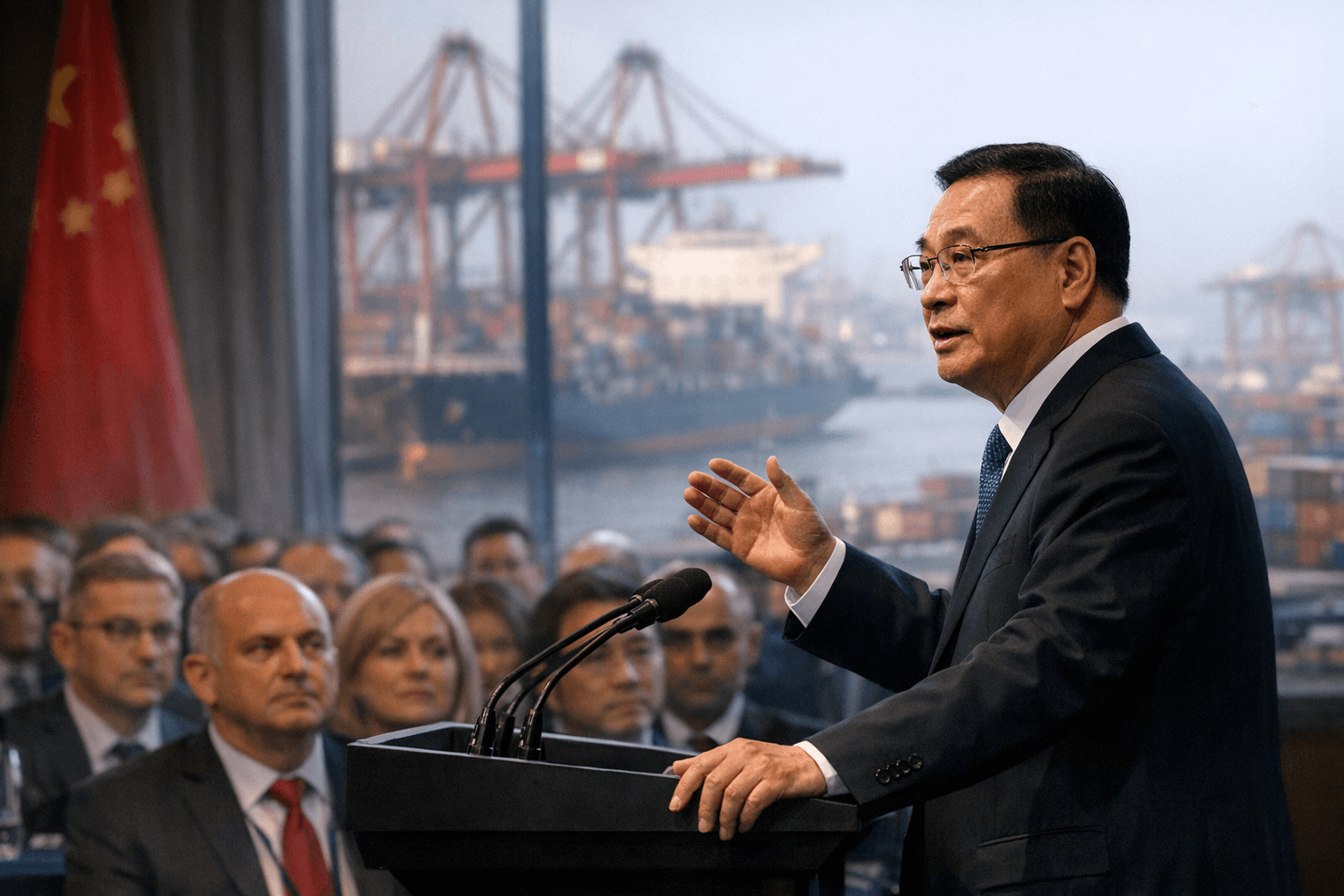
Against the backdrop of a record $1.2 trillion trade surplus and a year marked by trade friction and tariff wars with the United States and European Union, Chinese Premier Li Qiang stood before global business leaders Sunday and pledged to level the playing field for foreign companies operating in China.
Speaking at the opening session of the China Development Forum at Beijing's Diaoyutai State Guesthouse, Li committed to "further open up the economy and fully implement national treatment for foreign enterprises," promising that companies from all countries could "develop with confidence and realise their ambitions in China." The annual two-day forum, which draws foreign executives, Chinese officials, economists and academics, runs through Monday.
"We take our trading partners' concerns seriously, and we are ready to work with all parties to promote the sound and balanced development of trade," Li said. He added that China would "import more high-quality foreign goods and work with all parties to promote optimized and balanced trade development and expand the global trade pie."
Li identified specific sectors where China would expand market access, saying Beijing would "further widen market access for the services sector and increase imports of medical and healthcare products, digital technologies and low-carbon services to provide more business opportunities for foreign companies." He cast China as a stabilizing force in an unsettled global economy, describing the country as a "cornerstone of certainty" and "harbour of stability" for world trade.
In a separate meeting on the forum's sidelines, Commerce Minister Wang Wentao met with leaders from a U.S. pharmaceutical trade group and executives from five major multinational drug companies, telling them China would strengthen intellectual property protection and improve policy transparency, Bloomberg reported. IP protection and opaque regulatory processes have ranked among the most persistent grievances cited by foreign businesses operating in China.
The reassurances came at a moment of acute pressure. Foreign direct investment into China continues to decline, according to CNBC, even as Chinese exports surged in the first two months of 2026. The Business Times noted that the conflict in Iran has compounded risks for China's economy by upending energy markets and disrupting trade flows, though China entered the year with a surprising uptick in domestic consumption and investment.
The guest list underscored the forum's weight as a diplomatic venue for business. Senior executives from Apple, Samsung Electronics, Volkswagen, Broadcom, Siemens, BASF, and Novartis were among those attending, Reuters reported. Apple CEO Tim Cook delivered remarks broadcast live on screens throughout the venue. Notably, Reuters observed that no Japanese company executives appeared on the forum's published guest list.
Beijing faces a credibility challenge in translating Li's pledges into practice. Global capitals have grown increasingly vocal about China's trade practices, industrial overcapacity, and the risks of overreliance on key Chinese exports, Bloomberg reported. The national treatment commitment, while not new in principle, has historically been undermined by regulatory asymmetries that foreign firms say favor domestic competitors.
Whether Sunday's pledges mark a substantive shift or a messaging exercise calibrated to ease trade tensions will depend on the policy detail that follows. The forum concludes Monday.
This article was produced by Prism’s automated news system from verified source data, official records, and press releases, then run through automated quality and moderation checks before publishing. The system is built and supervised by the people who set the standards it runs under. Read our full AI policy.
Did this article answer your question?