China’s population declines again to 1.405 billion, data show
China’s population fell for a fourth consecutive year to 1.405 billion, intensifying policy challenges around aging, labor supply and long-term growth. The decline sharpens questions about pensions and consumption.
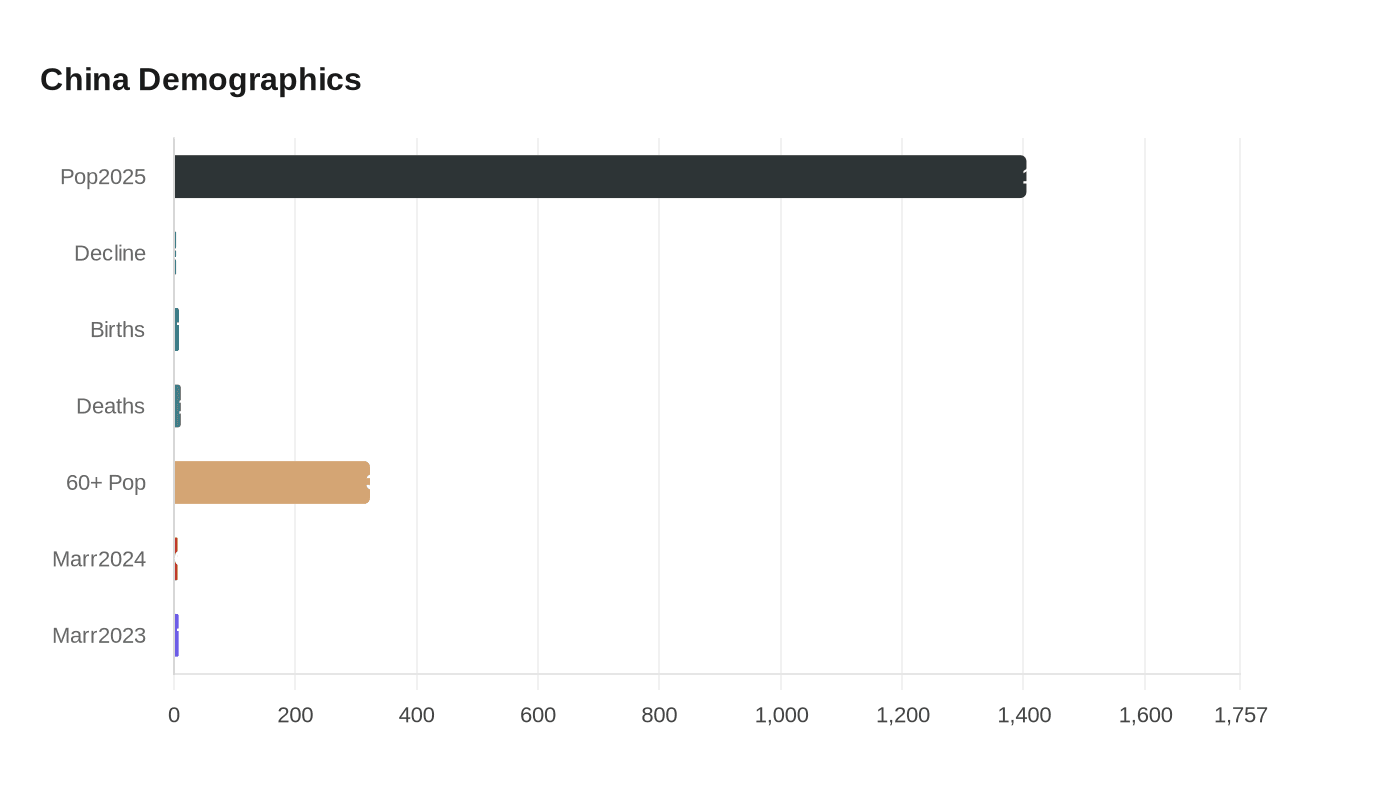
China’s population fell for a fourth consecutive year in 2025 to 1.405 billion, the National Bureau of Statistics said Monday, confirming a headcount decline of 3.39 million and underscoring a persistent and accelerating demographic shift. Births slipped to 7.92 million, the lowest level in decades, while deaths rose to 11.31 million, widening the natural decrease that is shrinking the population.
The NBS data show the over-60 population reached 323 million in 2025, or 23 percent of the total, up one percentage point from 2024. The growing share of elderly citizens comes as fewer young adults are forming families: marriages plunged by about one-fifth in 2024, with more than 6.1 million couples registering compared with 7.68 million the year before. A May 2025 rule allowing couples to register marriages anywhere in the country rather than only at their place of residence may ease administrative barriers and could produce a modest temporary uptick in registrations and births, demographers say, but the underlying fertility decline appears more durable.
Multiple news feeds briefly circulated a typographical error rendering the decline as 339 million; the NBS figures and official releases make clear the correct decline is 3.39 million. The scale and direction of the change, not the errant digit, matter for policy and markets: fewer births and a rising mortality rate are combining to shorten China’s working-age base and lengthen the period over which more retirees depend on public and private pensions.

Analysts point to long-running structural causes. The legacy of decades of strict family planning, urbanization, higher female education and participation in the labor force, and the steep cost of housing and child-rearing have changed preferences about marriage and childbearing. Observers draw parallels with Japan and South Korea, where similar social and economic transformations produced prolonged low fertility and sustained aging, complicating efforts to maintain consumption-led growth.
The demographic trend has broad economic consequences. A shrinking labor force will constrain potential growth, complicate Beijing’s efforts to rebalance the economy toward domestic consumption and to deleverage local governments and state-owned enterprises. Pension systems face mounting pressure as the ratio of workers to retirees declines, and higher health and eldercare spending will demand fiscal adjustments or benefit reforms. Internationally, slower Chinese demand could ripple through global supply chains and commodity markets, while an older workforce may affect innovation dynamics and foreign investment decisions.
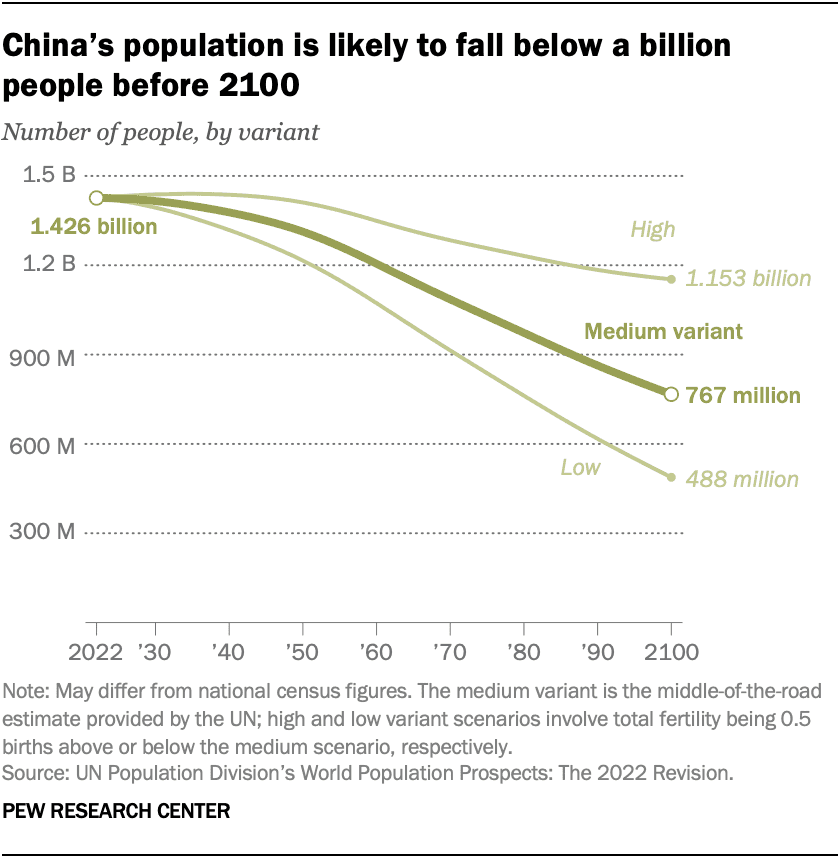
Long-term projections underscore the challenge. United Nations researchers warned in 2024 that China’s population could fall sharply by 2100 if current patterns persist; separate studies from Victoria University and the Shanghai Academy of Social Sciences suggested even steeper declines under unchanged behavior and policy. For Beijing, the immediate task is to combine short-term incentives and social policy reforms to ease the cost of family formation with broader economic strategies that sustain living standards amid a structurally older population.
Policymakers face delicate trade-offs: measures to boost fertility must contend with deep cultural and economic factors, while fiscal and labor reforms will be essential to preserve social stability and China’s role in the global economy as its demographic profile continues to shift.
This article was produced by Prism’s automated news system from verified source data, official records, and press releases, then run through automated quality and moderation checks before publishing. The system is built and supervised by the people who set the standards it runs under. Read our full AI policy.
Did this article answer your question?