China's solar giants race into battery storage as prices sink
China’s solar giants are shifting into batteries as panel prices hit record lows and exports slow, with JinkoSolar set to nearly triple storage capacity.
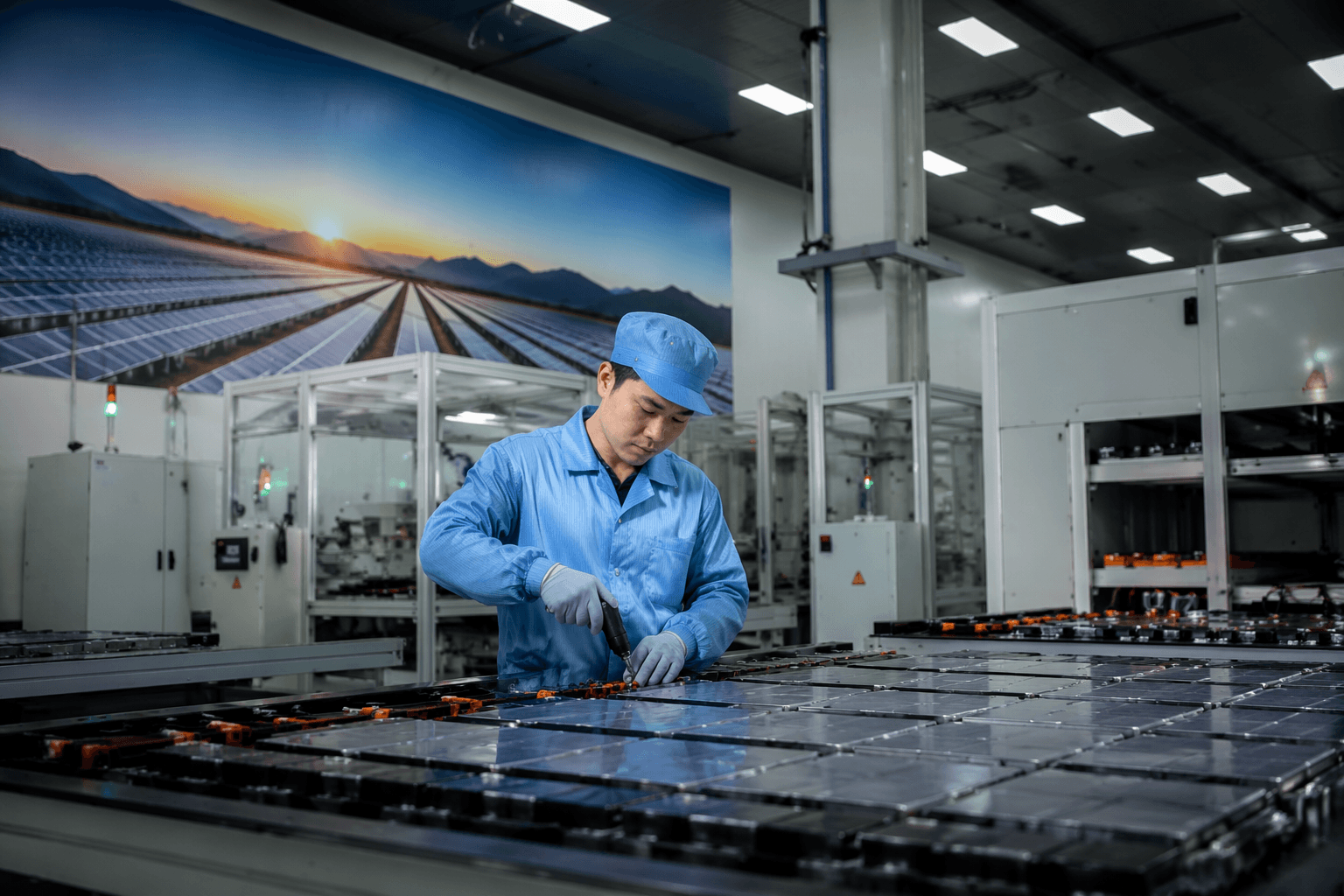
China’s biggest solar-panel makers are rushing into battery storage as the economics of modules deteriorate, turning a once-secondary business into a central hedge against oversupply, weak prices and slowing demand. JinkoSolar, JA Solar, LONGi Green Energy and Trina Solar are all pushing harder into storage as domestic installations soften, exports lose momentum and photovoltaic prices sink to record lows.
The pivot is already showing up in capacity plans. JinkoSolar aims to raise battery manufacturing capacity from 5 gigawatt-hours to 13 to 14 GWh by the end of 2026, a near-tripling that signals how aggressively the company is rebalancing its growth strategy. At Shanghai’s SNEC PV+ 2026 exhibition, which ran from June 3 to 5, JA Solar gave storage prominent billing, underscoring how quickly the sector is rebranding around integrated solar-plus-storage systems rather than modules alone.

Executives are treating that shift as more than a side bet. One Trina Solar executive described energy storage as “the second growth curve after photovoltaics,” capturing the industry’s view that batteries can help replace margin pressure in panels while also making renewable power more usable on the grid. The appeal is strongest in markets with high renewable penetration and a growing need for grid-balancing hardware, including Japan, Vietnam, India, Germany, the Netherlands, the United States and Australia.
The numbers help explain the urgency. China’s solar-panel exports grew just 4.7% in 2025, the slowest pace since 2018, and growth from May through December 2026 is expected to trail the first four months of the year. At the same time, global battery shipments from China are forecast to jump 30% to 150 GWh in 2026, a much stronger outlook than the panel market now offers. Industry executives also expect global photovoltaic demand to decline in 2026, making storage look like a strategic priority rather than a defensive add-on.
The move also puts solar manufacturers into sharper competition with established battery leaders such as CATL and BYD. Solar firms are betting that their supply-chain reach, engineering know-how and ability to package generation and storage into a single project will win business even in a crowded market. That bet comes as losses across the sector have widened, including LONGi Green Energy’s first-half 2025 net loss of 2.6 billion yuan, down from 5.2 billion yuan a year earlier, a sign that even the strongest players are still fighting through a brutal reset.
This article was produced by Prism’s automated news system from verified source data, official records, and press releases, then run through automated quality and moderation checks before publishing. The system is built and supervised by the people who set the standards it runs under. Read our full AI policy.
Did this article answer your question?

