China’s strong start clouds as Middle East war hits growth outlook
China posted a 5.0% first-quarter expansion, but a Middle East shock is lifting energy costs and threatening the export engine behind the rebound.
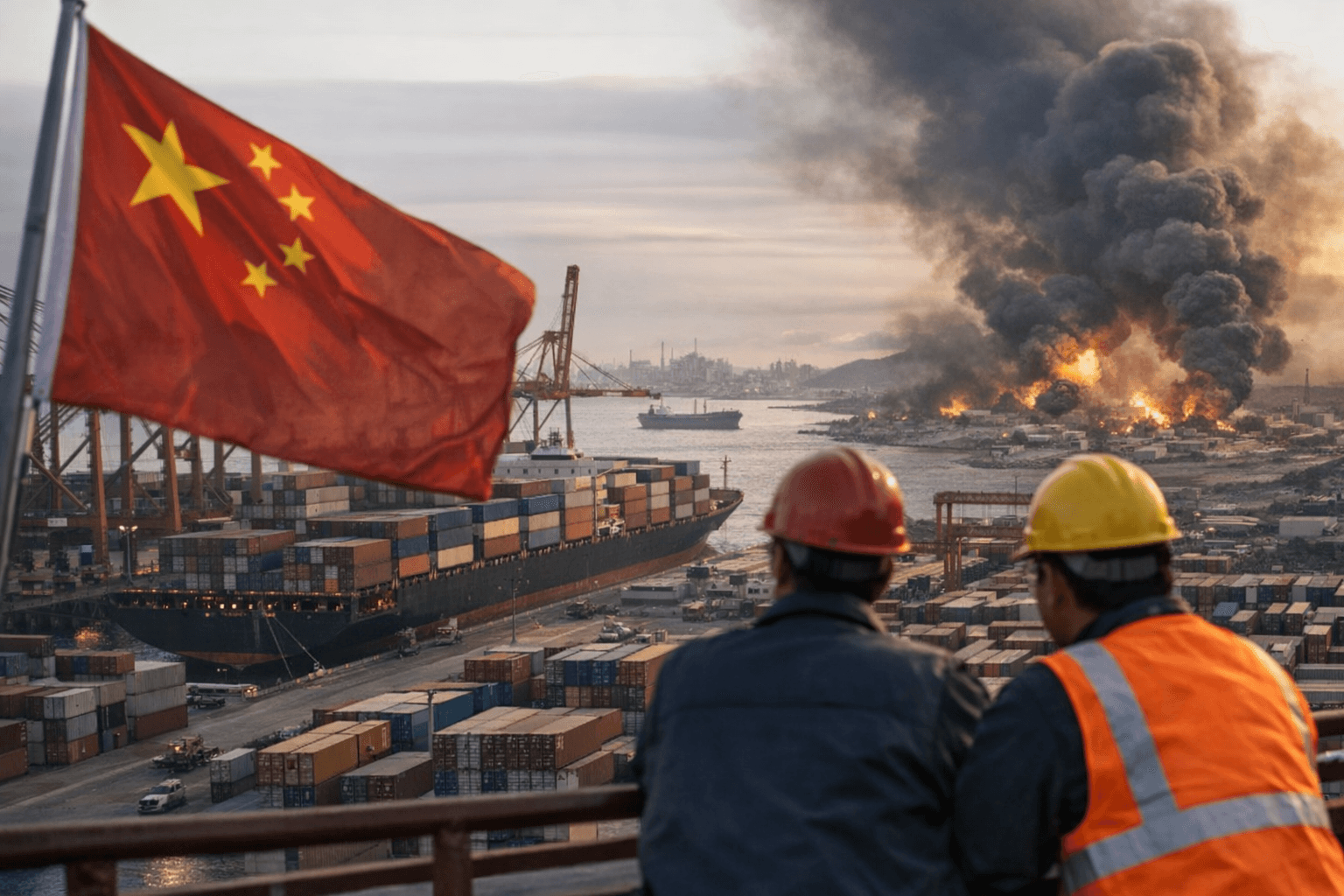
China entered 2026 with more momentum than many expected, only to see that outlook darken as war in the Middle East pushed up energy and transport costs and threatened demand for its goods. The tension is stark: a stronger first quarter on paper, and a more fragile second half if the shock persists.
Official data from the National Bureau of Statistics of China showed the economy grew 5.0% year on year in the first quarter, with gross domestic product reaching 334,193 billion yuan. Industrial output rose 6.1%, retail sales increased 2.4%, fixed-asset investment gained 1.7% and total goods trade climbed 15.0%. The surveyed urban unemployment rate averaged 5.3%, underscoring that the recovery still rested on uneven domestic footing.
Before those figures were released, a poll of economists had pointed to a 4.8% first-quarter expansion, with growth expected to ease to 4.7% in the second quarter and 4.6% for full-year 2026. That would still sit inside Beijing’s 4.5% to 5.0% target range, but it also suggested the strongest part of the rebound may already have passed.
Exports had carried much of the early-year lift. Shipments surged in January and February, driven in part by technology goods, and at one point looked capable of pushing China toward another huge trade surplus after last year’s record $1.2 trillion. But March brought a sharp slowdown, with export growth cooling to 2.5% year on year from 21.8% in January and February. The latest war-related disruption has raised the risk that the March pace becomes the new normal.
That vulnerability matters because China is both the world’s biggest energy importer and one of its most export-reliant major economies. Higher oil prices and more expensive shipping hit Chinese factories directly, while weaker global purchasing power can quickly feed back into orders. Nearly 40% of China’s exports go to lower-income emerging markets, making the country especially exposed when higher fuel bills squeeze consumers and businesses abroad.
Goldman Sachs economist Xinquan Chen said exports remain a key growth engine, but the energy shock has shifted the focus to whether external demand can stay strong. If the Middle East conflict continues to disrupt the Strait of Hormuz and keep costs elevated, Beijing may need to lean harder on domestic policy support to preserve growth in the second half of the year.
Know something we missed? Have a correction or additional information?
Submit a Tip