Chinese activist granted asylum after U.S. detention - freed and reunited
A U.S. immigration judge granted asylum to Guan Heng, who exposed Xinjiang detention camps; he was released from custody Feb. 4 and DHS has 30 days to appeal.
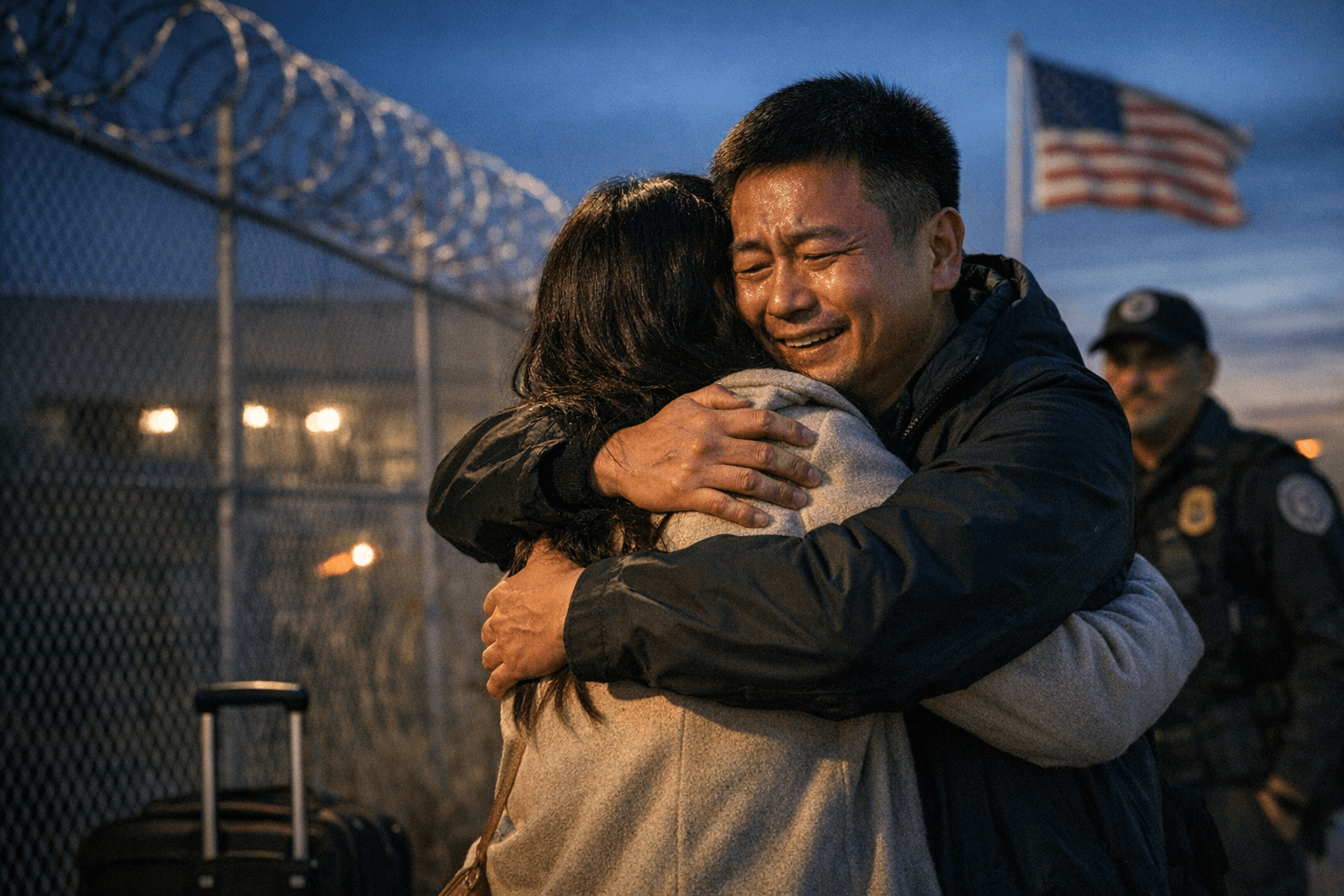
Guan Heng, the Chinese activist who secretly filmed detention facilities in Xinjiang and published the footage, was released from U.S. immigration custody on Feb. 4 after an immigration judge granted him asylum at the end of January. The ruling, dated Jan. 28, concluded that Guan had a “well-founded fear” of persecution if returned to China, clearing the path for his release nearly a week later. Department of Homeland Security officials have 30 days to decide whether to appeal.
Guan, 38, had been held since August 2025 after being swept up in a mass deportation operation by the Trump administration. He had applied for asylum after arriving in the United States in 2021 following travel through Hong Kong, Ecuador and the Bahamas before reaching Florida, where he filed his claim. His case drew intense public and congressional attention after officials at one point sought to deport him to Uganda; that plan was dropped in December 2025 even as the underlying deportation proceedings remained active.
The judge’s finding centered on the risk of retaliation by Chinese authorities. The court noted that Guan’s family had already been questioned and concluded that his documented work exposing detention and internment sites in Xinjiang made persecution a reasonable prospect. Activists and journalists estimate that as many as 1 million Uyghurs and other Muslim minorities have been detained in Xinjiang at the height of Beijing’s campaign of mass incarceration and reeducation. Guan’s videos, published under the username guanguan and circulated internationally in 2021, were presented by his legal team as central evidence of the danger he faced.
Guan spoke during his asylum hearing via video from Broome County Correctional Facility in upstate New York and later reunited with his mother, Luo Yun, who traveled from Taiwan. On release he said, “I'm in a great mood … I didn't feel the excitement yesterday. I felt I was still in prison, but today many friends have come to see me.” At the hearing, through a translator, he told the court, “I sympathized with the Uyghurs who were persecuted.” His mother said, “For five and half months I didn’t sleep one good sleep, but today I feel assured.” Representative Ro Khanna, who had pressed for scrutiny of the case, said Guan “should not have had to spend months in detention for the right outcome to be reached.”
The outcome carries policy implications beyond one man’s fate. Grants of asylum for high-profile dissidents remain rare in the current enforcement environment, where large-scale deportation operations have heightened uncertainty for asylum seekers and advocacy groups. The case also underscores the friction between immigration enforcement priorities and human rights concerns that shape U.S. foreign policy toward China. A decision to appeal would prolong scrutiny of both legal standards for asylum tied to political speech and the practical oversight of detention practices.
Markets sensitive to geopolitical risk and to U.S.-China relations may note the diplomatic reverberations of cases that attract public and legislative attention. For multinationals and investors weighing policy risk, episodes that highlight human rights tensions can feed broader concerns about supply chain reliability, regulatory scrutiny and the political environment for cross-border operations. For now, the immediate legal watch is the 30-day appeal window; if DHS declines to appeal, Guan’s asylum grant will stand and he will be permitted to remain in the United States while longer term adjustments to his immigration status are finalized.
This article was produced by Prism’s automated news system from verified source data, official records, and press releases, then run through automated quality and moderation checks before publishing. The system is built and supervised by the people who set the standards it runs under. Read our full AI policy.
Did this article answer your question?

