Chinese AI model GLM-5.2 narrows gap with OpenAI, Anthropic
GLM-5.2’s coding scores and long-context tools put a Beijing startup closer to Anthropic and OpenAI, and could sharpen price pressure in Silicon Valley.
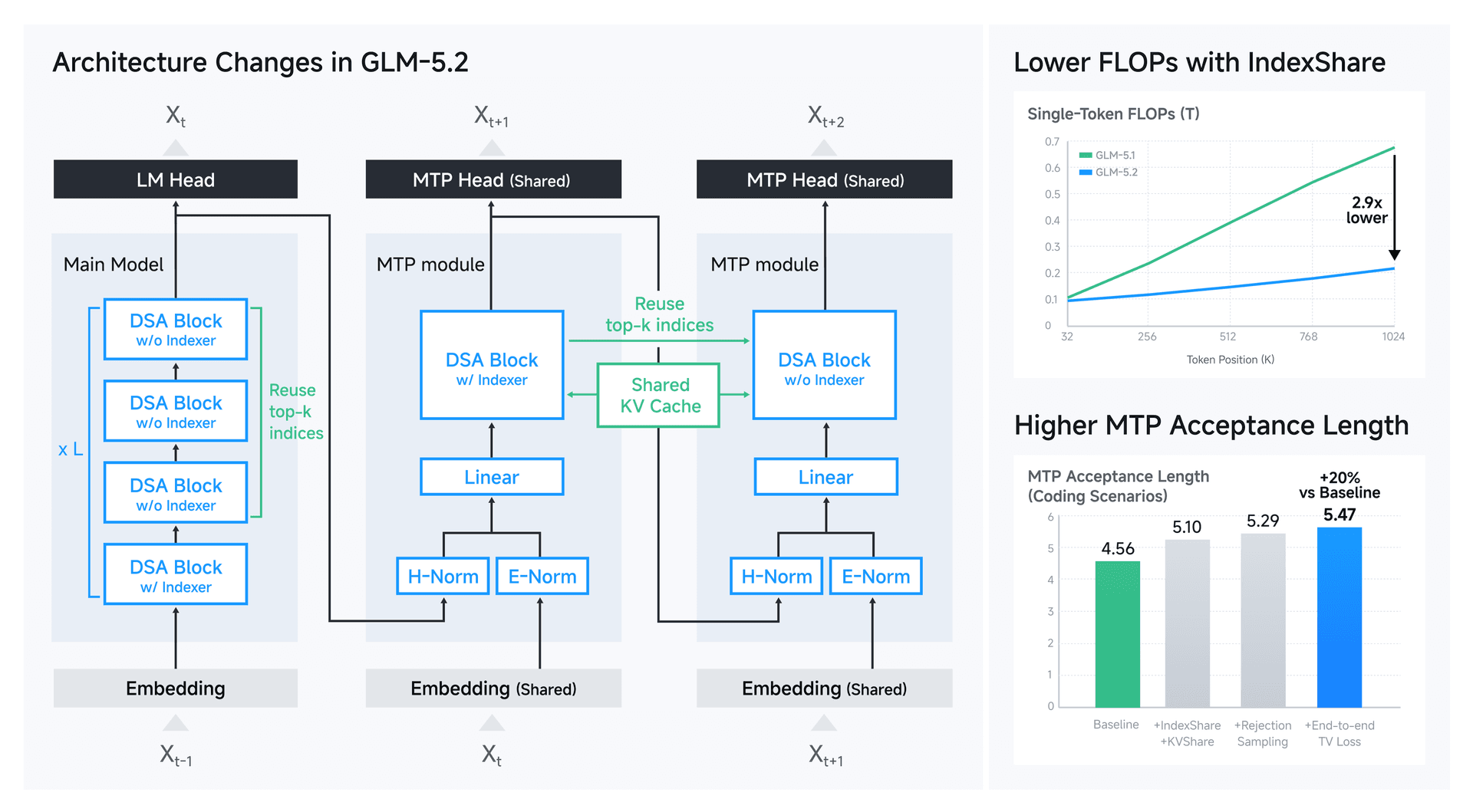
Z.ai said GLM-5.2 scored 81.0 on Terminal-Bench 2.1 and 62.1 on SWE-bench Pro, numbers that put the Beijing startup’s latest model closer to Anthropic and OpenAI in coding-heavy work. The company is pitching the system as its strongest coding model to date, with a usable 1 million-token context window, a 128,000-token maximum output limit, structured output, function calling and streaming tool calls.
The release landed through Z.ai’s GLM Coding Plan for Max, Pro and Lite users, underscoring how the company is trying to sell GLM-5.2 not as a novelty chatbot but as a workhorse for software development and automated workflows. Z.ai says the model is built for long-horizon tasks, project-scale engineering context and agentic capabilities, including architecture maps, module responsibilities, API contracts, data flows, call chains and technical-debt analysis.

The benchmark claims are aggressive. Z.ai says GLM-5.2 came within a few points of Anthropic’s Claude Opus 4.8 on Terminal-Bench 2.1, trailed Opus 4.8 by only 1% on FrontierSWE and edged out OpenAI’s GPT-5.5 by 1% on that same test. Anthropic has described Claude Opus 4.8 as built for complex agentic coding and enterprise work, while OpenAI said GPT-5.5 was released on April 23, 2026, with API availability on April 24.
GLM-5.2 also arrived after a rapid cadence of earlier Z.ai releases: GLM-5 on February 12, 2026, GLM-5-Turbo on March 15, GLM-5V-Turbo on April 1 and GLM-5.1 on April 7. That pace has helped keep the model in front of developers at a moment when Silicon Valley is watching whether Chinese systems can compete on more than price.
That is the larger business fight. Reuters has previously reported that DeepSeek’s low-cost model wave rattled the tech industry and set off a flurry of cheaper Chinese AI launches. Z.ai is now trying to turn that same cost advantage into adoption by offering API access, compatibility with Claude Code and OpenClaw, and migration guidance from earlier GLM models. The company’s bet is that engineers will try a Chinese model if it can slot into existing workflows with less friction.
For U.S. buyers, the question is no longer only whether a Chinese model can hit a benchmark. It is whether enterprise teams, investors and developers will trust it enough to deploy it at scale, even as U.S. rivals keep pushing their own frontier systems forward. If GLM-5.2 holds up outside the scorecards, the pressure on Western pricing power could intensify fast.
This article was produced by Prism’s automated news system from verified source data, official records, and press releases, then run through automated quality and moderation checks before publishing. The system is built and supervised by the people who set the standards it runs under. Read our full AI policy.
Did this article answer your question?