CIMB denies 1.2 million‑record breach after underground forum listing
CIMB says its systems are secure after a Breachforums post claimed about 1.2 million customer records; the bank posted verification on X and no independent forensic proof has emerged.
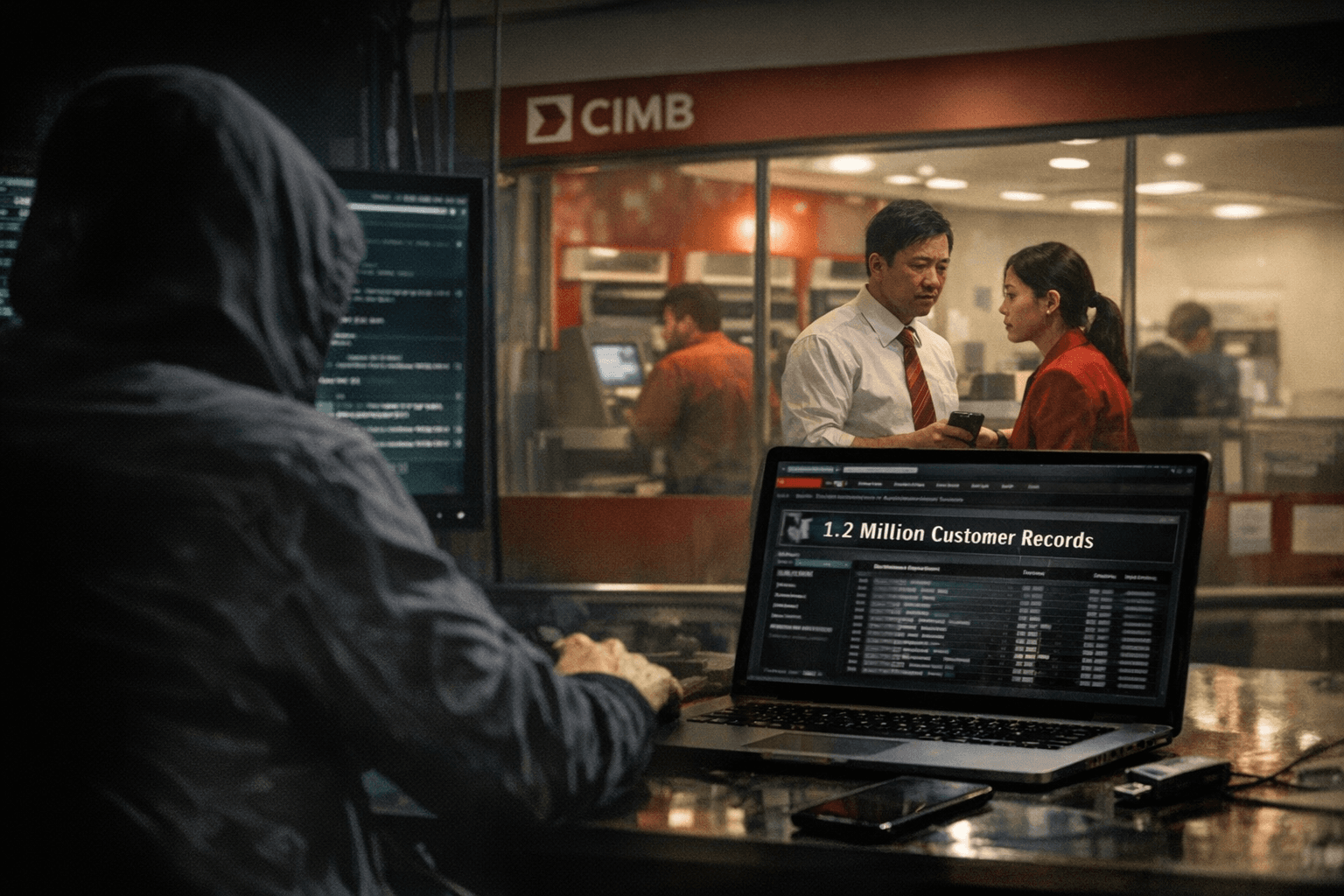
CIMB Group Holdings Bhd on March 4 publicly denied online claims that roughly 1.2 million customer records had been exposed, posting on X that “customer data remains fully safeguarded” and that “security teams have verified that all systems are secure.” The statement came after an underground forum listing early this month alleged a large dataset tied to CIMB Bank Malaysia was being offered for sale.
The purported sale first surfaced on March 2 on Breachforums.as, where a user calling itself “datasource” claimed to be selling approximately 1,200,000 customer records. The listing, which posted sample field names and invited private negotiations for the full dataset, described the files as “structured customer information extracted from internal systems.” The post prompted rapid circulation of the allegation across security trackers and social channels before CIMB issued its refutation.
CIMB’s concise public message stopped short of detailing its investigative steps. The bank has not published technical indicators of compromise, sample records, or a third‑party forensic report in connection with the claims. Independent verification is likewise absent from the public record: no law enforcement statement, regulator advisory or outside cybersecurity firm has confirmed the existence or authenticity of the alleged dataset.
The gap between an underground marketplace posting and a corporate refutation highlights a common challenge for financial institutions and regulators: distinguishing noisy, opportunistic claims from validated data exposures. If authentic, a dataset of 1.2 million records would be a material operational and reputational event for CIMB and could raise immediate risks of identity theft, account takeover, and targeted financial fraud for affected customers. CIMB’s statement aims to head off those risks by asserting system integrity, but without third‑party forensics customers and counterparties may remain uncertain.
The listing has already intensified scrutiny of regional banking cyber risk. The forum post and subsequent coverage prompted cybersecurity observers to warn that sensitive financial data can move rapidly into criminal markets and to urge banks to adopt more proactive, intelligence‑driven defenses and continuous monitoring. For regulators, the episode underscores the importance of timely incident classification and clear communication channels between banks, law enforcement and consumers to limit contagion effects across the sector.
For now, the factual record is limited to three elements: the March 2 underground forum claim tied to a user named “datasource,” the description of the data sample fields in that listing, and CIMB’s March 4 public denial on X. Absent published forensic evidence, the allegation should be treated as unverified. Key outstanding items for confirmation include the provenance of the sample fields, whether records match CIMB data structures, any indicators of compromise demonstrating exfiltration, and whether authorities have been notified or opened an investigation.
Customers of CIMB should monitor account statements and transaction alerts while the bank completes internal checks. Market participants and policy makers will be watching whether CIMB provides further technical detail or whether independent cyber forensics firms or regulators step in to validate or debunk the claimed dataset. The episode is a reminder that, in a tightly interconnected financial system, unverified online postings can create immediate operational and trust challenges even before any breach is proven.
This article was produced by Prism’s automated news system from verified source data, official records, and press releases, then run through automated quality and moderation checks before publishing. The system is built and supervised by the people who set the standards it runs under. Read our full AI policy.
Did this article answer your question?