CityUHK 3D‑prints sea‑urchin‑inspired mechanoelectrical sensors via vat photopolymerisation to detect underwater flow
CityUHK researchers led by Professor Lu Jian used vat photopolymerisation to 3D‑print gradient porous polymer and ceramic sensors that produced 3× voltage and 8× signal amplitude versus gradient‑free designs.

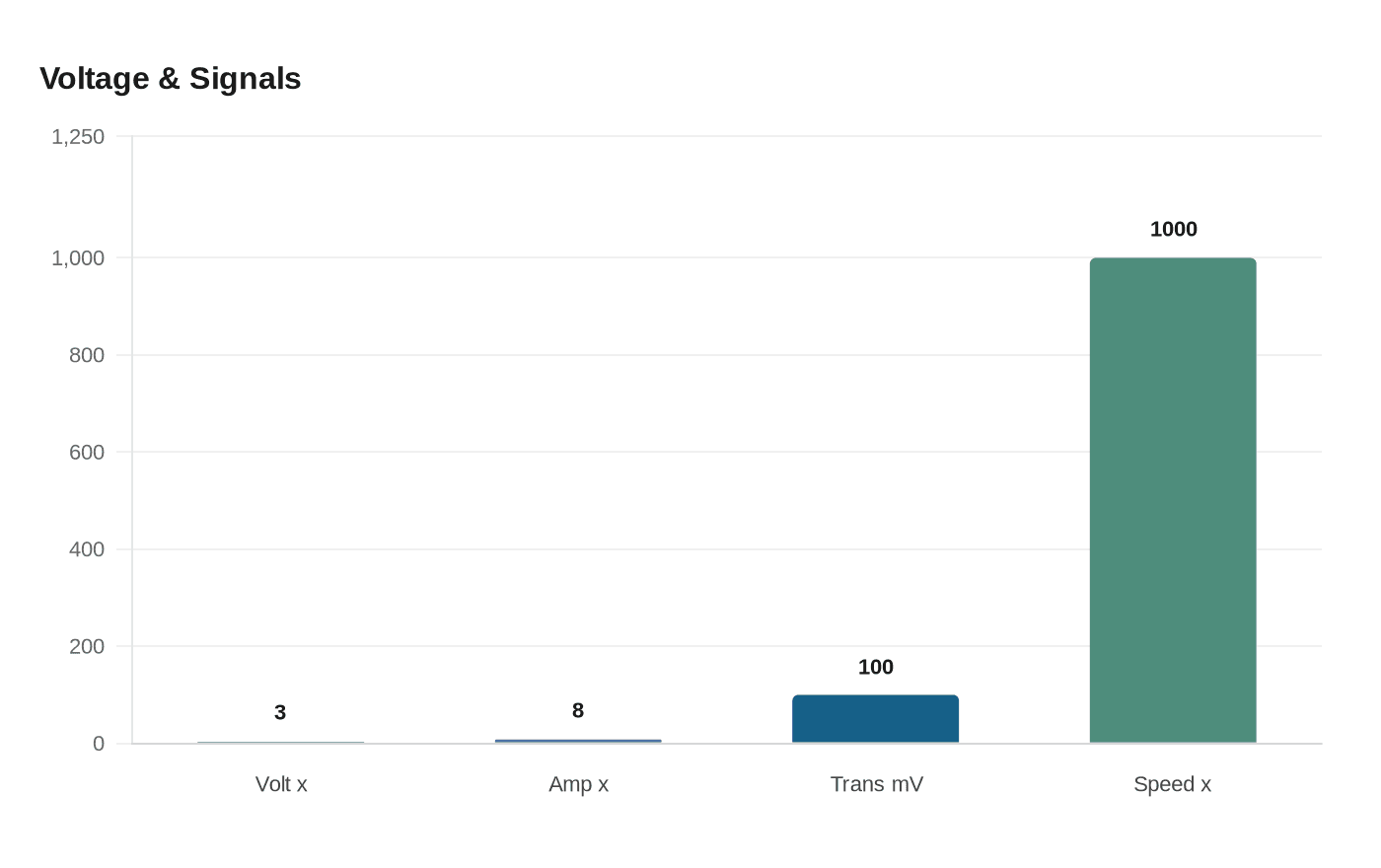
CityUHK engineers led by Professor Lu Jian translated a sea‑urchin microstructure into a self‑sensing material, reporting that vat photopolymerisation 3D printing of biomimetic gradient porous polymer and ceramic samples produced a threefold increase in voltage output and an eightfold increase in signal amplitude compared with gradient‑free structures. The team also notes natural spines generate transient potentials of about 100 mV under droplet stimulation and that the response is more than a thousand times faster than the animal’s visual perception.
Professor Lu Jian is named as lead author and is identified as Dean of the College of Engineering and Chair Professor in the Department of Mechanical Engineering at City University of Hong Kong. CityUHK distributed a press release via PR Newswire on March 1, 2026 and CityUHK NewsCentre posted a related item dated March 2, 2026; the study is titled “Echinoderm stereom gradient structures enable mechanoelectrical perception” and is reported as recently published in Nature.
The biological observations focused on the long‑spined sea urchin Diadema setosum, where in situ tests showed water droplets and flows over the stereom spine topology produced measurable electrical signals. CityUHK’s press materials state "the naturally occurring porous ceramic structure within sea urchin spines possesses an unexpected capability for mechanoelectrical perception." SPINEMarketGroup reported droplet stimulation induced a transient potential of approximately 100 mV and emphasized that spines produced signals even without viable cellular tissue, supporting the claim that the effect arises from microstructure rather than living nerves.
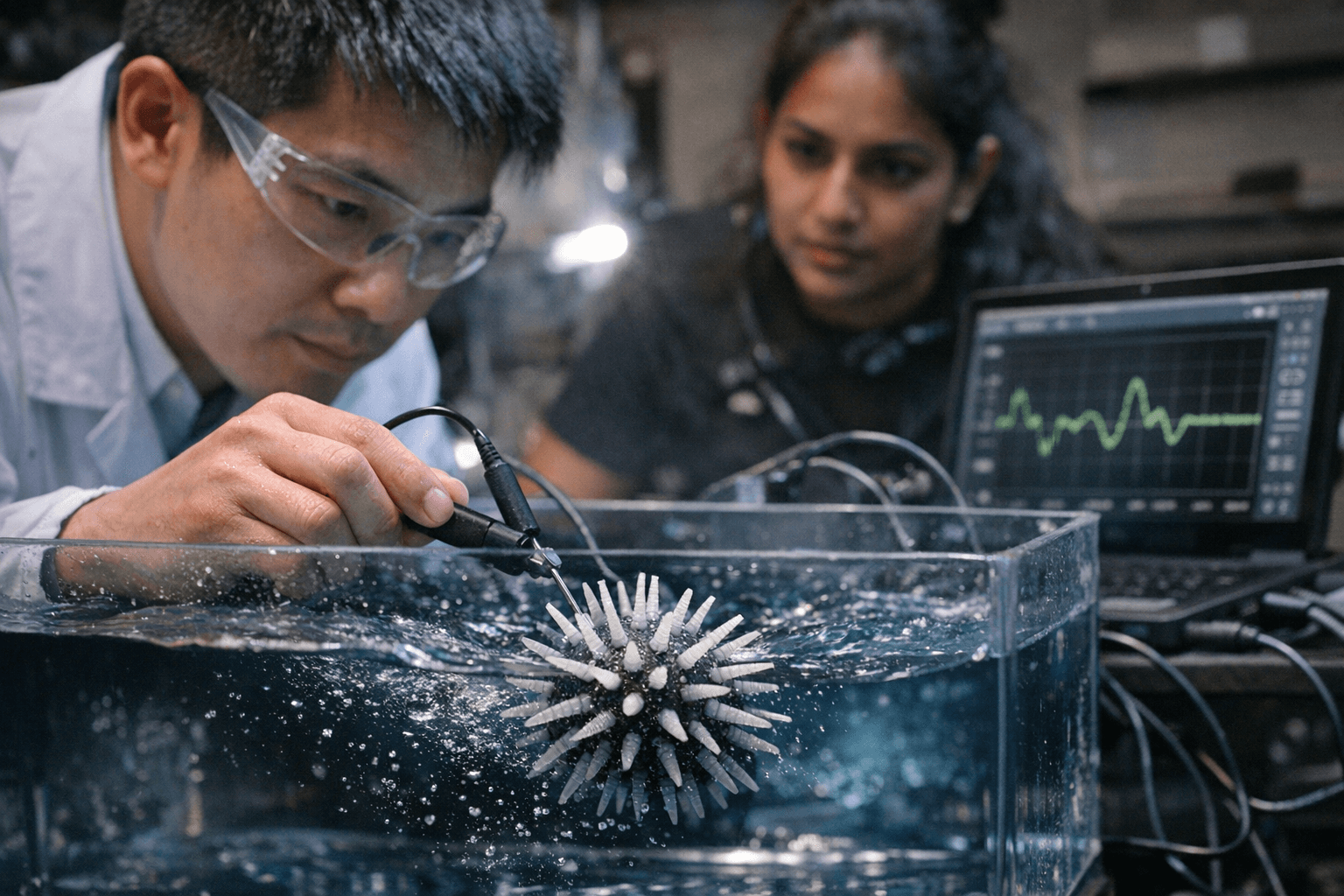
To test generality, the team used vat photopolymerisation to fabricate biomimetic gradient porous polymer and ceramic samples and compared them to gradient‑free counterparts. The press materials summarize the outcome as gradient designs giving a threefold boost in voltage output and an eightfold boost in signal amplitude, demonstrating the topology-driven effect can be replicated and amplified in engineered materials rather than being tied to the natural ceramic chemistry.
Building on the printed samples, the researchers assembled a multi‑unit device described as a biomimetic mechanoreceptor or a biomimetic metamaterial mechanoreceptor comprising multiple gradient units. The prototype is credited with real‑time detection of underwater flow intensity and, in some descriptions, direction and intensity with time‑resolved self‑monitoring, operating without external sensors or external power according to the project brief.
The team frames the finding as a design principle: topology, not material composition, governs mechanoelectrical perception, opening avenues for next‑generation smart sensing and underwater monitoring materials and for engineered streaming‑potential sensors. The PR package includes a contact line listed as 888‑776‑0942 in the distribution metadata. The Nature paper and supplementary materials will be needed to verify experimental setup, exact voltage traces for printed samples, the basis for the >1,000× temporal claim, sample sizes, and printing/material specifications before assessing deployment readiness for real‑world underwater sensing.
Know something we missed? Have a correction or additional information?
Submit a Tip