University of Mississippi team develops customizable 3D-printed medicated bandage for chronic wounds
University of Mississippi School of Pharmacy researchers developed a customizable, biodegradable 3D-printed scaffold intended to close persistent sores and ulcers, announced March 3, 2026.
University of Mississippi School of Pharmacy researchers have developed a customizable 3D-printed biodegradable medicated scaffold designed to help close persistent sores, ulcers and other chronic wounds, the university reported March 3, 2026. The project is described across an Ole Miss news release by Clara Turnage and complementary coverage on MedicalXpress, with the university calling the device a medicated patch, bandage and scaffold interchangeably.
The team says the scaffolds contain biodegradable, natural ingredients intended to reduce the chance of infection. A researcher identified only by the last name Vemula noted a specific clinical advantage: “Being biodegradable also means that if the material is applied to wounds inside the body, health care professionals don't have to make a second incision to remove it.” No detailed material names, drug identities, or release kinetics were provided in the university excerpts.
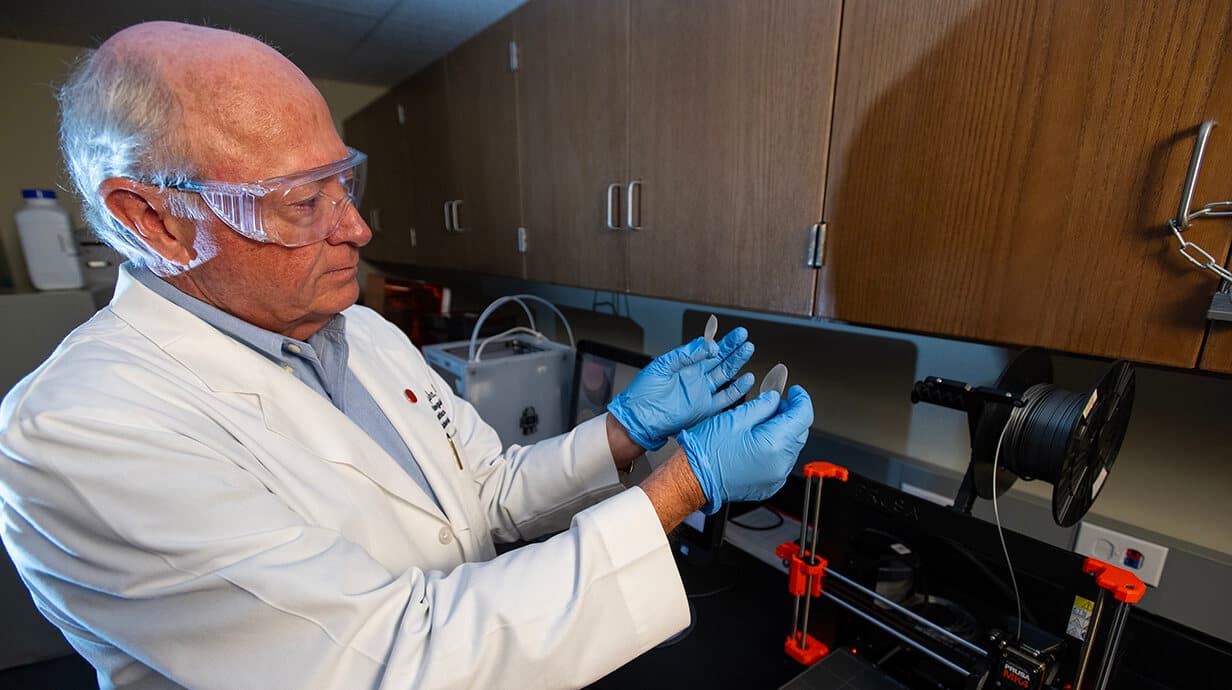
Michael Repka, distinguished professor of pharmaceutics and drug delivery at Ole Miss, is a named lead on the project and is shown in a Shoemaker Hall laboratory photo credited to Thomas Graning / Ole Miss Digital Imaging Services. Repka summarized the translational aim plainly: “The goal is translating this from research to patients.” The Ole Miss release places the work in the School of Pharmacy’s pharmaceutics and drug delivery labs but does not list other team members’ full names; one collaborator appears in coverage only as Vemula.
Repka cautioned the scaffold is intended for wounds where traditional bandages are not sufficient: “Depending on what kind of wound it is, a regular bandage might work well and this wouldn't be necessary.” He also flagged potential field use, framing portable manufacturing as a practical scenario: “But there are a lot of applications for this technology. These could be printed in the field for, say, military applications. If you have a generator that can run these 3D printers, you can print the scaffold you need based on what kind of wound has occurred.”
The university materials and news coverage note that the device will require further testing and Food and Drug Administration review before clinical use, but neither preclinical data nor a regulatory timeline were included in the captured excerpts. The reports also omit specifics on printer models, software, CAD workflows, or how patient-specific geometry would be captured for customization.
Related School of Pharmacy outreach on LinkedIn highlights a separate 3D-printed project — a timed-release medication capsule described as able to “release medication at exactly the moment a patient needs it” — and appears on the organization page that shows 4,374 followers and a graphic credit to Jerry Martin. Local press reuse of the Ole Miss material surfaced in the Star-Herald, where the same scaffold language appears behind a premium content paywall that advertised subscription options “as low as $2.50 per month.”
Ole Miss contact details embedded in the release list University, MS 38677 USA and phone 662-915-7211 for general campus contact. The next reporting steps identified by the release and coverage are material disclosure, preclinical data release, and formal regulatory planning before the team can move the 3D-printed scaffold from Shoemaker Hall benches into patient care.
Know something we missed? Have a correction or additional information?
Submit a Tip