Civics education rebounds as schools revive election-related lessons
Civics is back in more classrooms, but the benefits depend on whether schools can turn election season attention into lasting civic literacy. Access remains uneven across states.
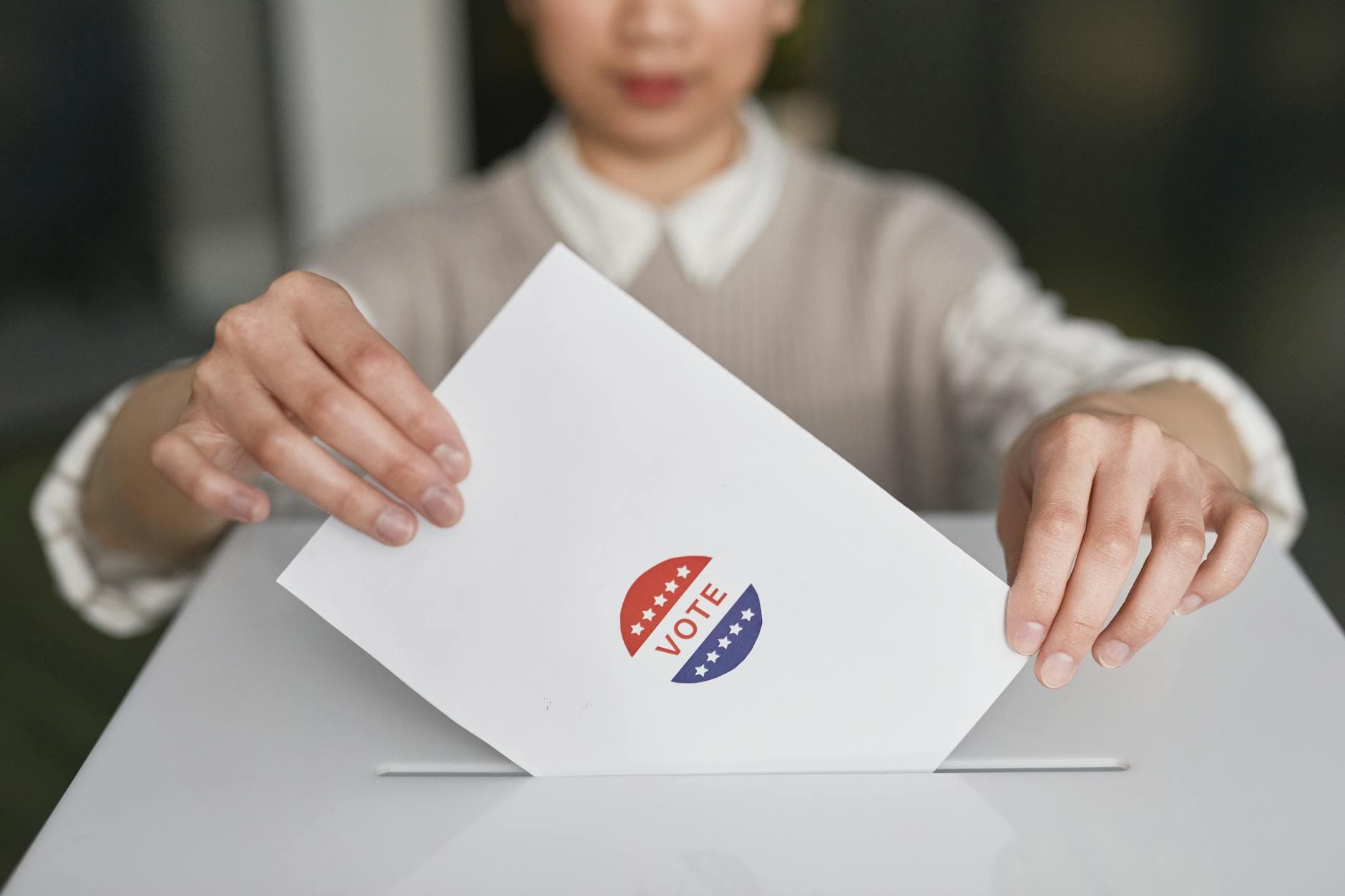
Why the rebound matters
Civics is moving back into classrooms, and that matters far beyond a single unit on government. When students learn how elections work, how laws are made, and how institutions are supposed to function, they gain the practical skills that support political literacy, help build trust in public institutions, and make misinformation easier to spot.
That is the promise of the current rebound: not just more discussion of democracy, but more students who can read a ballot, separate fact from spin, and understand why civic rules exist in the first place. The harder question is whether that momentum is broad enough to matter nationally, or whether it remains strongest in schools and states already inclined to treat civics as a priority.
What the national test scores say
The National Assessment of Educational Progress is the clearest national yardstick for civics, testing students in grades 4, 8, and 12. The most recent civics assessment was given in 2022 to about 7,800 eighth-graders from about 410 schools, and it captured a long-running problem: eighth-grade civics scores posted their first decline since testing began in 1998.
The trend line is flat to weak over more than two decades. Average eighth-grade scores were 150 in 1998, 150 in 2006, 151 in 2010, 154 in 2014, 153 in 2018, and 150 in 2022. That pattern shows an early rise, then stagnation, then a slide back to the starting point. The 2022 report also dug into race, gender, school type, teaching and learning conditions, and the impact of the Covid-19 pandemic, underscoring that civics outcomes are shaped by more than one classroom period or one textbook chapter.
The numbers do not show a dramatic collapse, but they do show how hard it has been to sustain improvement. That is exactly why renewed attention in schools matters: if civics is going to translate into stronger democratic habits, it has to reach students consistently before they ever cast a ballot.
Election lessons returned in force
The clearest sign of revival came in the fall of 2024, when schools leaned into the national election as a teaching moment. The National Center for Education Statistics reported that 77 percent of public schools said teachers were incorporating the election into lessons. More than half, 52 percent, said they had at least one special election-related programming activity.
Those activities were not abstract. Schools were using mock debates, mock voting, guest speakers, and voter-registration opportunities for eligible students to make civic participation concrete. That is the kind of instruction that can move civics from memorization to practice, especially when students can connect classroom lessons to what they see on television, online, and in their own communities.
The practical value is straightforward. Election-related lessons can show students how campaigns work, why turnout matters, what local and national offices do, and how misinformation spreads during political campaigns. In an environment where online falsehoods travel quickly, that kind of civic fluency is not ornamental. It is a defense mechanism.
Access still depends on geography
The rebound is real, but it is uneven. CivxNow says 28 states plus the District of Columbia require at least a one-semester high school civics course, while seven states require a year-long course and 15 states have no high school civics course requirement at all. That means whether a student gets sustained civic instruction can still depend heavily on where that student lives.
A Hoover Institution review sharpens the concern further, finding that eight states require neither a civics course nor a civics test for high school graduation. Even where election lessons are making a comeback, that does not guarantee every student gets a structured path through the basics of government, rights, responsibilities, and public participation.
CivxNow also says 12 states have adopted new middle or high school civics course mandates since 2018, affecting about 700,000 students each school year. That is meaningful progress, but it also reveals how much of the country still relies on patchwork policy rather than a common baseline. The result is a system where some students get repeated exposure to civics and others get little more than a brief unit or a passing mention.
The money is steady, but modest
Federal support has held steady enough to keep the issue alive. Congress’s FY2024 spending bills included $23 million for K-12 civic education, divided between $3 million for American History and Civics Academies and $20 million for American History and Civics National Activities. That funding signals that civic learning remains a federal concern, even if it is not funded at the scale of larger education programs.
The challenge is less about whether money exists than whether it can be translated into durable classroom practice. Small federal appropriations can seed teacher training, curricular materials, and programming partnerships, but they do not by themselves solve uneven state requirements or local capacity gaps. If the national rebound is going to last, it will need policy support that reaches beyond election years and beyond a handful of districts.
Politics is the backdrop, not the exception
This push for stronger civics is unfolding in a sharply polarized environment. A 2024 ERIC-indexed study on education politics found that widening partisan gaps are driven mainly by political sorting, with polarization also increasing on some of the most divisive issues. That means civics education is not advancing in a neutral setting; it is advancing inside a broader struggle over schools, curricula, and what children should be taught about public life.
That makes the case for civics stronger, not weaker. When education policy itself is contested, students need clearer grounding in how democratic institutions work and how disagreement is handled in a constitutional system. The rebound in election-related lessons is encouraging because it shows schools can still create common civic reference points even when the political climate is fragmented.
The next test is whether this attention can outlast the election cycle. If states strengthen requirements, schools keep using elections as teachable moments, and federal support remains in place, civics can become more than a seasonal emphasis. It can become the durable civic infrastructure that a functioning democracy requires.
This article was produced by Prism’s automated news system from verified source data, official records, and press releases, then run through automated quality and moderation checks before publishing. The system is built and supervised by the people who set the standards it runs under. Read our full AI policy.
Did this article answer your question?

