CJNG Co-Founder Pleads Guilty to Cocaine Conspiracy, Faces Life in Prison
CJNG co-founder Erick Valencia Salazar, a Santa Clara, California resident, pleaded guilty to cocaine conspiracy, facing life in prison weeks after his co-founder was killed by the Mexican army.
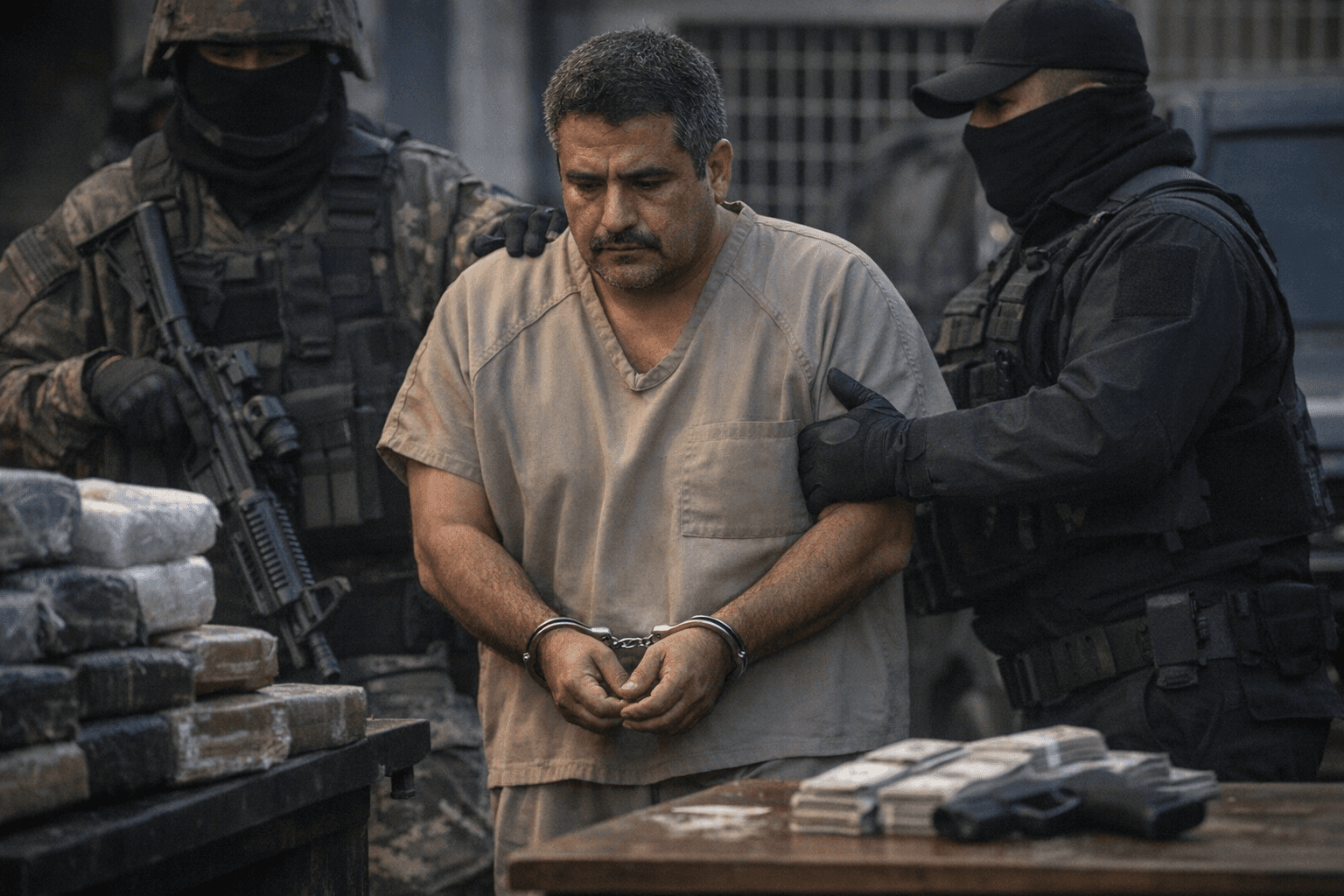
A co-founder of the Jalisco New Generation Cartel who listed Santa Clara, California as his home address stood before a federal judge in Washington, D.C., and pleaded guilty to cocaine conspiracy, setting himself on a path toward a potential life sentence.
Erick Valencia Salazar, 49, known as "El 85," entered a guilty plea to one count of conspiring to distribute cocaine for importation into the United States. Chief Judge James Boasberg scheduled sentencing for July 31; Valencia Salazar faces a mandatory minimum of 10 years and a maximum of life.
The case highlights how cartel leadership can operate across borders while remaining embedded in U.S. communities. Though residing in Silicon Valley, Valencia Salazar was not indicted by a federal grand jury until 2018, and not extradited until February 2025, when Mexico transferred him alongside 28 other cartel figures under pressure from the Trump administration. Mexican courts had already failed once to hold him: arrested in Zapopan, near Guadalajara, in 2012, he was released five years later after a judge cited alleged procedural flaws, then recaptured by the Mexican Army in 2022 in the mountain town of Tapalpa, Jalisco.
Valencia Salazar and Nemesio Rubén Oseguera Cervantes, known as "El Mencho," both came up through the Milenio Cartel before co-founding the CJNG around 2007. The organization grew into one of the most aggressive criminal enterprises in Mexican history. The U.S. State Department credited it with the highest cocaine, heroin, and methamphetamine trafficking capacity in Mexico, and documented its innovations in cartel violence: explosive-laden drones, roadside mines, and the 2020 grenade-and-rifle assassination attempt on Omar García Harfuch, then Mexico City's top police official and now the country's federal security secretary. Valencia Salazar eventually split from El Mencho to form a rival outfit, La Nueva Plaza, while the State Department placed a $5 million reward on his head.
Assistant Attorney General A. Tysen Duva said the CJNG had inflicted "immeasurable damage" on the United States, and that Valencia Salazar "was also responsible for furthering the rampant violence in Mexico, at the expense of people's lives and the safety of communities, that helped destabilize the region and allow crime to flourish."
The guilty plea arrives at a pivotal moment for the cartel. El Mencho was killed on February 22 when Mexican Army special forces tracked him to a secluded cabin in Tapalpa, the same mountain town where Valencia Salazar had been recaptured three years earlier. Intelligence linking one of El Mencho's romantic partners to his location led soldiers to close in; eight CJNG members were killed, and El Mencho was wounded, captured in nearby woodlands, and died from his injuries while being airlifted to Mexico City. The White House confirmed U.S. intelligence support for the operation, calling it "a major win against one of the top fentanyl traffickers feeding the American overdose crisis." The fallout triggered narco-blockades across 20 Mexican states, leaving 62 dead, including 25 National Guard troops, and 70 arrested.
Vanda Felbab-Brown, a Brookings Institution expert on non-state armed groups, warned that the violence following El Mencho's death could persist "for months to come and potentially years to come as the criminal landscape is being redesigned."
Valencia Salazar's cooperation with federal prosecutors, extending through a July 31 sentencing date, could give investigators a rare inside look at CJNG cocaine supply chains and financial architecture at a moment when both founders have been neutralized. The Trump administration designated the cartel a foreign terrorist organization in February 2025, and whether that designation accelerates future prosecutions may depend on what El 85 is willing to say.
This article was produced by Prism’s automated news system from verified source data, official records, and press releases, then run through automated quality and moderation checks before publishing. The system is built and supervised by the people who set the standards it runs under. Read our full AI policy.
Did this article answer your question?