ClickUp cuts 22% of staff as it deploys 3,000 AI agents
ClickUp cut about 290 jobs while running 3,000 AI agents, recasting human work around supervision, not execution.
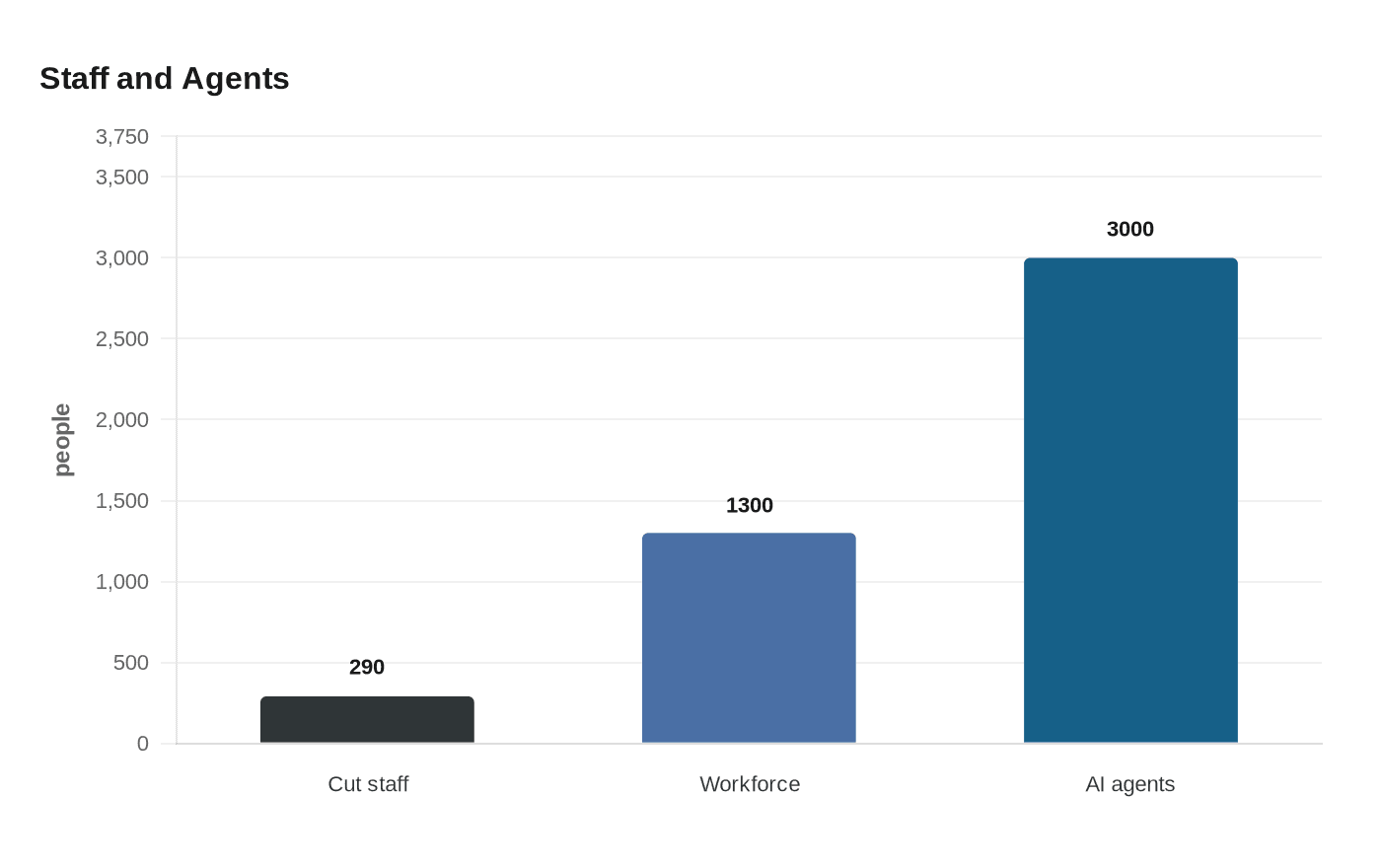
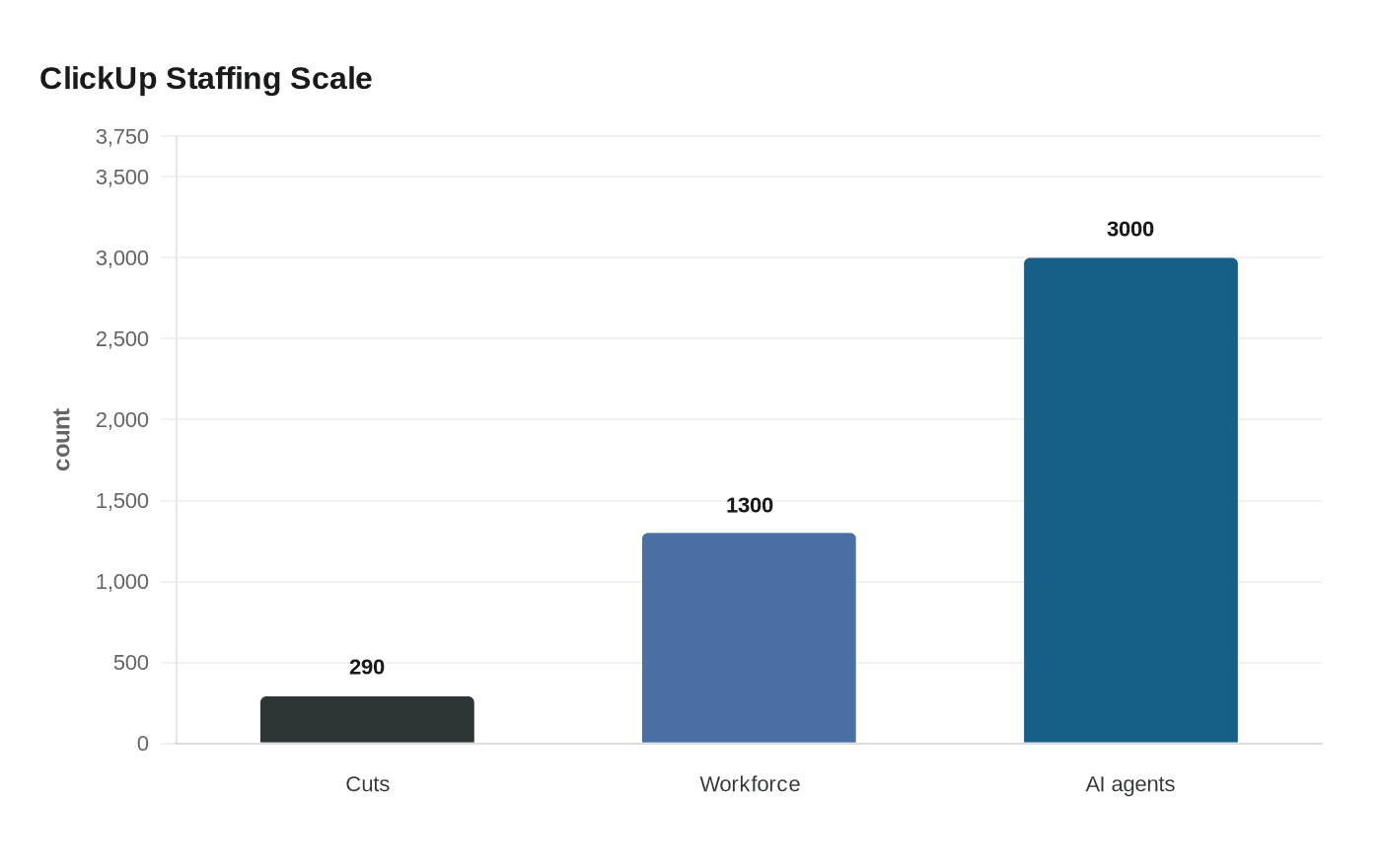
ClickUp’s latest restructuring put a hard number on the software industry’s AI promise: about 290 employees, or 22% of a workforce of roughly 1,300, were cut as the nine-year-old startup said it was already using around 3,000 internal AI agents across its workflows. That works out to a roughly 3:1 agent-to-employee ratio, a vivid sign that the company is betting on software taking over more of the routine labor once done by people.
Chief executive Zeb Evans framed the move as a deliberate redesign of the company, not simply a bill-cutting exercise. He said ClickUp is building toward a “100x org,” a structure meant to amplify output far beyond headcount growth. Evans also said remaining employees who create outsized impact using AI could reach salary bands as high as $1 million, signaling that the company wants fewer people, but far higher leverage from the ones who stay.
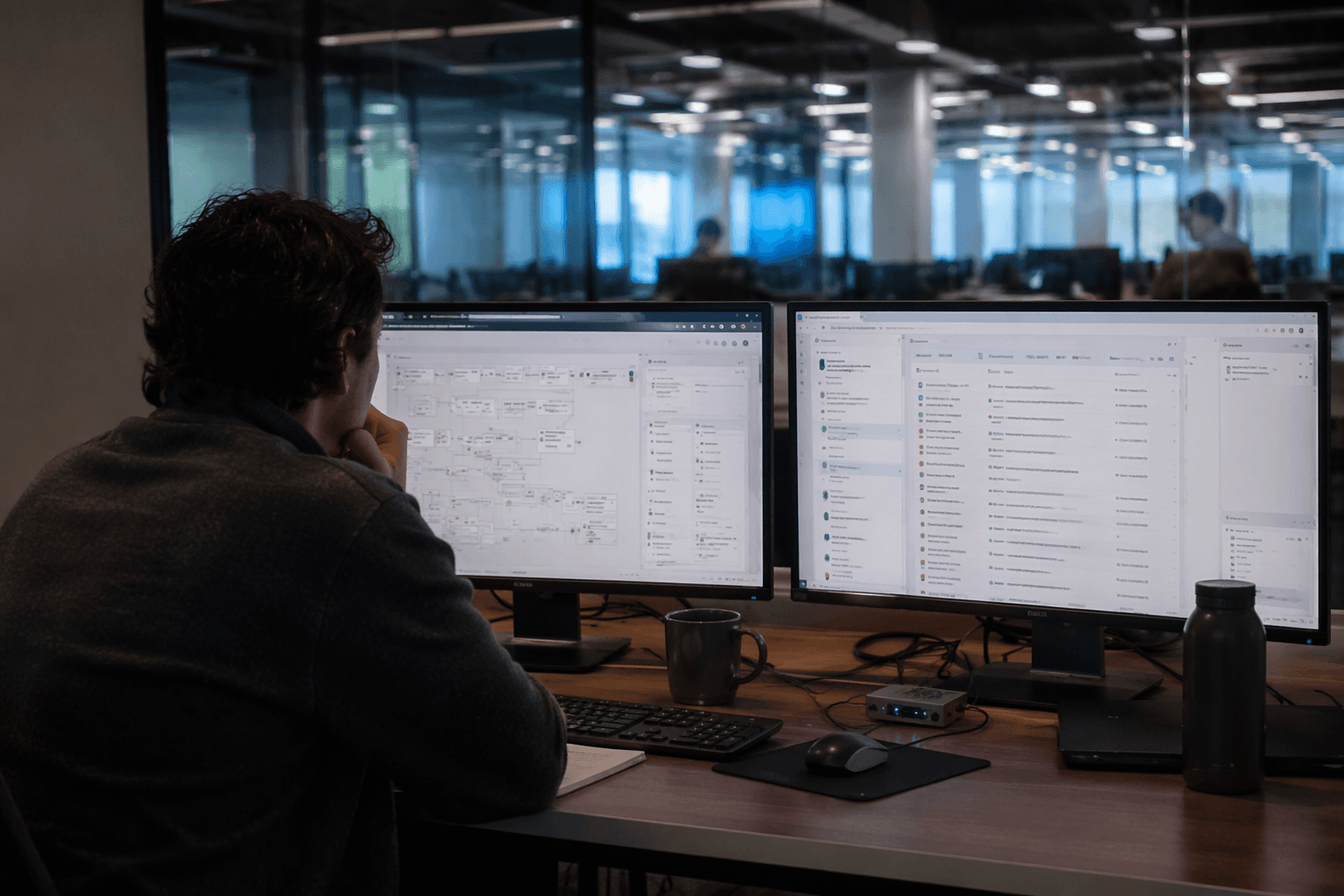
The labor-market reality check sits in the details of how ClickUp says these agents are used. The company describes agents embedded directly into workflows across departments, where employees direct them to plan and execute multi-step tasks autonomously. That means the machine handles more of the execution layer, while humans shift toward assigning work, checking results, and deciding when an output is good enough to ship. In that model, the human function does not disappear, but it becomes narrower and more supervisory.
ClickUp has also made the strategy visible in its product direction. The company has promoted “Super Agents” and AI coding agents, and its website describes a new role called “Agent Managers,” people tasked with creating, deploying, and optimizing AI workflows to keep quality and consistency intact. That is a different employment story from outright replacement: it suggests a re-sorting of labor toward oversight, workflow design, and exception handling, while the repetitive parts of the job are pushed into software.
The broader question is whether ClickUp is showing the future of work or simply using AI language to justify a leaner cost structure. The answer may be both. A company that can run 3,000 internal agents alongside about 1,000 employees is clearly reorganizing around automation, but the need for human review, judgment, and systems design has not gone away. What has changed is where the value sits: less in doing the work by hand, more in managing the machine that does it.
Know something we missed? Have a correction or additional information?
Submit a Tip