Climate activists halt vessel movements at Port of Newcastle, dozens arrested
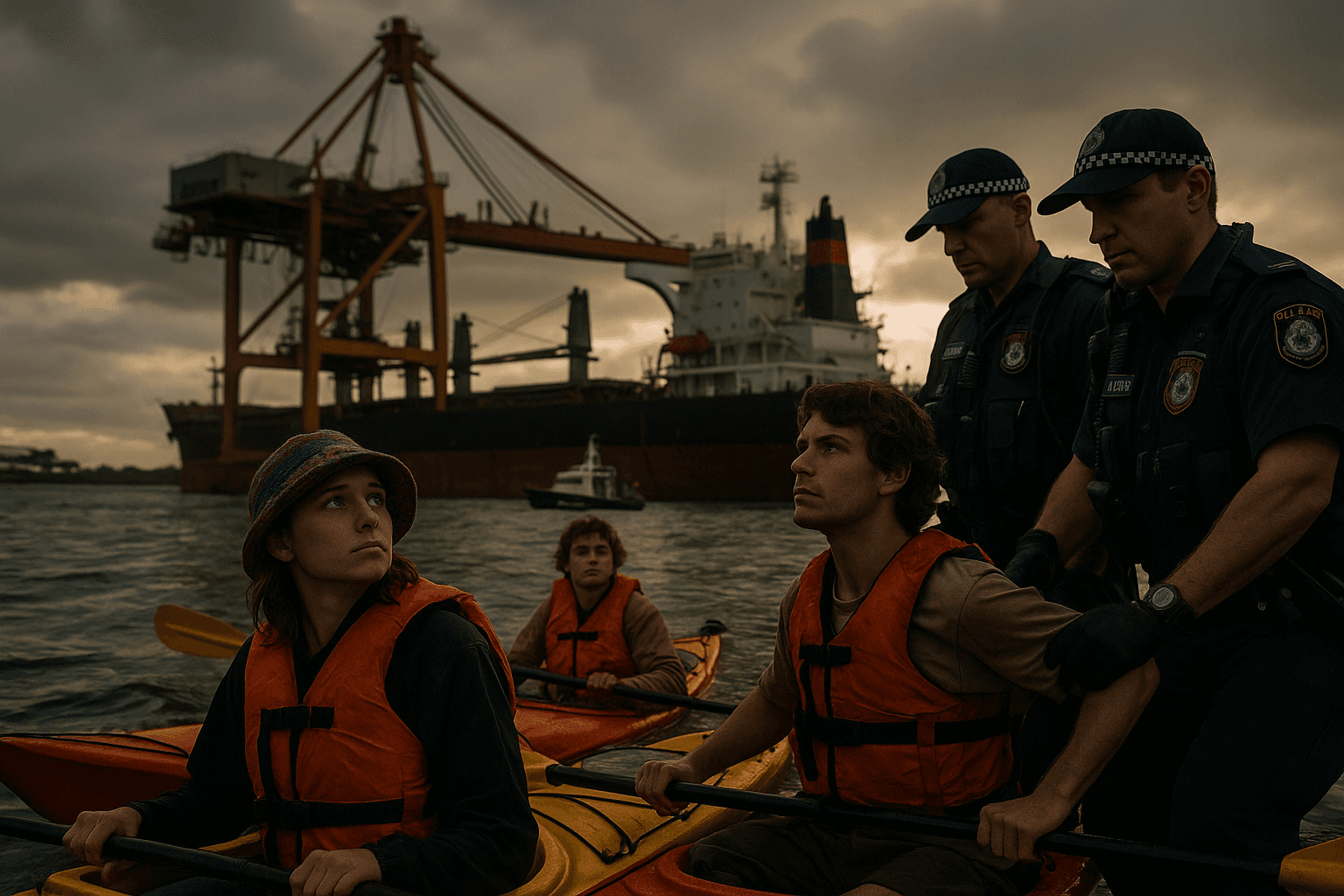
Hundreds of climate activists staged on water demonstrations at Australia’s Port of Newcastle on November 30, forcing the temporary suspension of selected cargo movements and prompting police to make multiple arrests related to marine offences. The action, which included kayaks in shipping lanes and activists boarding a coal carrier, underscores rising global pressure on fossil fuel exporters and poses fresh legal and trade questions for Australian authorities.

Hundreds of demonstrators converged on Australia’s Port of Newcastle on November 30, paddling kayaks into shipping lanes and disrupting operations at one of the nation’s largest coal export harbors. Authorities and Reuters reported that police made arrests linked to marine offences, with official tallies confirming 21 people were detained at the scene on Sunday and other local reports suggesting a higher total across the weekend.
The protest, organized by Rising Tide and allied groups and joined by Greenpeace, saw activists deploy small vessels and enter restricted waters to impede the movement of bulk carriers. Organisers were reported to have climbed onto a coal ship as part of the action. Port operators said they temporarily suspended select cargo movements, including an alumina shipment, on safety grounds and that normal operations were expected to resume the following day.
By targeting the Port of Newcastle, activists aimed at a central node in Australia’s fossil fuel export network. The city’s port handles vast quantities of coal destined for international markets, making it a focal point for campaigners who argue that exporting fossil fuels undermines global climate goals. The timing and nature of the demonstration reflect a broader strategy by environmental groups to escalate disruption at physical infrastructure to pressure policymakers and industry alike.
Maritime safety was central to the port’s decision to halt select operations. Moving vessels through congested coastal approaches requires strict coordination and clearance, and authorities said the presence of noncommercial craft in shipping lanes presented an unacceptable risk to both protesters and crews. Police arrested demonstrators under laws that govern conduct in navigable waters, and legal proceedings are expected to follow. Local law enforcement agencies have not released detailed charges beyond marine related offences.
The intervention at Newcastle carries diplomatic and economic implications beyond Australia. Any sustained pattern of interdictions at major export terminals could complicate contractual obligations between Australian shippers and international buyers, and increase insurance and security costs for carriers. For governments that rely on Australian coal and other raw materials, disruptions may prompt inquiries into supply chain resilience and influence bilateral trade discussions.
The protest also places a spotlight on the political tensions between a government balancing energy exports and transition commitments, and an increasingly assertive climate movement willing to accept legal risk to amplify its message. Rising Tide and allied groups have repeatedly said they are seeking to accelerate the energy transition by raising the domestic political cost of continued fossil fuel exports.
Authorities and port officials will be watching how the legal response unfolds, and whether arrests and prosecutions deter similar actions or energise further direct action. For now, the incident reinforces a growing pattern in which climate activism seeks to intersect with global trade routes and maritime law, forcing governments, companies and international partners to contend with disruptive tactics on high seas and in port basins.
This article was produced by Prism’s automated news system from verified source data, official records, and press releases, then run through automated quality and moderation checks before publishing. The system is built and supervised by the people who set the standards it runs under. Read our full AI policy.
Did this article answer your question?