Russia Launches Massive Rolling Aerial Attack on Ukraine With Drones and Missiles
Russia's overnight drone swarms gave way to daytime missile strikes on April 3, killing at least one person and damaging homes in the Kharkiv and Kyiv regions.
Russia pressed a sustained aerial campaign against Ukraine, combining overnight drone swarms with daytime ballistic and cruise missile strikes in what Ukrainian officials described as a "rolling" attack designed to overwhelm air defenses and inflict damage across multiple regions simultaneously.
The assault began the evening of April 2 and continued into daylight hours on April 3, targeting the Kharkiv and Kyiv regions, where local officials reported fires, power outages, and damage to residential buildings. At least one person was killed and several others were injured, according to initial tallies from regional governors and emergency services.
Ukraine's air force characterized the tempo as exceptionally high, with a large number of enemy drones operating in Ukrainian airspace before daytime follow-on missile strikes were launched. The pattern is deliberately structured to exploit gaps in defensive coverage: overnight drone swarms force air-defense systems and personnel into continuous operation, and the subsequent daytime strikes arrive when fatigue and resource strain are at their highest.
The tactical shift carries significant implications. Unlike single-wave overnight barrages seen in earlier phases of the conflict, a rolling attack demands a continuous readiness posture from Ukrainian interceptor crews, repair teams, and regional emergency responders. Every hour of sustained engagement accelerates wear on missile interceptors that remain difficult to replenish quickly.
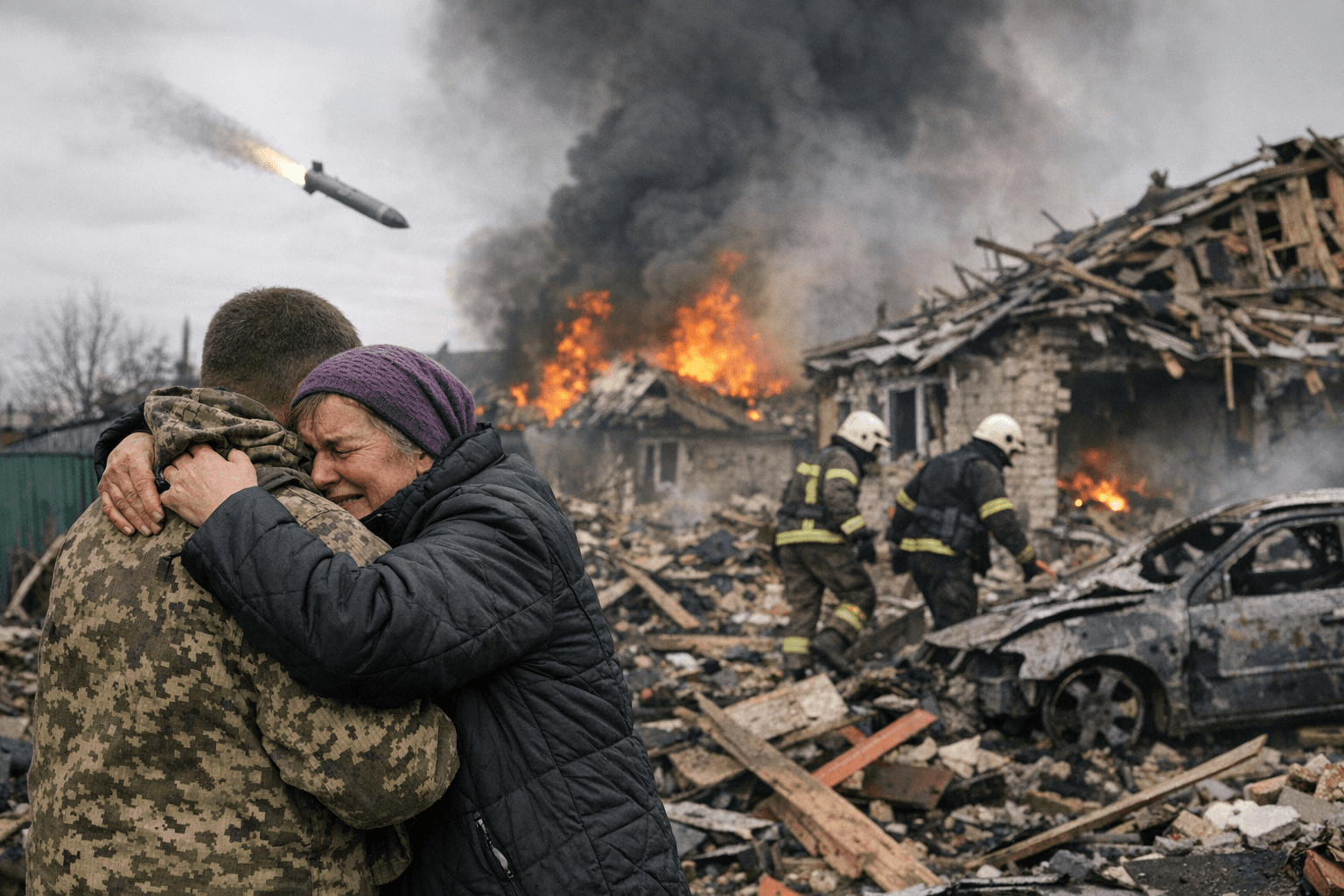
Beyond hardware, the strikes renewed pressure on power and water infrastructure, humanitarian corridors, and the capacity of local governments to support displaced populations in hard-hit areas. Kharkiv, already among the most consistently targeted cities of the war, again bore the brunt of early-morning bombardment as fires broke out across affected neighborhoods.
Kyiv used the attack to renew appeals for additional air-defense systems, military hardware, and international condemnation of Moscow's tactics. The strikes also arrived as diplomatic efforts elsewhere absorbed international attention, a timing observers noted reinforces how quickly the Ukrainian front can escalate and redirect European security priorities. Neighboring countries reported precautionary measures, including jet scrambles and airspace monitoring, as the scale of the offensive became clearer.
The assault fits a documented pattern of intensified aerial campaigns in recent weeks, with Russia deploying large numbers of low-cost long-range drones, sometimes supplemented by cruise and ballistic missiles, to saturate Ukrainian defenses and damage energy and logistics infrastructure. The shift to a rolling format extends that template by eliminating the predictable overnight window that Ukrainian defenders had adapted to anticipate, turning a war of attrition into a contest of continuous endurance.
This article was produced by Prism’s automated news system from verified source data, official records, and press releases, then run through automated quality and moderation checks before publishing. The system is built and supervised by the people who set the standards it runs under. Read our full AI policy.
Did this article answer your question?


