Iran Strikes Gulf Oil and Water Infrastructure After Trump Vows More Attacks
Iran struck Qatar's LNG hub, Kuwaiti refineries, and Bahrain's water supply as Trump vowed to destroy "what's left in Iran" after the B1 bridge collapse near Tehran.
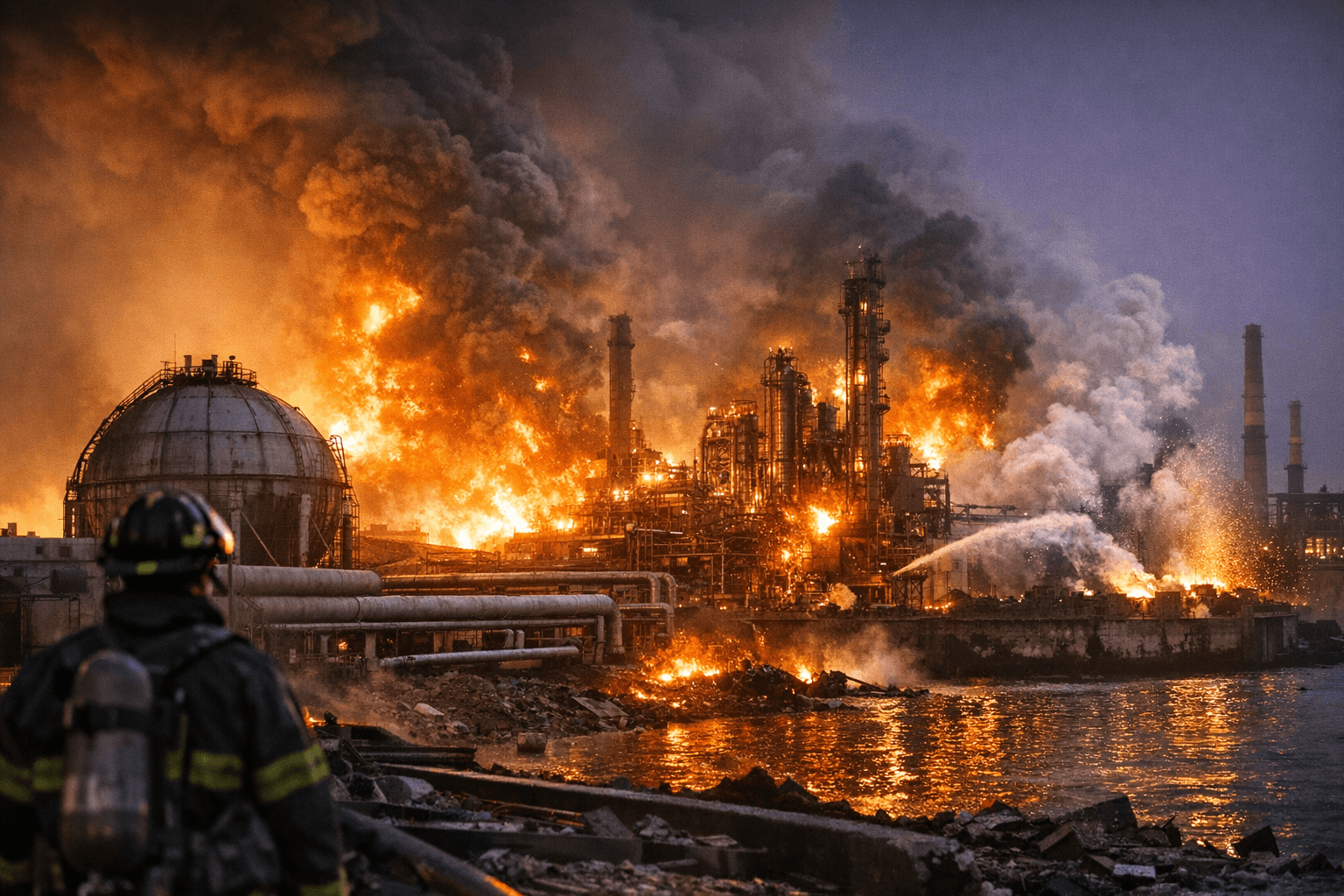
Iran's retaliatory campaign against Gulf Arab states hosting U.S. military assets expanded sharply on Wednesday, with Iranian missiles and drones striking Qatar's Ras Laffan liquefied natural gas hub, a Kuwaiti oil refinery, desalination infrastructure in Bahrain, and the U.S. military's al-Dhafra airbase in the UAE. The strikes came one day after U.S. and Israeli forces destroyed the B1 bridge in Karaj and President Trump publicly threatened to wipe out what remained of Iran's civilian infrastructure.
The B1 bridge, described as Iran's tallest and biggest, had only recently been completed. Linking Tehran to the Caspian Sea coast, it served as a major transit corridor through a city of millions west of the capital. A U.S. defense official said the bridge was targeted because it was being used to transport drone and missile components to Iranian firing units. Iranian state media reported at least 8 people killed and 95 wounded. More bridges are likely to be targeted, a U.S. defense official said.
Trump celebrated on Truth Social, posting video of the collapse and writing that "the biggest bridge in Iran comes tumbling down, never to be used again" and that it was "time for Iran to make a deal before it is too late." On March 30, he had threatened to "completely obliterate" Iran's power plants, oil wells, Kharg Island, and possibly desalination plants unless a deal was reached and the Strait of Hormuz reopened. White House press secretary Karoline Leavitt said Iran's "best move is to make a deal," adding that the U.S. military "has capabilities beyond their wildest imagination."
Iran's response fell hardest on Qatar. Iranian missiles caused "extensive damage" to Ras Laffan, the operational heart of QatarEnergy's LNG sector, which accounts for roughly 16% of global energy supply. Qatar's desalination network, which provides 99% of the country's drinking water, faced direct exposure. In Kuwait, Iran hit an oil refinery and a power and desalination plant, forcing the national oil company to shut down several units. Missile alarms sounded at least three times in Bahrain after an Iranian drone damaged a desalination plant near Muharraq; desalination provides more than 90% of Bahrain's drinking water.
The Islamic Revolutionary Guard Corps also struck oil facilities in Fujairah and hit an Oracle data center in Dubai. Saudi Arabia destroyed a drone in its airspace overnight and rerouted large oil volumes westward toward the Red Sea to avoid the increasingly dangerous Strait of Hormuz.
Following the B1 bridge strike, Iran's IRGC-linked Fars news agency published a hit-list of eight major regional bridges as potential retaliation targets, including infrastructure in Kuwait, Saudi Arabia, and Israel. Iranian military spokesman Ebrahim Zolfaqari had pre-warned that Tehran would strike regional desalination facilities specifically.
The six Gulf Cooperation Council states provide desalinated water to 62 million people through more than 400 plants, producing more than 40% of the world's desalinated water. The Strait of Hormuz, through which approximately 20% of the world's oil passes in peacetime, remained critically disrupted. U.S. gas prices surged past $4 a gallon. Trump said Iran had agreed to allow 20 tankers through as "a sign of respect," but the corridor was far from restored.
Iranian President Masoud Pezeshkian called U.S. strikes on Iran's energy infrastructure a "war crime," warning that "such actions carry consequences that extend far beyond Iran's borders." French President Emmanuel Macron called for a moratorium on strikes targeting civilian energy and water facilities. Bahrain proposed a UN Security Council resolution authorizing countries to use "all defensive means necessary" to secure the Strait of Hormuz, with a vote scheduled for Friday.
The conflict, now in its 35th day, has already claimed American lives. Declan Coady, a 20-year-old soldier from West Des Moines, Iowa, was killed in a drone strike at a command center in Kuwait on March 7. Trump said the war could "wrap up in 2-3 weeks." With water and energy infrastructure burning across the Gulf, that timeline is being tested by every new strike.
This article was produced by Prism’s automated news system from verified source data, official records, and press releases, then run through automated quality and moderation checks before publishing. The system is built and supervised by the people who set the standards it runs under. Read our full AI policy.
Did this article answer your question?


