Clinician-informed cold plunge guide clarifies safety, benefits, and limits
A clinician-informed primer lays out cold-plunge benefits and clear safety rules for hobbyists and facilities. Follow temperature, time, and medical red-flag guidance to plunge smarter.
Cold plunges can shorten postworkout muscle soreness, speed core-temperature recovery after heat stress, and deliver mood and alertness boosts, with many users reporting better sleep. Those upsides come with real risks, and a clinician-informed primer offers a straightforward how-to and risk checklist to help hobbyists and businesses run safer chill sessions.
The primer emphasizes starting conservatively. Beginners should use warmer water and shorter durations, with many clinicians recommending roughly 50 to 59 degrees Fahrenheit for short exposures. Avoid going under about 40 degrees Fahrenheit unless a trained professional is supervising. Even in recommended ranges, exposure should be brief; a conservative maximum is a few minutes to limit hypothermia and cold-shock risk.
Medical red flags are clear and nonnegotiable. Existing heart disease, uncontrolled hypertension, peripheral neuropathy, diabetes with neuropathy, Raynaud’s disease or cold-urticaria, and pregnancy all raise the risk of serious complications. The guidance stresses never plunging alone and consulting a healthcare provider before starting cold-immersion practices. Gradual acclimation matters: build time and colder temperatures incrementally rather than attempting a long, frigid session on day one.
For community operators and facilities offering cold-plunge services, the primer functions as a practical checklist. Screen participants for the listed contraindications, require that customers not enter solo, and set conservative default temperatures and timers that favor short exposures. The clinician-informed approach is meant to protect both new adopters who chase the recovery and alertness benefits and veteran plungers who push limits for perceived gains.
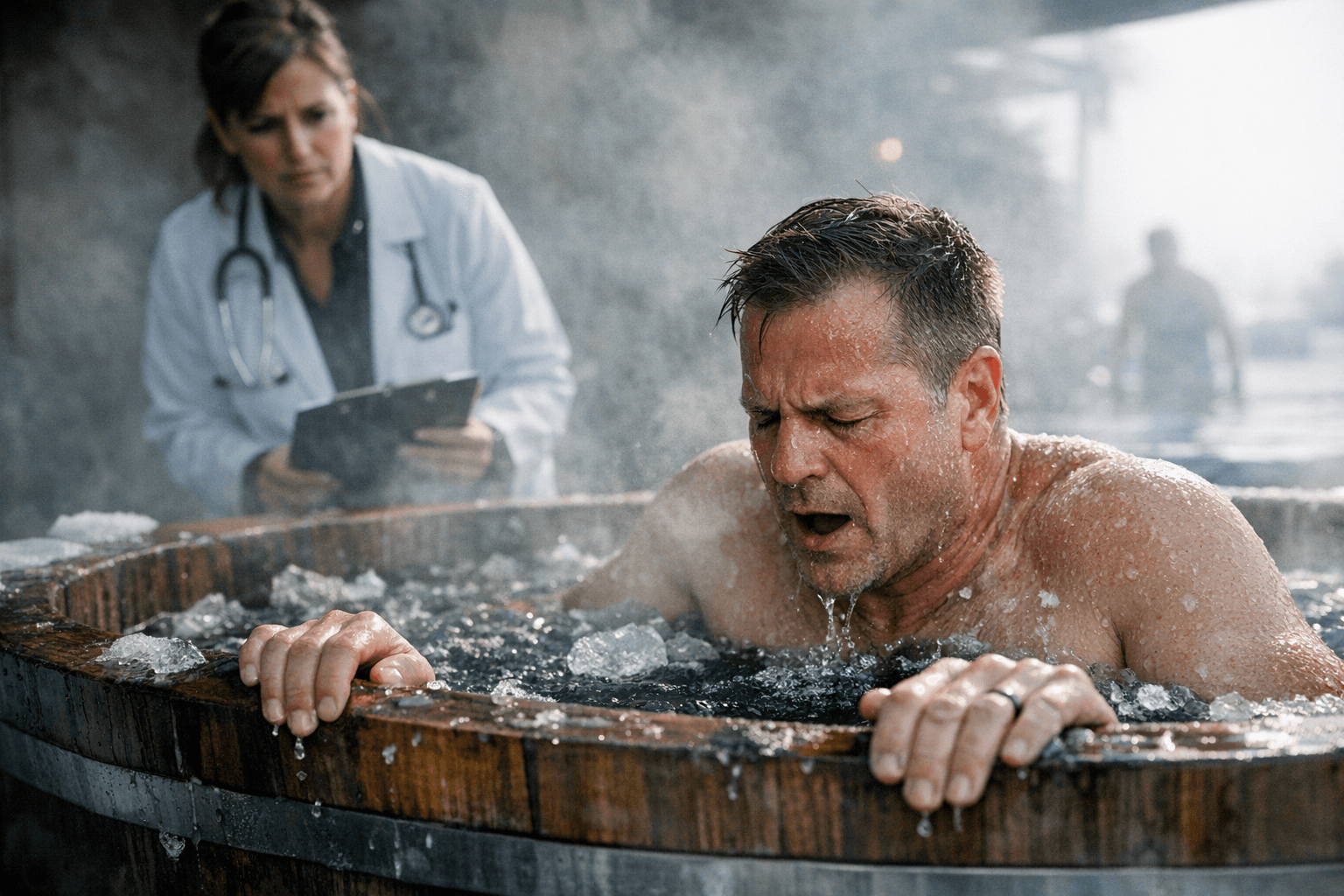
Practical value for readers is immediate. If you plan to add cold plunging to your routine, start warmer and shorter, check with your clinician if you have cardiovascular or nerve conditions, and never do solo experiments in sub-40-degree water. If you run a plunge facility, adopt conservative default temps and time caps, establish simple screening, and make supervision standard operating procedure.
The community has a culture of shared tips, breathwork protocols, and celebration of cold gains, but safety is the foundation. Our two cents? Treat cold plunges like a training modality: respect the dose, watch for red flags, and progress slowly. Do that, and you’ll stay in the game long enough to enjoy the benefits without unnecessary risk.
Know something we missed? Have a correction or additional information?
Submit a Tip