CNN Reporter Takes Rare Train Journey From Beijing to Pyongyang
A CNN journalist rode the Beijing-Pyongyang train just 17 days after it resumed for the first time in six years, offering a rare look inside North Korea's tightly managed border.
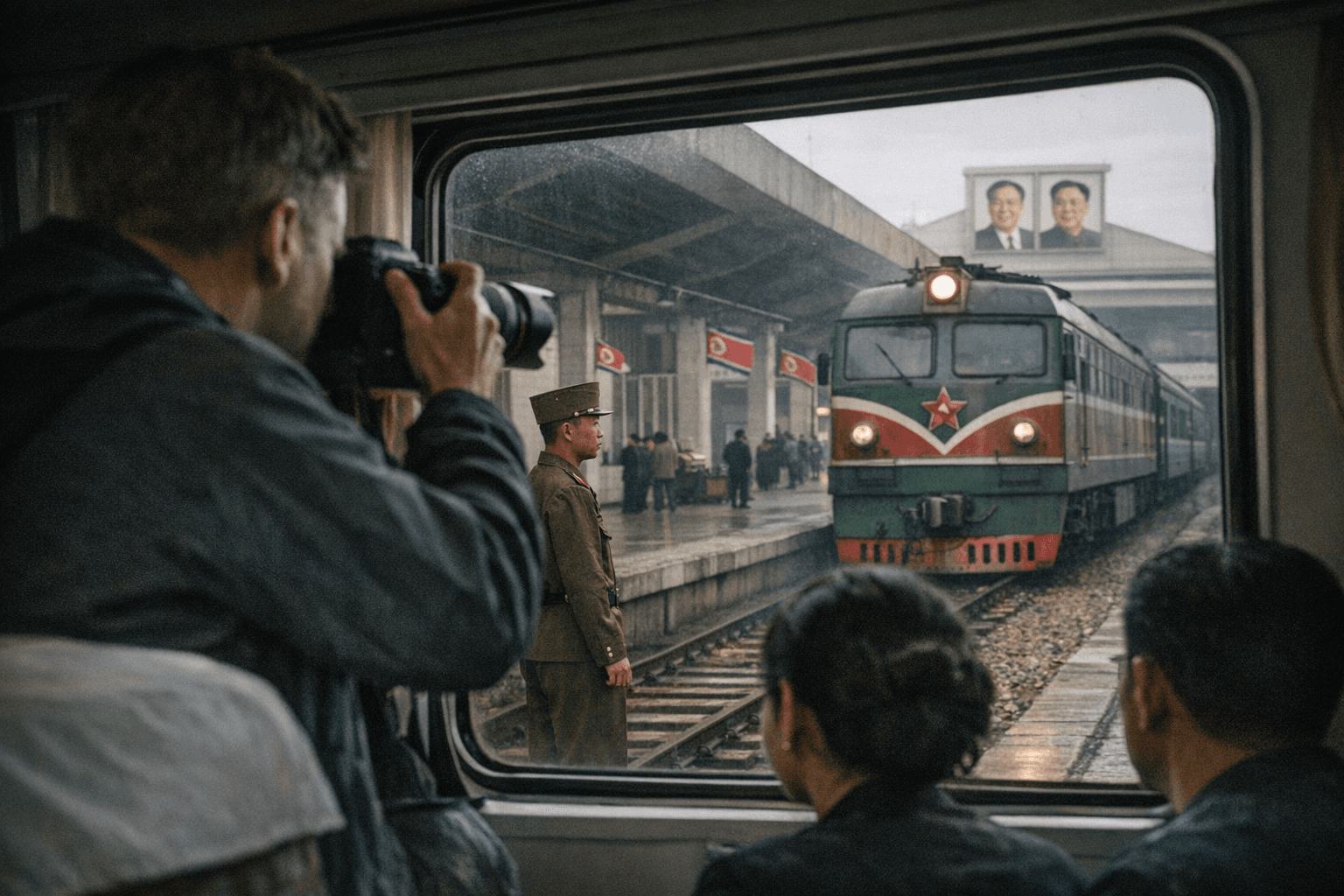
The moment the K27 slides across the Sino-Korean Friendship Bridge over the Yalu River, the rules change. Cameras go away, questions go unanswered, and North Korean officials board to inspect what passengers have brought. For CNN's Justin Robertson, that crossing was the story.
Robertson published video from the Beijing-to-Pyongyang run on March 29, 2026, following the only direct passenger train linking China and North Korea. He was among the first Western television journalists to document the reopened corridor: the Beijing-Pyongyang train service resumed operations on March 12, running four times a week, on Monday, Wednesday, Thursday, and Saturday, after a halt confirmed by an official at China State Railway Group. Robertson's footage came just 17 days after that first crossing.
The service had been suspended since the Covid-19 pandemic, when North Korea sealed its borders in 2020. China is North Korea's largest trading partner and a vital source of diplomatic, economic, and political support for the isolated nuclear state. In a train that typically runs 16 to 18 carriages, only the final two carriages are currently designated for international passengers. The overnight service departs Beijing Station, stops at Tianjin, then rolls northeast toward Dandong, where China ends at the Yalu River and everything changes.
Robertson's footage, narrated without any on-camera interviews with North Korean officials, documented what Pyongyang permits outsiders to see: station architecture and signage, street scenes and markets visible from permitted vantage points, and the elaborate bureaucratic handoff at the border. That formality alone, heavily policed and deliberately slow, is evidence of how tightly Pyongyang manages any incoming flow of foreign eyes.
What the footage cannot show is at least as revealing as what it does. North Korea remains among the most closed societies on earth, and a state-supervised rail journey to the capital does not unlock the country's food distribution system, its internal surveillance apparatus, or the daily calculus of citizens who live far from the showcase streets near Pyongyang's central stations. Defector testimony and satellite analysis have long documented food insecurity and forced-labor infrastructure that no permitted camera crew reaches.
Still, the K27 footage matters in 2026 precisely because of what reopened the door: a deliberate decision by both Beijing and Pyongyang to restore a link that Beijing controls almost entirely. The Dandong-Pyongyang route has resumed daily operations, providing a high-frequency connection via the Sino-Korean Friendship Bridge over the Yalu River. The K27 runs on China's timetable and requires Chinese railway infrastructure to function. When Pyongyang sealed the border in 2020, the trains stopped. When it decided to reopen in March 2026, China's railway authorities confirmed the schedule within days. The aperture is real; so is the hand on the lever.
Put into service on May 21, 1954, the K27 is currently the only pair of direct passenger trains connecting China and North Korea. Its resumption after the longest suspension in its seven-decade history is not a diplomatic footnote. For analysts tracking cross-border trade flows and the rare logistics of verified ground-level reporting from inside the DPRK, the return of an overnight sleeper train is itself a primary source, and Robertson's camera was the first Western lens on board.
This article was produced by Prism’s automated news system from verified source data, official records, and press releases, then run through automated quality and moderation checks before publishing. The system is built and supervised by the people who set the standards it runs under. Read our full AI policy.
Did this article answer your question?


