Colbert Mocks Trump's "Double-Sided Cease-Fire" Phrase, Jokes Single-Sided Is Just Murder
Colbert's quip that a "single-sided cease-fire is just murder" inadvertently spotlighted how Trump's redundant phrase obscured a fragile two-week Iran pause hinging on the Strait of Hormuz.
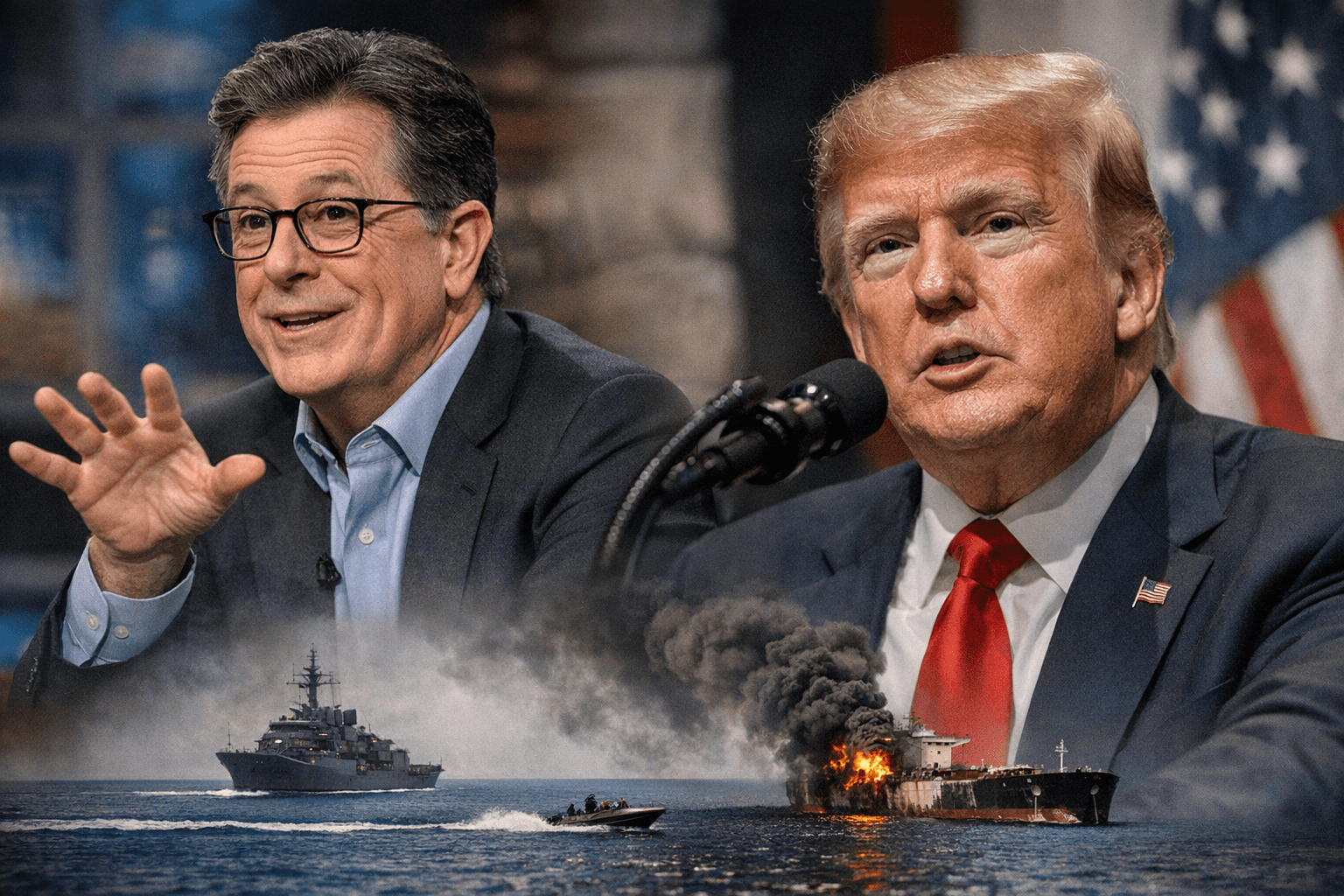
Stephen Colbert landed his sharpest line of the Iran crisis by doing almost nothing — just repeating Trump's words back to the audience. When Trump declared a "double sided CEASEFIRE" on Truth Social on April 7, Colbert's response was instant: "I believe there's a word for a single-sided cease-fire and it's murder." The joke worked because the phrase is, by definition, absurd. A cease-fire requires two parties to stop firing. The modifier "double-sided" adds nothing — except, perhaps, a window into how the White House has been framing a genuinely complicated and fragile diplomatic arrangement.
What Trump announced at 6:32 p.m. ET on April 7 was a two-week pause in U.S. military operations against Iran, contingent on one very specific and consequential condition: Iran must reopen the Strait of Hormuz, which Tehran had blockaded, severing a critical artery for global energy shipments. That is not a standard cease-fire — it is a conditional halt with an economic trigger attached. Oil prices registered the stakes immediately, plunging as much as 16% following the announcement. The deal came less than two hours before Trump's own self-imposed 8 p.m. EDT deadline, and was brokered in part through conversations with Pakistani Prime Minister Shehbaz Sharif and Field Marshal Asim Munir, whom Trump credited as pivotal to the pause. Iran's Supreme National Security Council confirmed the agreement and claimed victory. Israel also confirmed it had agreed to stop firing.
The diplomatic backstory runs deeper than the Truth Social post suggested. Iran had submitted a 10-point peace proposal, which Trump described as "a workable basis on which to negotiate" — a notable rhetorical shift from a president who, just hours before the announcement, had posted one of the most alarming statements of his presidency: "A whole civilization will die tonight, never to be brought back again. I don't want that to happen, but it probably will." Colbert called the post "chilling," building his monologue around the jarring contrast between civilizational annihilation rhetoric and the subsequent cease-fire declaration.
That contrast was even sharper given the timing of the broadcast. Colbert recorded his Tuesday monologue before the cease-fire was announced, meaning his mockery of the threat aired simultaneously with the deal being struck. The comedic bit about Trump's language landed not as anticipation of a resolution but as an unwitting real-time commentary on the gap between presidential rhetoric and diplomatic reality — which is, arguably, exactly what political satire is supposed to illuminate.
Jimmy Kimmel, the only other major late-night voice that week with Jimmy Fallon, Seth Meyers, and "The Daily Show" all on hiatus, took a sharper personal angle. Kimmel highlighted the cognitive whiplash of a president lamenting that he had not won the Nobel Peace Prize while simultaneously threatening to annihilate a civilization, quipping: "He went from Mahatma Gandhi to General Zod like that." Kimmel also dubbed the moment "D-Day," with the "D" standing for "dementia."
Both hosts were working from the same raw material: a military conflict now more than five weeks old, begun on February 28, 2026, when the United States and Israel launched joint airstrikes on Iran targeting military and government sites, an operation that also killed Supreme Leader Ali Khamenei. Whether calling the arrangement "double-sided" was sloppy language, deliberate framing, or simply Trump's rhetorical style, Colbert's joke did something measurable: it forced a mass television audience to confront what the words actually mean — and what the terms of the pause actually require.
The backdrop for Colbert's coverage carries its own political charge. CBS has already announced the cancellation of "The Late Show," a decision that drew a formal letter from Senators Elizabeth Warren, Bernie Sanders, and Ron Wyden to Skydance CEO David Ellison questioning whether a "secret side deal" tied to the Paramount-Trump settlement influenced the network's programming decisions. That unresolved question now hangs over every segment Colbert airs on the Iran crisis, adding a layer of institutional pressure to the comedic defiance on display Tuesday night.
This article was produced by Prism’s automated news system from verified source data, official records, and press releases, then run through automated quality and moderation checks before publishing. The system is built and supervised by the people who set the standards it runs under. Read our full AI policy.
Did this article answer your question?

