College of Menominee Nation Highlights History, Land-Grant Status and Programs
The College of Menominee Nation, chartered by the Menominee Tribal Legislature in 1993, was designated a land-grant college in 1994 and maintains a main campus in Keshena with a Green Bay campus near Oneida lands.
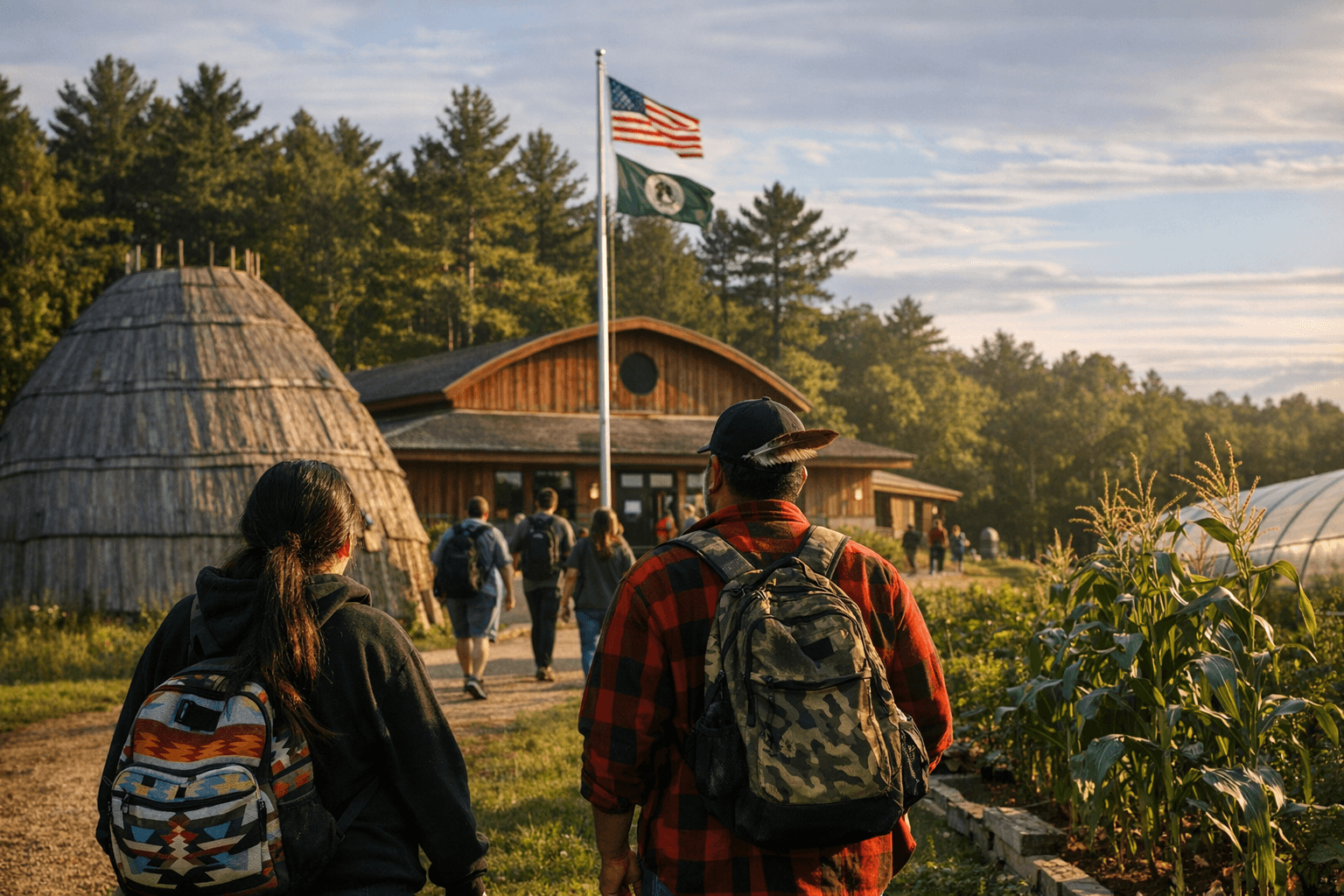
The College of Menominee Nation (CMN) was chartered by the Menominee Tribal Legislature in 1993 and began offering classes in the 1993 Spring semester; the institution was designated a land-grant college in 1994 alongside 31 other tribal colleges. CMN’s main campus sits on the southern border of the Menominee Indian Reservation in Keshena, Menominee County, with a second campus serving metropolitan Green Bay near the tribal lands of the Oneida Nation of Wisconsin.
CMN holds a record of regional accreditation milestones: full accreditation by the North Central Association of Colleges and Schools on August 7, 1998, with a ten-year accreditation awarded in 2003 and reaffirmation in 2013. Enrollment figures in CMN materials vary: an institutional summary states the college serves about 400 students each semester, while an informational entry lists 661 students; the materials do not attach dates to those counts. CMN is described as an accredited, bachelor’s degree providing, federally recognized Tribal College and University and is one of two tribal colleges in Wisconsin.
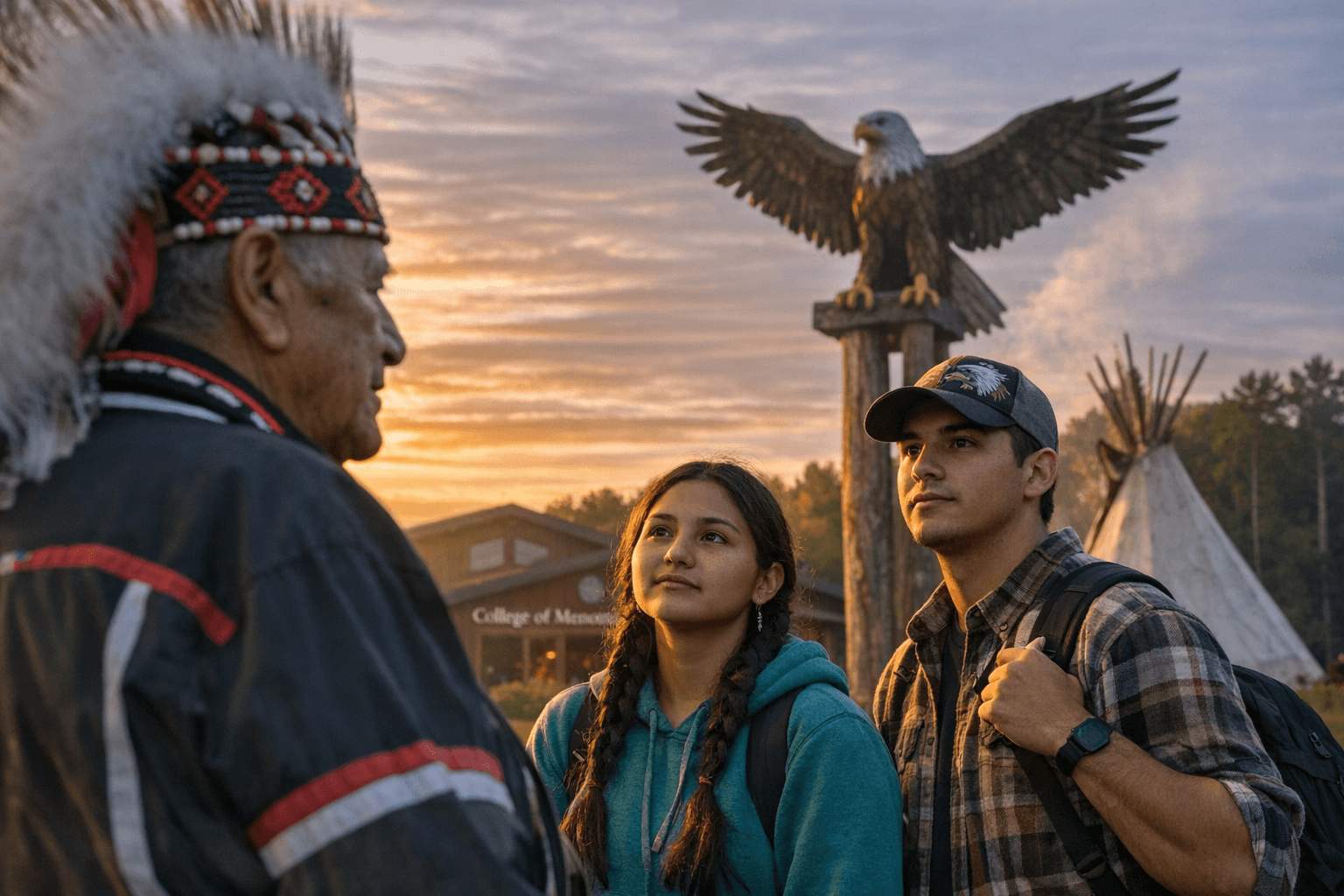
Academically, CMN emphasizes Indigenous knowledge, sustainability, and service to neighboring Tribal Nations. The college houses the Sustainable Development Institute, whose mission is described as “reflection and dissemination based on the tribe’s sustainable forestry experience.” Tribal leaders framed the institution around the Menominee experiential way of learning to “infuse learning with American Indian culture and prepare students for leadership, careers, and advanced studies in a multicultural world.” CMN offers degree and certificate programs as well as workforce training and community programming tailored to the Menominee Nation, Oneida and Stockbridge Munsee communities, rural residents, and other students from diverse backgrounds.
CMN’s teacher education program integrates trauma-informed practice and reservation-specific research priorities. Program materials emphasize adverse childhood experiences and historical trauma, stating, “We believe that our pre-service teachers need to be trauma sensitive and aware as working with students and their social-emotional well-being is crucial knowledge for our program graduates.” Graduates of the teacher program are to receive two years of induction services, and the department will work with partner schools and CMN graduates to ensure payback requirements are met. Kelli Chelberg is named as Project Director for the teacher education project; her listed credentials include a BS in Special Education, an M.Ed. in Education, and ongoing doctoral work at Edgewood College in Administrative Educational Leadership (Pre-K–16). Her time allocation is specified as 60 percent during academic years plus 20 percent in summers for years 1–3, and 40 percent during academic years plus 20 percent in summers for years 4–5.
Leadership and contact points in the provided materials include President Chris Caldwell and historic presidents Verna Fowler (1993–2016) and Diana Morris (interim, 2016). For more information, CMN’s press materials direct inquiries to the Director of Institutional Advancement, Susan Waukau: “For questions or more information regarding this press release, please contact CMN Director of Institutional Advancement, Susan Waukau, at 715-799-6226, ext. 3114, or by email at swaukau@menominee.edu.”
Know something we missed? Have a correction or additional information?
Submit a Tip