Collin County Tops Texas in Rent Burden for Low-Income Households
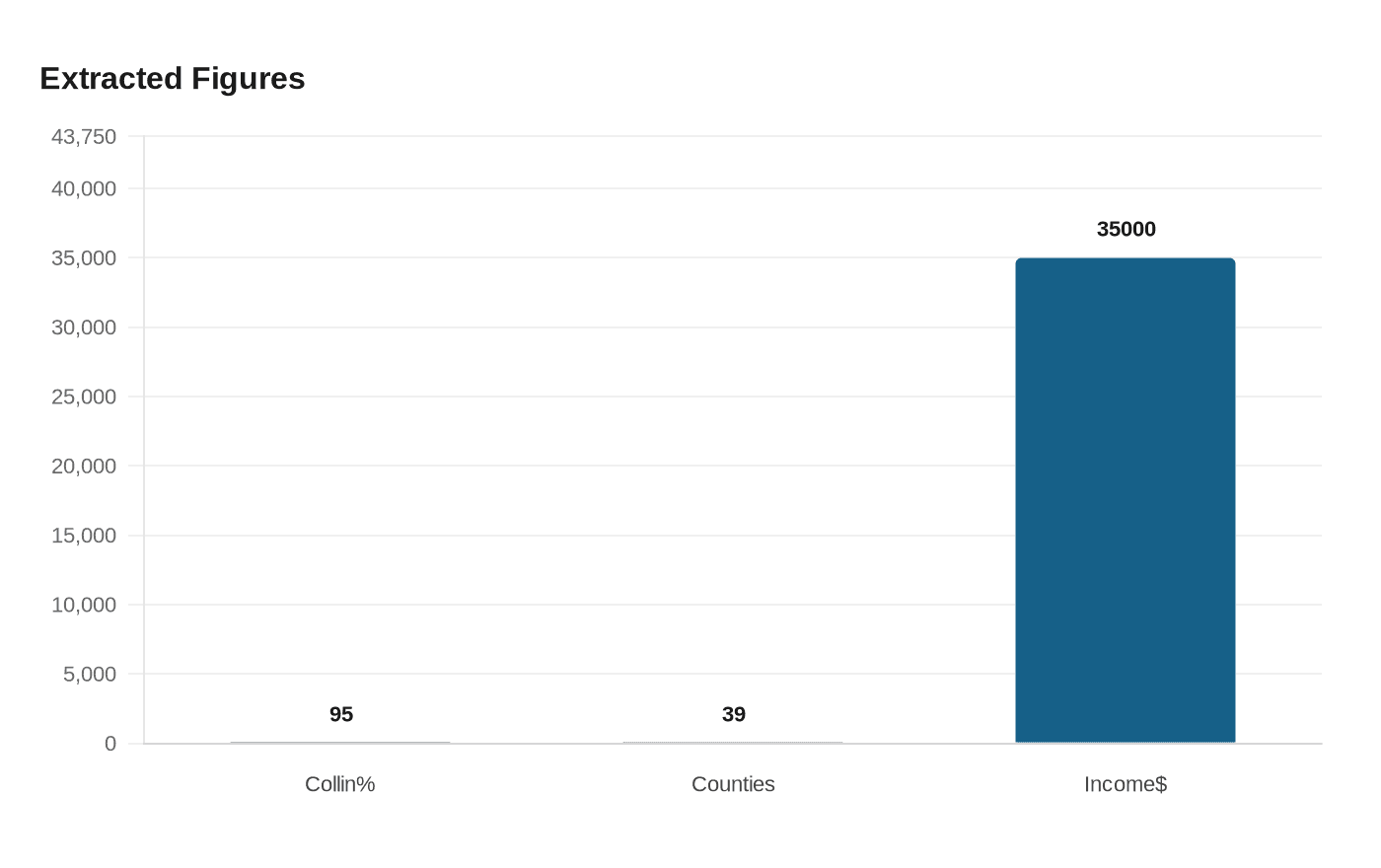
New analysis from the Texas Real Estate Research Center shows Collin County had the highest share of low-income renters spending more than one-third of their income on rent, placing nearly all such households under severe financial strain. The finding underscores growing housing affordability pressures for residents earning under $35,000 and raises questions about local workforce stability and policy responses.
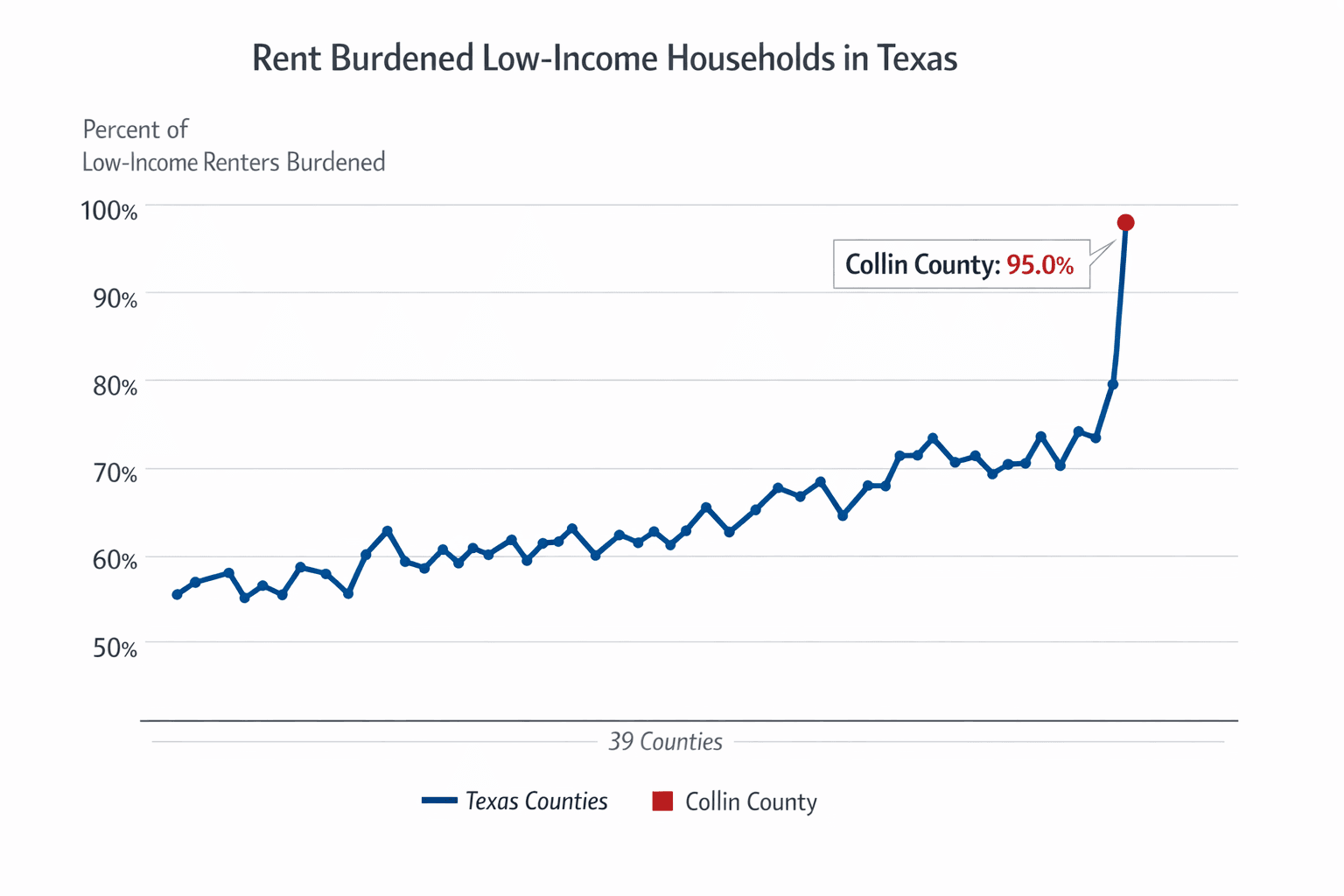
Collin County led Texas with a 95.0% rent burden among low-income renter households, meaning nearly all households earning under $35,000 annually were spending more than one-third of their income on rent, according to data presented Dec. 10 by research economist Jorge Barro of the Texas Real Estate Research Center at Texas A&M. Barro’s analysis showed that Texas has experienced a sharper decline in rental affordability than the national average, with the share of renter households spending more than one-third of their income rising notably after the pandemic.
The county’s 95.0% figure exceeded both the mean and median values displayed for a set of 39 Texas counties included in the study, signaling a pronounced local concentration of rent-stressed households. For Collin County residents, that translates into tighter household budgets, reduced ability to save for emergencies or for homeownership, and greater vulnerability to displacement if rents continue to outpace wage gains.
Economically, pervasive rent burden among low-income residents can ripple through the local market. Households allocating large shares of income to housing have less to spend on goods and services, which can weigh on small businesses and local retail. Employers in sectors that rely on lower-wage workers may face higher turnover and recruitment challenges if workers find housing unaffordable near job centers. Over time, constrained household formation and delayed homebuying among younger households could reshape demand in both rental and for-sale markets.
Policy responses at the county and municipal level will influence whether the trend eases or intensifies. Options often discussed by housing economists include increasing the supply of deeply affordable rental units through incentives and financing, preserving existing affordable stock, expanding rental assistance programs, and considering zoning adjustments to enable more diverse housing types. For residents earning under $35,000, targeted rental supports and access to subsidized units are immediate tools that reduce the short-term strain while longer-term supply-side measures are developed.
Barro’s presentation places Collin County’s situation in the broader post-pandemic context of tightening rental markets, and signals urgency for local leaders to evaluate housing strategies. With rent burden concentrated among the county’s lowest earners, policymakers face a choice between steadying household finances through targeted interventions or allowing affordability pressures to erode local economic opportunity and stability.
Sources:
Know something we missed? Have a correction or additional information?
Submit a Tip