Colombia runoff pits hard-right outsider against left-wing rival over security
Abelardo De La Espriella is betting on fear of crime and a Bukele-style crackdown as Colombia heads to a June 21 runoff. Iván Cepeda is promising continuity.
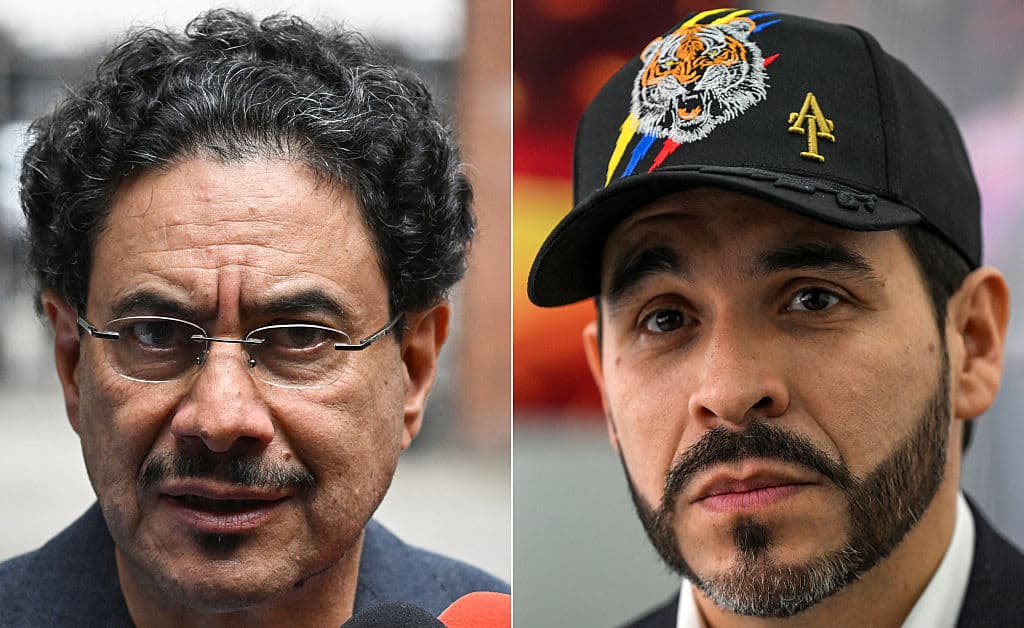
A combative criminal lawyer who has never held elective office has turned Colombia’s runoff into a referendum on security, drugs and the country’s alignment with Washington. Abelardo De La Espriella, 47, is running as a political outsider on the hard right after a first round on May 31 produced no winner above 50 percent.
De La Espriella has built his campaign on a blunt promise to crush drug traffickers. He says he would end peace talks with rebel groups, launch a military offensive and build 10 mega-prisons. Supporters and commentators compare him to Nayib Bukele of El Salvador, and De La Espriella has leaned into that image as a law-and-order outsider willing to break with Colombia’s political class.

The race has unfolded against a sharp rise in violence that has helped define daily life in parts of the country. Kidnappings, extortion, corruption, street crime and armed-group activity have shaped the campaign, and candidates have scaled back events after attacks that rattled the political establishment. Among the most shocking was the 2025 assassination of Miguel Uribe Turbay, the first killing of a Colombian presidential candidate in more than 30 years.
On the other side is Iván Cepeda, 63, a senator in the Pacto Histórico coalition and a longtime civil-rights activist who has taken part in peace talks with both the FARC and the ELN. Cepeda has said he would continue Gustavo Petro’s program, offering voters a path of continuity after four years of left-wing rule under a president who cannot seek immediate reelection under Colombia’s constitution.
The choice in the June 21 runoff reaches well beyond Colombia. A victory by De La Espriella would reinforce a regional rightward shift in Latin America and could push Bogotá toward a more confrontational approach to coca production, drug trafficking and peace negotiations. It would also likely bring Colombia closer to the security-first politics that have gained ground across the hemisphere, with stronger implications for relations with Washington.
De La Espriella’s rise has also been fueled by voters’ frustration with rising violence and the sense that the state has lost control in some areas. Cepeda has tried to keep the contest focused on policy and dialogue rather than personal attacks, arguing that Colombia’s next president must confront insecurity without abandoning negotiations altogether.
With no candidate clearing the first-round threshold, the runoff now pits two sharply different visions of the country against each other: one built on force, prisons and rupture, the other on continuity, talks and institutional restraint. The outcome will shape not only Bogotá’s response to armed groups, but also how Colombia positions itself in a more polarized hemisphere.
This article was produced by Prism’s automated news system from verified source data, official records, and press releases, then run through automated quality and moderation checks before publishing. The system is built and supervised by the people who set the standards it runs under. Read our full AI policy.
Did this article answer your question?