Colorado man who died in Denver airport runway collision ruled suicide
A 41-year-old Pueblo man climbed a DIA fence, reached Runway 17L in minutes, and was ruled to have died by suicide after a Frontier jet struck him.
Denver authorities said Michael Mott, 41, of Pueblo, Colorado, scaled an airport perimeter fence and got onto an active runway at Denver International Airport before a Frontier Airlines jet struck him as it took off for Los Angeles. Denver’s chief medical examiner ruled the death a suicide, tying the finding to scene evidence, the circumstances and Mott’s history.
The collision involved Frontier Flight 4345, an Airbus A320/A321-family aircraft carrying 224 passengers and 7 crew members. Pilots reported smoke and an engine fire after the strike, and passengers later evacuated by slides. Twelve passengers suffered minor injuries, and five were taken to hospitals. Denver International Airport said Runway 17L would remain closed during the investigation, while the National Transportation Safety Board was notified and began gathering information.
Airport officials said Mott climbed an 8-foot perimeter fence topped with barbed wire and reached the runway in about two minutes. Security-camera footage reviewed by local outlets showed the climb itself took about 15 seconds. That speed underscores the challenge of protecting a sprawling facility where a brief lapse can become a runway emergency in moments.
Denver International Airport Chief Executive Phil Washington called the incident a “horrible and preventable tragedy.” The airport said it was continuing to gather information with multiple agencies as investigators worked to determine how Mott crossed the perimeter and reached an active strip before anyone stopped him.
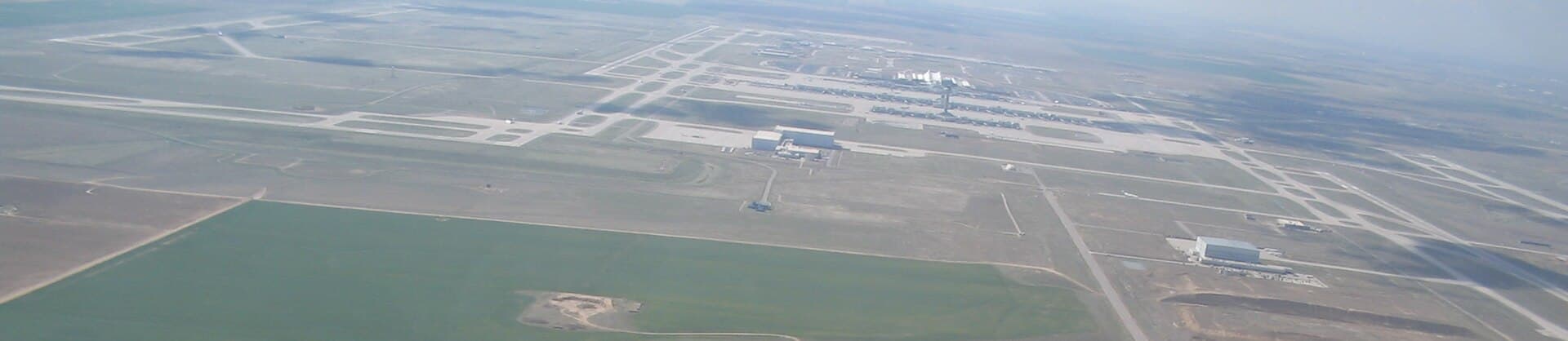
The breach has drawn attention to the limits of physical barriers at one of the country’s largest airports. DIA spans roughly 33,000 acres, or about 52 to 53 square miles, and its perimeter fence stretches about 36 miles. Officials have also said a radar system monitoring the fence line triggered an alarm before the collision, but airport personnel initially missed the breach, raising questions about how quickly alerts are converted into action.
Investigators have said Mott was not believed to be an airport employee. The case now sits at the intersection of aviation security and crisis response, with pressure on airport and federal officials to explain how a person in acute distress was able to breach the perimeter, reach Runway 17L, and enter the path of a departing airliner.
This article was produced by Prism’s automated news system from verified source data, official records, and press releases, then run through automated quality and moderation checks before publishing. The system is built and supervised by the people who set the standards it runs under. Read our full AI policy.
Did this article answer your question?

