Colorado Senate Approves Expansion of Red-Flag Law, Bill Heads to House
Colorado senators approved SB 4 to expand the state's red-flag law, a move that would let schools and health facilities petition to temporarily remove firearms.

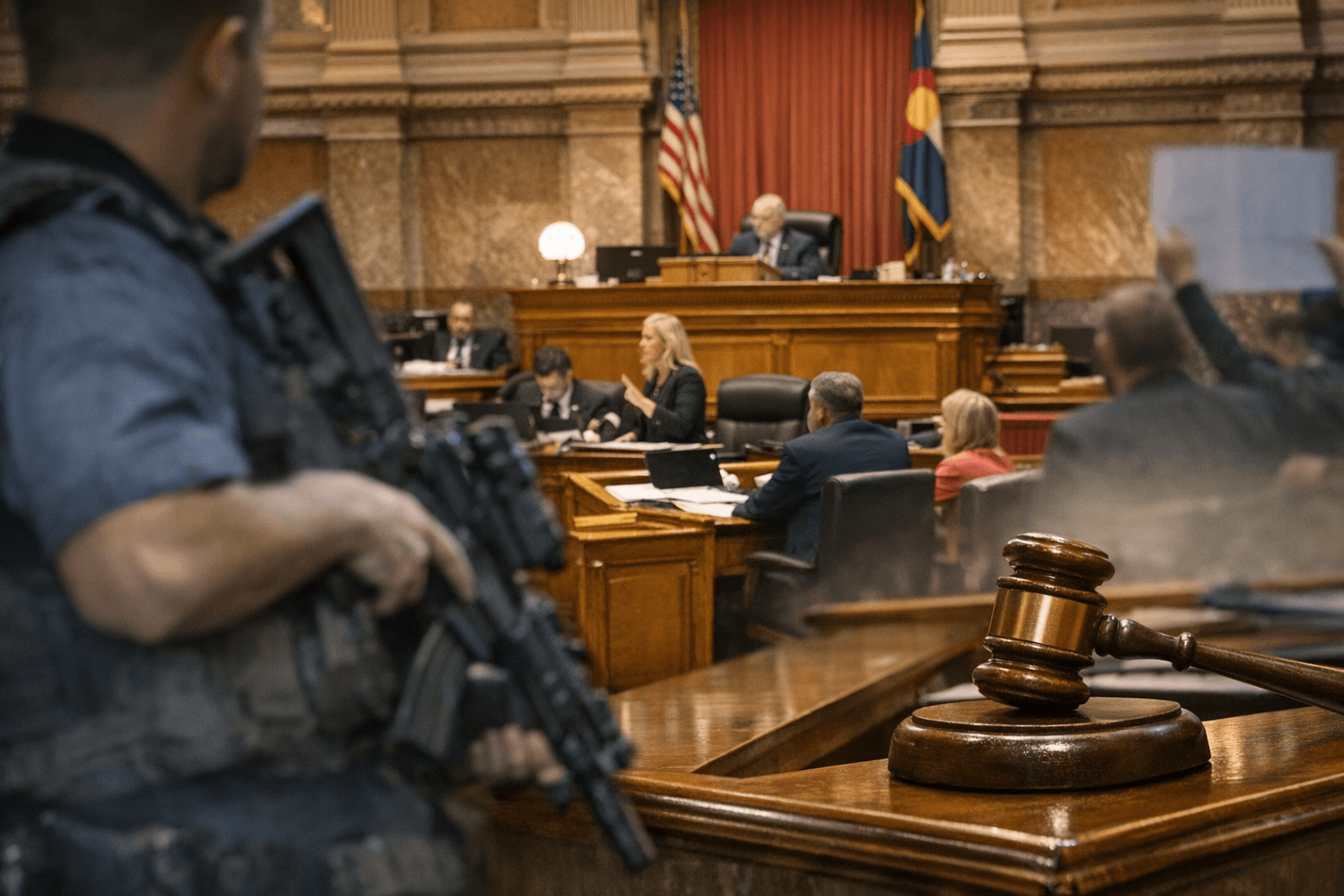
The Colorado Senate approved Senate Bill 4, expanding the state's extreme-risk protection order law to allow institutions such as health care facilities, behavioral health treatment centers, K-12 schools and colleges to file petitions to temporarily require someone to surrender firearms. The measure passed on a near party-line vote of 20-13 and now moves to the Colorado House, where a 43-22 Democratic majority makes final passage likely.
Sponsor Sen. Tom Sullivan, a Centennial Democrat, framed the bill as a data-driven adjustment to a statute first enacted in 2019 and implemented in 2020. Sullivan said opponents were sounding false alarms, accusing them of playing "Chicken Little" and arguing the law "hasn't resulted in widespread confiscation." Gov. Jared Polis' office signaled support for strengthening the statute. Polis' spokesperson Eric Maruyama said, "Colorado's red flag law has shown success since its implementation in 2020, and the governor is open to finding ways to further strengthen it."
Supporters cast the change as a public health intervention aimed at preventing gun violence and suicide. Sen. Julie Gonzales, a Denver Democrat, said, "Extreme risk protection orders save lives. Red flag laws prevent harm. These policies, and this bill that we are debating here today, address the public health crisis that is gun violence." Proponents point to state data showing petitions have been used in several hundred cases without a broad pattern of rights violations.
Opponents warned the expansion would widen a tool they view as risking civil liberties and deterring people from seeking care. Sen. Lynda Zamora Wilson, an El Paso County Republican and Air Force veteran, warned the bill could dissuade gun owners from seeking mental health help because institutions providing care could request loss of firearm access. She said the measure "will inflict unnecessary harm on innocent citizens, waste taxpayer dollars and strain trust in our institutions" and warned it could erode Second Amendment rights and due process because petitions can be filed absent criminal convictions.
Published state tallies show how courts have handled extreme-risk petitions so far. From 2020 through 2024 there were 692 petitions filed statewide. Of those, 478 resulted in temporary firearm removal for at least two weeks or were granted on a temporary or long-term basis. Year-by-year counts show 156 petitions in 2022, 171 in 2023 and 164 in 2024. Approval patterns differ by petitioner type with law enforcement petitions approved more than 80 percent of the time while non-law-enforcement petitions are approved at about 22 percent. Nearly 70 percent of unsuccessful petitions were denied because they failed to meet the burden of proof.
Nonpartisan Legislative Council Staff analysis and prior 2023 budget decisions inform fiscal expectations. The staff noted the state allocated additional resources in 2023 to process more petitions and concluded that adding entities and employers who overlap with existing petitioners will have a minimal fiscal impact on the state.
For Logan County residents the change would expand which local bodies could seek temporary removal of firearms, touching K-12 districts, higher education campuses, behavioral health providers and local health systems. The bill now heads to the Colorado House for committee review and floor votes where amendments could alter petitioner lists or procedural safeguards. If the House approves SB 4 it is likely to reach Governor Polis' desk for signature. Watch for House committee hearings, any proposed limits on employer petitions, and statements from local school districts, hospitals and mental health providers about whether they would seek petitioning authority and how they would safeguard patient trust.
Sources:
Know something we missed? Have a correction or additional information?
Submit a Tip