Colorado's Cannabis Market Faces Oversupply, Falling Prices, and Fierce Competition
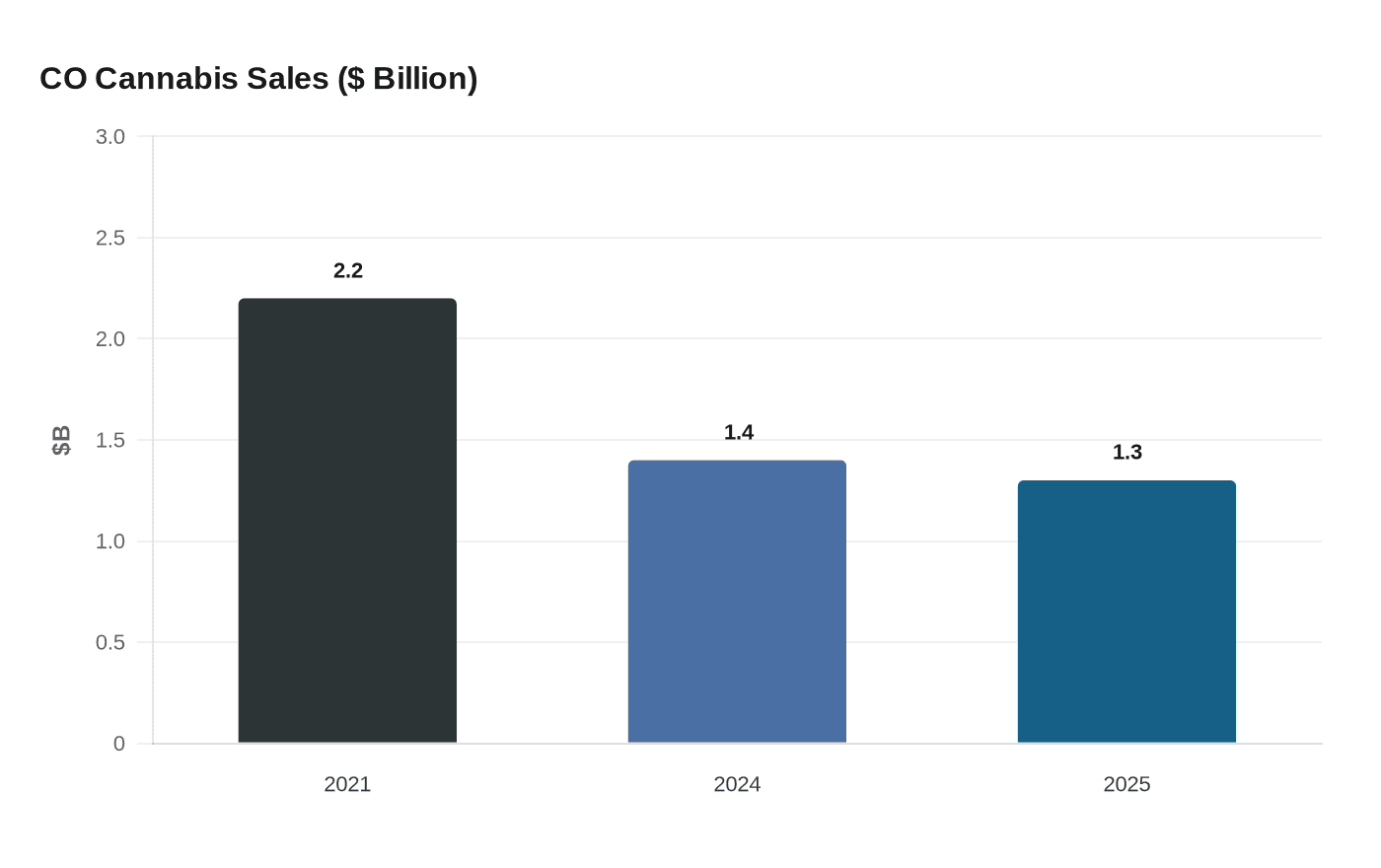
Colorado wholesale cannabis prices have crashed 65% since 2021 to a record-low $608 per pound, as annual dispensary sales collapsed from $2.2B to $1.3B.
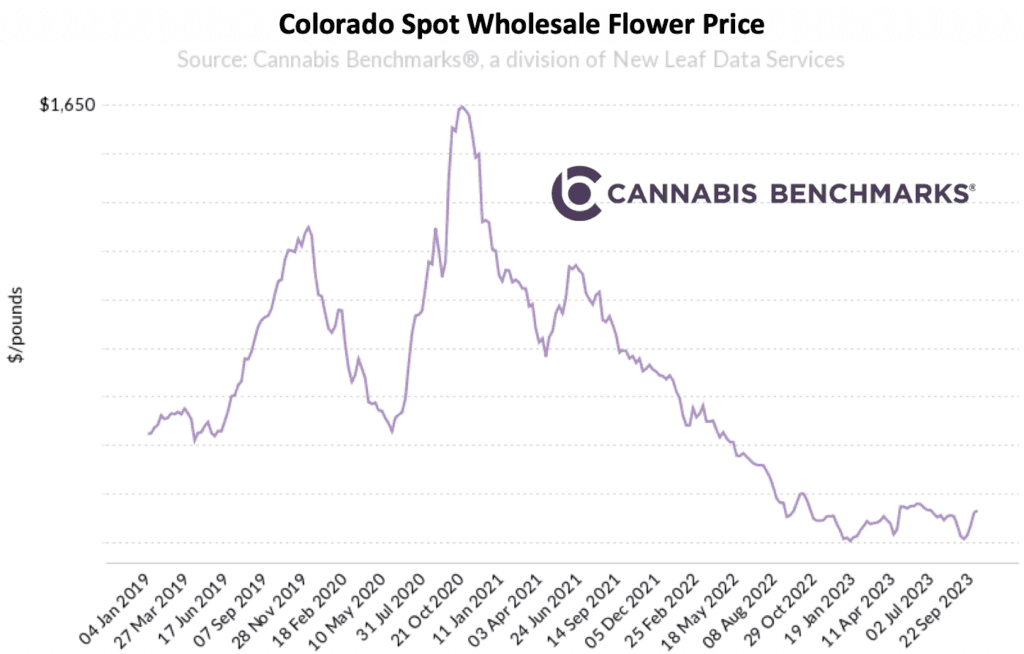
Colorado's licensed cannabis market, the first commercial adult-use system in the United States, is deep into a contraction that has erased the boom-era gains of its earliest years. Wholesale flower prices have fallen more than 65 percent since 2021, when the median price per pound peaked at $1,721. By March 2026, the Colorado Department of Revenue recorded a median retail price of $608 per pound, the lowest figure since the state began tracking legal cannabis prices in 2014.
The revenue collapse is equally stark. Dispensaries sold a record $2.2 billion worth of cannabis in 2021, fueled by pandemic-era demand and pent-up consumer appetite born out of prohibition. By 2024, that figure had fallen to just over $1.4 billion, and preliminary data show sales continued falling through 2025 to approximately $1.3 billion, marking the fourth consecutive annual decline. From January through May 2025 alone, purchases were down 7 percent year over year.
The supply side has undergone its own painful correction. Colorado counted 791 licensed recreational cultivation operations in December 2021. By late 2024, that number had dropped to 488, a 38 percent contraction, as growers unable to cover fixed costs at depressed wholesale prices surrendered licenses or shuttered entirely. High-profile brands including Bubba's Kush and Dablogic closed or exited the state, while three of Colorado's largest dispensary chains downsized or showed signs of financial distress within a single month in early 2026.
Budget analysts at the Colorado legislature's Joint Budget Committee have identified two primary culprits behind the sustained slide: rising competition from other states that have since legalized adult use, drawing both tourists and border-region consumers away from Colorado retailers, and the proliferation of intoxicating hemp products that have cannibalized legal marijuana sales nationally. The committee responded by cutting $16 million from marijuana-funded programs, including substance abuse prevention, anti-bullying grants, and cannabis research, a sign of how deeply communities that built spending plans around cannabis revenue are feeling the market's retreat.
Since recreational sales launched in 2014, Colorado has collected more than $3 billion in marijuana taxes and fees. That milestone, however, masks the trajectory: per-year tax collections have been declining in tandem with sales, and a proposed tax increase considered by the state legislature appeared likely to deepen the problem rather than solve it, with data from other jurisdictions showing that higher levies tend to push consumers toward the untaxed market.
Consolidation has emerged as the dominant survival strategy for operators with access to capital. Vireo Health closed its acquisition of Schwazze assets, expanding to 45 dispensaries across Colorado and New Mexico, illustrating how distressed exits are becoming acquisition opportunities for well-financed buyers. Smaller cultivators and single-store retailers lack that runway. One operator captured the market's brutal consumer dynamic plainly: "The consumer largely doesn't care. They want big buds that are cheap and test high in THC."
Colorado's trajectory is being closely watched by states at earlier stages of legalization. The core tension the state's experience exposes is structural: licensing frameworks designed during boom conditions, layered with high tax rates and compliance costs, proved poorly calibrated for a maturing, increasingly competitive market. Whether regulators elsewhere can design systems that prevent the same oversupply spiral, while still meeting social-equity and public-health goals, is the central policy question Colorado's decade-long experiment has raised, without yet answering.
This article was produced by Prism’s automated news system from verified source data, official records, and press releases, then run through automated quality and moderation checks before publishing. The system is built and supervised by the people who set the standards it runs under. Read our full AI policy.
Did this article answer your question?

