Community restoration logs deliver practical guidance for vintage synth repairs
A hands-on community project published detailed restoration logs with photos and step-by-step repair notes, giving readers practical instructions for safe basic synth servicing.
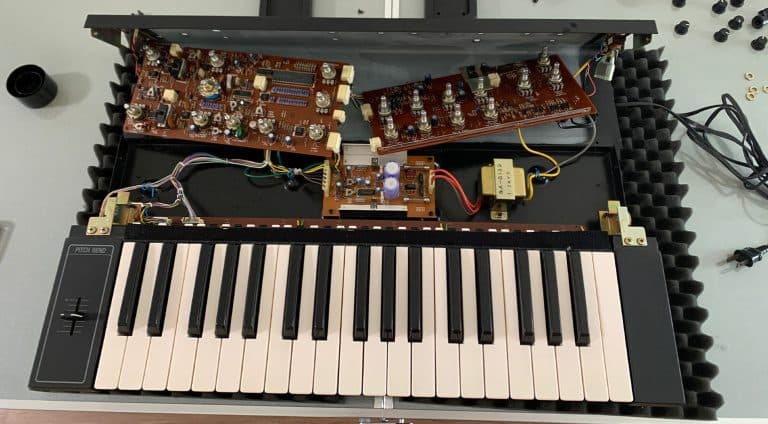
A community restoration project has compiled detailed, hands-on logs that walk through basic repairs and refurbishment for vintage synthesizers, offering a pragmatic entry point for anyone dealing with flaky keyboards, noisy pots, or tired power supplies. The package of disassembly photos, progressive repair notes, and lessons learned focuses on safe, cautious work and fills a gap between casual tinkering and pro-level shop repairs.
The logs document a methodical workflow: start with a careful initial evaluation, document faults, and proceed with staged disassembly while photographing each step. That approach helps preserve orientation for reassembly and makes troubleshooting reproducible. The project lays out practical cleaning and servicing tasks that are both common and high impact: switch and pot cleaning, keyboard contact strip servicing and replacement, capacitor testing and safe removal, and power supply refurbishment. Where components require replacement or recalibration, the notes flag when to seek an experienced technician.
Readers get specific, usable guidance on cleaning agents and techniques. Recommended solvents include isopropyl alcohol and standard contact cleaners for gunked contacts and pots, and the logs describe when to choose gentle contact-cleaning over deeper part replacement. The capacitor notes emphasize safety and offer tips for removing and testing old caps rather than simply assuming replacement, a valuable cost and time saver for many projects.
Photos accompany progressive disassembly to reduce the guesswork that often turns a straightforward job into a salvage operation. The visual documentation shows fasteners, connector orientations, and cable routing so you can trace how parts come apart and go back together. Keyboard notes cover contact replacement and recalibration, targeting the common failure modes that produce dead notes or velocity issues.
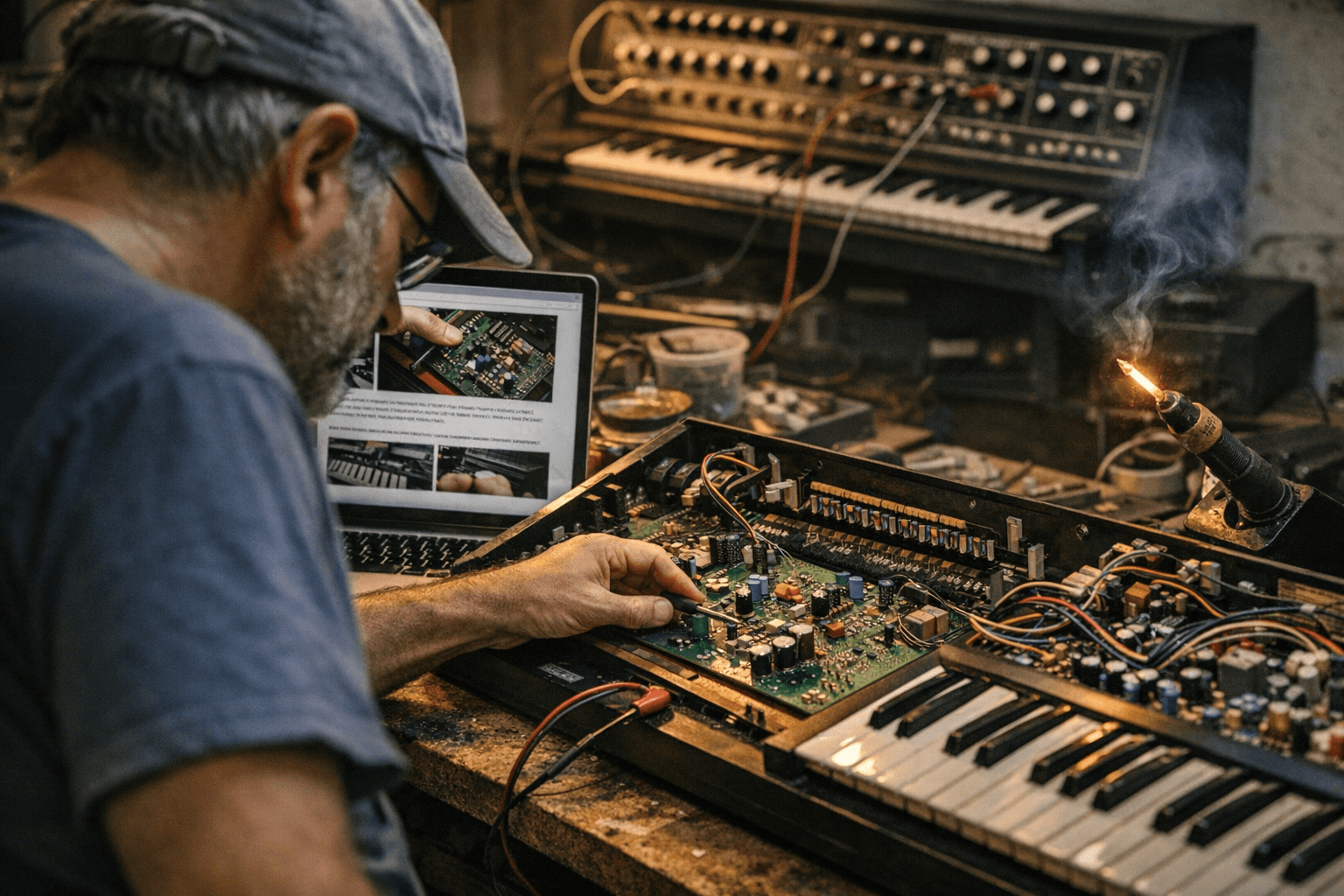
This material is intentionally practical: it is aimed at hobbyists who want a cautious, hands-on introduction rather than a deep dive into electronics engineering. The logs also point to further resources and community techs for jobs that exceed typical bench skills, so you know when to call in a pro rather than risk frying a power rail.
For synth collectors weary of GAS and a growing pile of units with sticky keys and scratchy pots, these restoration logs function like a field manual. They reduce the intimidation factor, teach safe habits, and make it easier to get a workable instrument back into the patch without a major outlay. Expect this work to keep more classics playable and to sharpen the community’s collective repair skills, and to inspire more people to pick up a screwdriver and follow the photos instead of letting another cabinet of sounds go silent.
Know something we missed? Have a correction or additional information?
Submit a Tip