Complete Conure Care Guide: Housing, Diet, Enrichment, and Vet Warning Signs
Clear, practical conure care essentials for housing, diet, enrichment, and vet warning signs to help keep pet parrots healthy and reduce emergency visits.
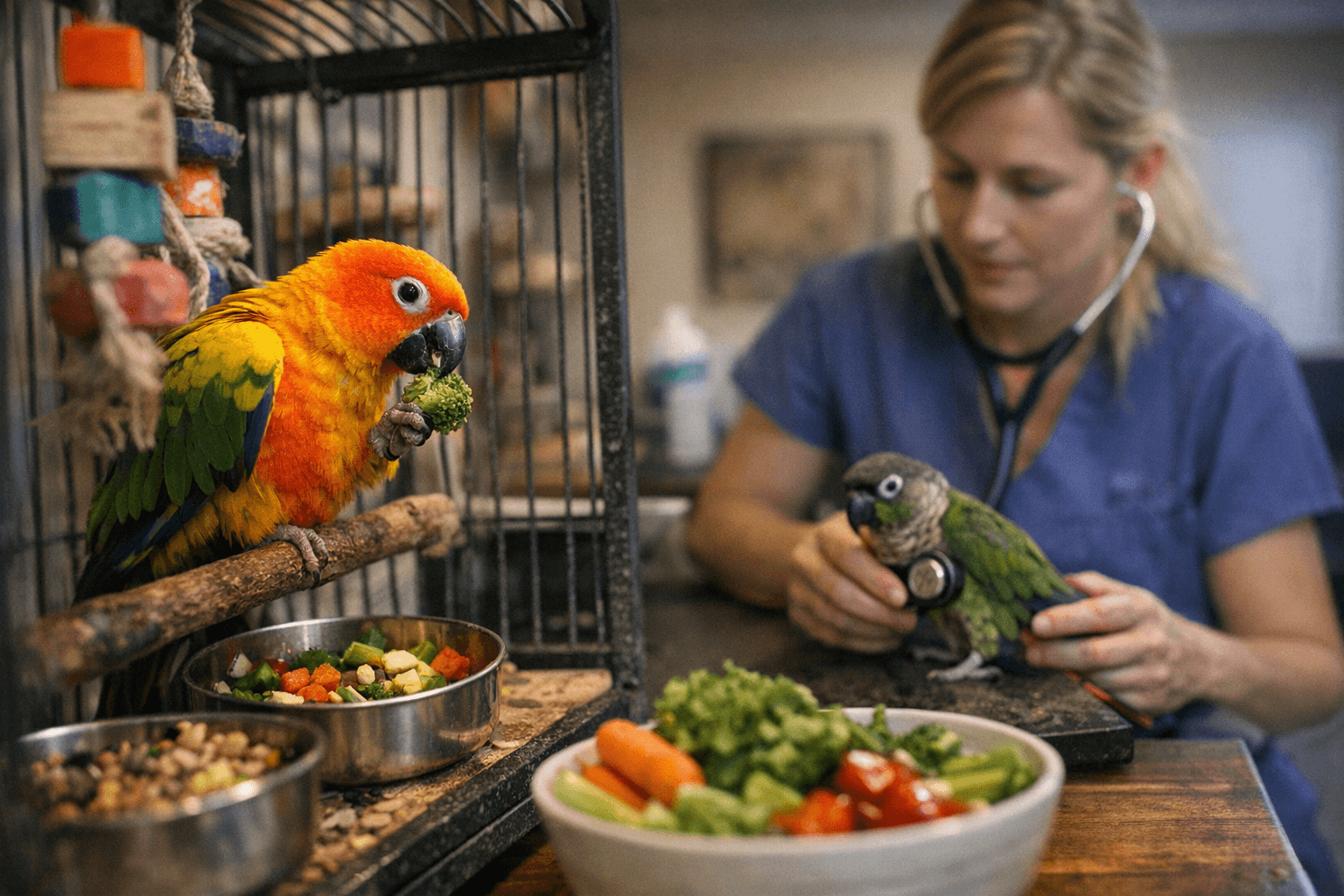
Proper housing and a balanced diet are the foundations of conure care and the most effective way to prevent common health problems. Provide a cage at least 20 x 20 x 30 inches, with 32 x 23 x 36 inches or larger recommended whenever space allows. Position the cage where the conure can be part of daily household activity, but avoid kitchens, fumes, drafts and direct intense sun; cover the cage at night to give the bird a secure sleep environment.
Perches and enrichment shape behavior and beak health. Offer multiple perch types of varying thickness so feet get exercise and rest, rotate toys regularly to prevent boredom, and include chewable items and foraging opportunities to encourage natural foraging and shredding. Add a cuttlebone for beak maintenance and bone health. Provide a play-stand or a safe play area outside the cage for supervised out-of-cage time that supports social bonding and physical exercise.
Diet should be pellet-forward. Use a high-quality fortified pellet as the base diet, supplemented daily with fresh vegetables and moderate amounts of fruit and grains. Offer seeds, nuts and millet only as occasional treats, not staples. Avoid chocolate, avocado, and foods high in salt, sugar or fat; these can be toxic or damaging to conure health.
Bathing and hygiene are simple but essential routines. Offer a shallow birdbath or mist the bird two to three times weekly. Keep fresh drinking water available at all times. Spot-clean the cage daily to remove fresh droppings and food debris, and perform a deep clean at least weekly to reduce bacterial and fungal buildup.
Watch for clear red flags that require prompt veterinary attention. Seek an avian veterinarian if a conure shows prolonged sitting on the cage floor, decreased appetite or weight loss, lethargy, persistent fluffed feathers, sneezing or discharge from the eyes, nose or mouth, runny droppings lasting more than two days, feather-plucking, or abnormal beak function. If you do not already have one, find an avian veterinarian through professional directories and keep contact information handy for emergencies.
Practical changes yield immediate benefits: upgrading cage size, adding foraging toys, shifting to pellet-based feeding, and establishing cleaning routines can reduce stress-related behaviors and prevent infections. Apply these measures one step at a time so the bird adapts smoothly. Regular observation and a low threshold for veterinary consultation will protect your conure and save you time and worry down the line.
Know something we missed? Have a correction or additional information?
Submit a Tip