Congress Moves to Treat AI Chips Like Weapons in Export Control Fight
The AI OVERWATCH Act cleared committee 42-2, seeking to give Congress power to block advanced chip exports to adversaries the way it blocks arms sales.

The House Foreign Affairs Committee passed the AI OVERWATCH Act by a vote of 42 to 2 on January 21, advancing legislation that would give Congress authority to block exports of advanced AI chips to adversary nations by treating semiconductors with the same oversight as arms sales.
The bill would require licenses for the export, reexport, or in-country transfer of certain high-performance AI chips to countries of concern, and establishes a two-tier framework for congressional oversight of the licensing process. Its sponsors frame the measure as a direct response to the administration's existing export policy, with one legal analysis describing it as "Congress's most recent answer to the administration's new export policy."
House Foreign Affairs Committee Chairman Rep. Brian Mast (R-Fla.) said he intends to continue advancing legislation aimed at giving Congress greater oversight of chip exports. Select Committee on China Chairman John Moolenaar, a cosponsor of the bill, made the strategic rationale explicit: "Advanced AI chips are foundational to economic growth and military power, and Congress has a responsibility to ensure they are not fueling the Chinese Communist Party's military modernization or surveillance state. We must protect our world class innovation and the security of the American people."
Moolenaar called the committee vote "a critical step toward protecting America's technological edge."
The legislation has drawn support from an unusual coalition. Analysts note the bill is a bipartisan effort led by a Republican committee chairman, with the House Select Committee on Strategic Competition between the United States and the Chinese Communist Party framing advanced semiconductors as a "strategic chokepoint" in the rivalry with Beijing. The national security establishment has largely praised the measure.
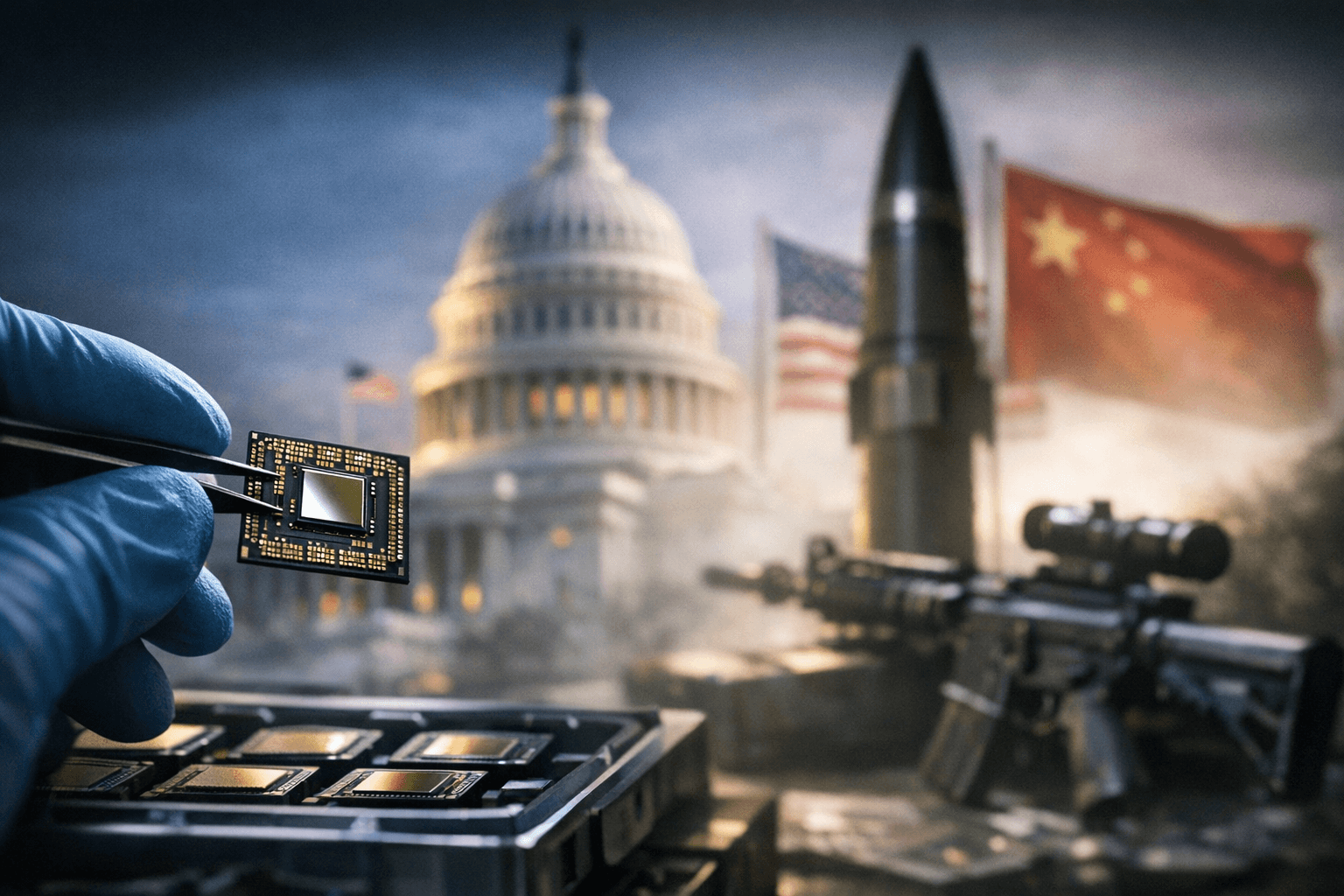
Opposition, however, has come from multiple directions. The White House AI czar has criticized the bill, and conservative influencers have attacked it, reflecting deeper tensions between national security imperatives and commercial interests. The underlying conflict also represents a constitutional contest: who controls export policy, Congress or the executive branch.
The bill's path has been shaped by the failure of earlier efforts. The GAIN AI Act, which would have required chipmakers to prioritize domestic customers before exporting to China and other countries of concern, passed the Senate but was stripped from the final defense bill after lobbying by the White House and Nvidia.
China's own behavior adds complexity to the debate. Beijing has simultaneously approved and throttled imports of the very chips at issue, a dual-track approach that complicates U.S. export control strategy and underscores why lawmakers argue tighter congressional oversight is necessary rather than leaving decisions solely to executive agencies.
A further markup is planned as the bill works toward a full House floor vote, though no specific date has been confirmed. The legislation still faces a path through the full chamber and then the Senate, where the industry lobbying that killed the GAIN AI Act remains a significant countervailing force.
This article was produced by Prism’s automated news system from verified source data, official records, and press releases, then run through automated quality and moderation checks before publishing. The system is built and supervised by the people who set the standards it runs under. Read our full AI policy.
Did this article answer your question?

