Conservation group builds artificial reef in Coral Triangle rubble fields
In the Coral Triangle’s rubble fields, engineers are testing whether artificial reefs can do more than stand in place and actually help damaged ecosystems recover.
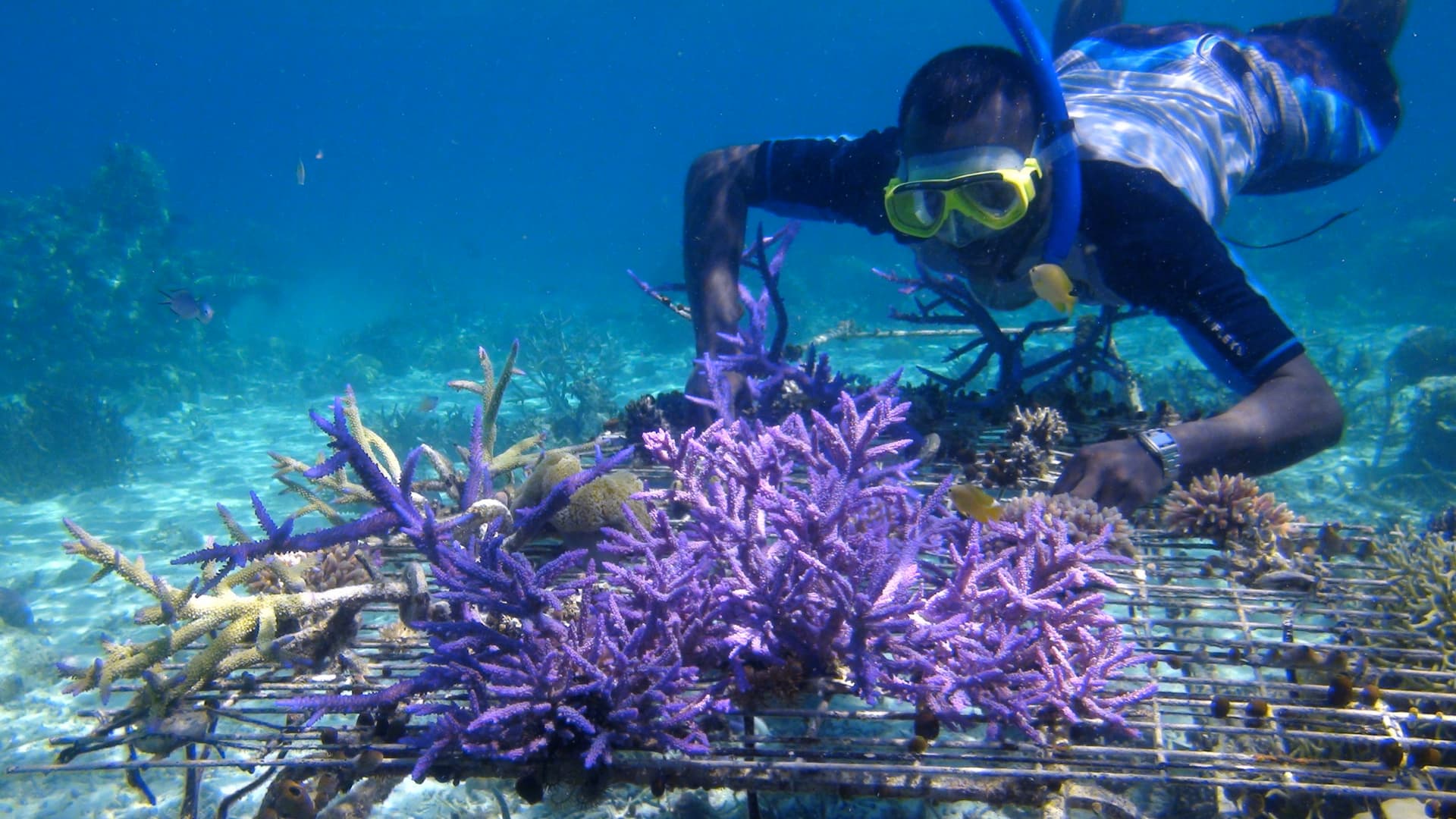
Can an engineered reef do more than create underwater structure and actually restore a damaged ecosystem at meaningful scale? That question sits at the center of conservation work now taking shape in a devastated stretch of the Coral Triangle, where blast-fishing rubble can stay unstable for decades and block young corals from taking hold.
The Coral Triangle stretches across parts of Indonesia, Malaysia, Papua New Guinea, the Philippines, the Solomon Islands and Timor-Leste, and some areas support more than 605 species of hard coral. It is also a food and income base for coastal communities, which makes the damage there a governance problem as much as an environmental one. Destructive fishing, especially blast fishing, has left reefs shattered in places that still have nearby healthy coral producing larvae, yet those larvae often have nowhere stable to settle.

That is why restoration groups and researchers are increasingly looking at artificial, or built, reef structures. A 2024 review by the U.S. Geological Survey said such structures can help restore reef complexity, but it also flagged major knowledge gaps about how well they perform ecologically. In one of the clearest warnings about the scale of the damage, researchers reported that blast-fished reefs in South Sulawesi, Indonesia, were still rubble fields 30 to 40 years after the original destruction. In other words, natural recovery has been slow enough that the seabed remains locked in a damaged state across generations.
The policy backdrop is the Coral Triangle Initiative on Coral Reefs, Fisheries, and Food Security, a six-country partnership created in Bali in December 2007. Its current Regional Plan of Action runs from 2021 to 2030, reflecting how closely reef health is tied to food security, fisheries and tourism across the region. The initiative also highlights the pressure from explosives, cyanide fishing and bottom trawling, while climate change, pollution and coastal development continue to add strain. The result is a restoration debate that is no longer about scenery alone, but about whether governments and conservation groups can stabilize coastal systems fast enough to buy time.

Even the most optimistic engineering claims come with limits. MIT researchers said a carefully designed reef could dissipate more than 95 percent of incoming wave energy in modeling, and use far less material than conventional defenses. But scientists also say artificial reefs are an adaptation tool, not a replacement for cutting greenhouse-gas emissions or fixing the local drivers of reef loss. The unanswered test is stark: whether built structures can help corals return in the rubble fields, or whether they remain a costly but photogenic stopgap in a warming ocean.
This article was produced by Prism’s automated news system from verified source data, official records, and press releases, then run through automated quality and moderation checks before publishing. The system is built and supervised by the people who set the standards it runs under. Read our full AI policy.
Did this article answer your question?