Construction crew sends daily messages to 4-year-old awaiting transplant
Construction workers at Cleveland Clinic’s site send daily hand-heart gestures and gifts to Brinley, a 4-year-old awaiting a heart transplant, offering steady emotional support.
%3Amax_bytes(150000)%3Astrip_icc()%3Afocal(749x0%3A751x2)%2Fbrinley-wyczalek-heart-transplant-construction-workers-021926-1-65383a4b37da41568ea5e0dc45f2f609.jpg&w=1920&q=75)
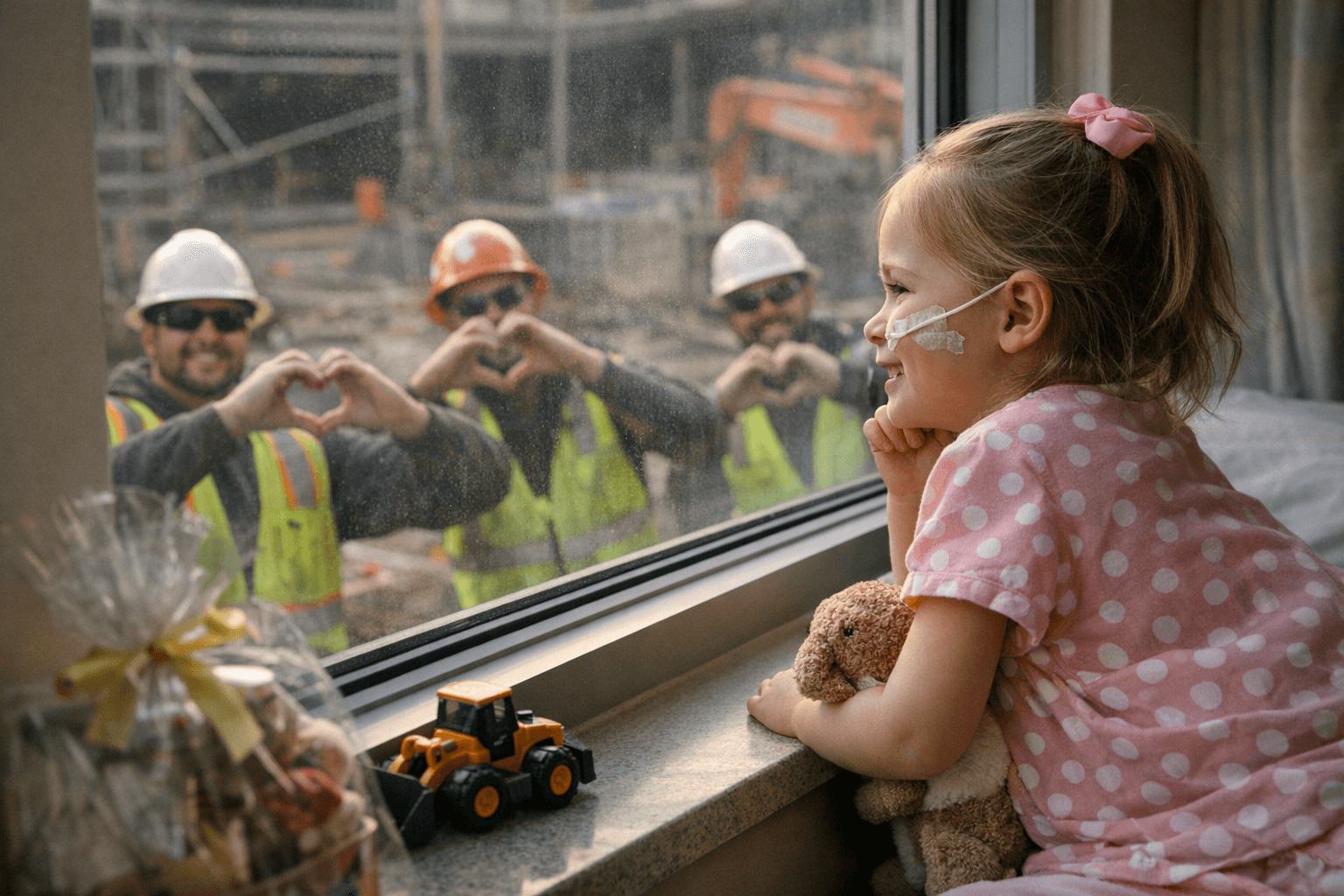
Brinley Wyczalek, 4, who is awaiting a heart transplant at Cleveland Clinic Children’s Hospital in Cleveland, has a new circle of support outside her window: a crew of construction workers who stop each afternoon to wave, form hearts with their hands and send gifts. The daily ritual, held around 3 p.m., has become a predictable moment of connection for a child who has been hospitalized more than 110 days while waiting for a donor heart.
The practice began in January after Brinley’s father, Travis Wyczalek, flashed a flashlight toward the construction site across from the hospital. “To our surprise, someone flashed a light right back at us,” said Berlyn Wyczalek, Brinley’s mother. Workers taped a “Get Well Soon” sign to the scaffolding and the family replied with a sign that reads, “Thank you. Waiting for a heart.”
The site will become Cleveland Clinic’s new Neurological Institute. Workers have continued to gather in the under-construction building each weekday and to bring small tokens for Brinley: a signed lime-green hard hat, a toy hammer, an oversized stuffed bear and coloring books. Devan Nail, a union carpenter with OCP Contractors, said in a news release shared by the hospital, “We wanted her to know she has a whole crew behind her.”
Hospital staff see the exchange as more than feel-good optics. The girl’s pediatric cardiologist at Cleveland Clinic Children’s said, “Healing isn’t only physical. Emotional support and human connection matter deeply, especially for children.” For pediatric patients facing long waits for scarce organs, consistent social contact can blunt isolation, reduce stress and make hospital stays more tolerable for families who often live in limbo for weeks or months.
The spontaneous friendship highlights several structural issues that shape outcomes for children like Brinley. Prolonged hospitalization for transplant candidates concentrates financial and emotional strain on families, particularly those who must travel or miss work to remain near their child. Community gestures can provide short-term relief, but they do not substitute for policies that address caregiver leave, travel assistance, and equitable access to transplantation and follow-up care.
The involvement of a unionized crew underscores how workplace solidarity can translate into community health support. The workers’ actions also raise questions for hospital administrators about how to safely facilitate such outside contact without compromising infection control or patient privacy. Brinley’s case suggests hospitals can both protect clinical care and create space for community contributions when guided by clear protocols.
As Brinley continues to wait, the daily visits have become a measurable source of hope. They are a reminder that, in complex medical systems, informal networks—neighbors, unions, contractors—often fill gaps that policy and funding do not. For clinicians and policymakers, the scene across Brinley’s window is an argument for integrating psychosocial supports into pediatric transplant care and for strengthening the social safety net that surrounds families during long medical crises.
This article was produced by Prism’s automated news system from verified source data, official records, and press releases, then run through automated quality and moderation checks before publishing. The system is built and supervised by the people who set the standards it runs under. Read our full AI policy.
Did this article answer your question?