Consumer Confidence Rises in March but Inflation Expectations Hit 7-Month High
Consumer confidence beat forecasts in March, rising to 91.8, but inflation expectations climbed to a 7-month high as gas prices topped $4 for the first time in over three years.
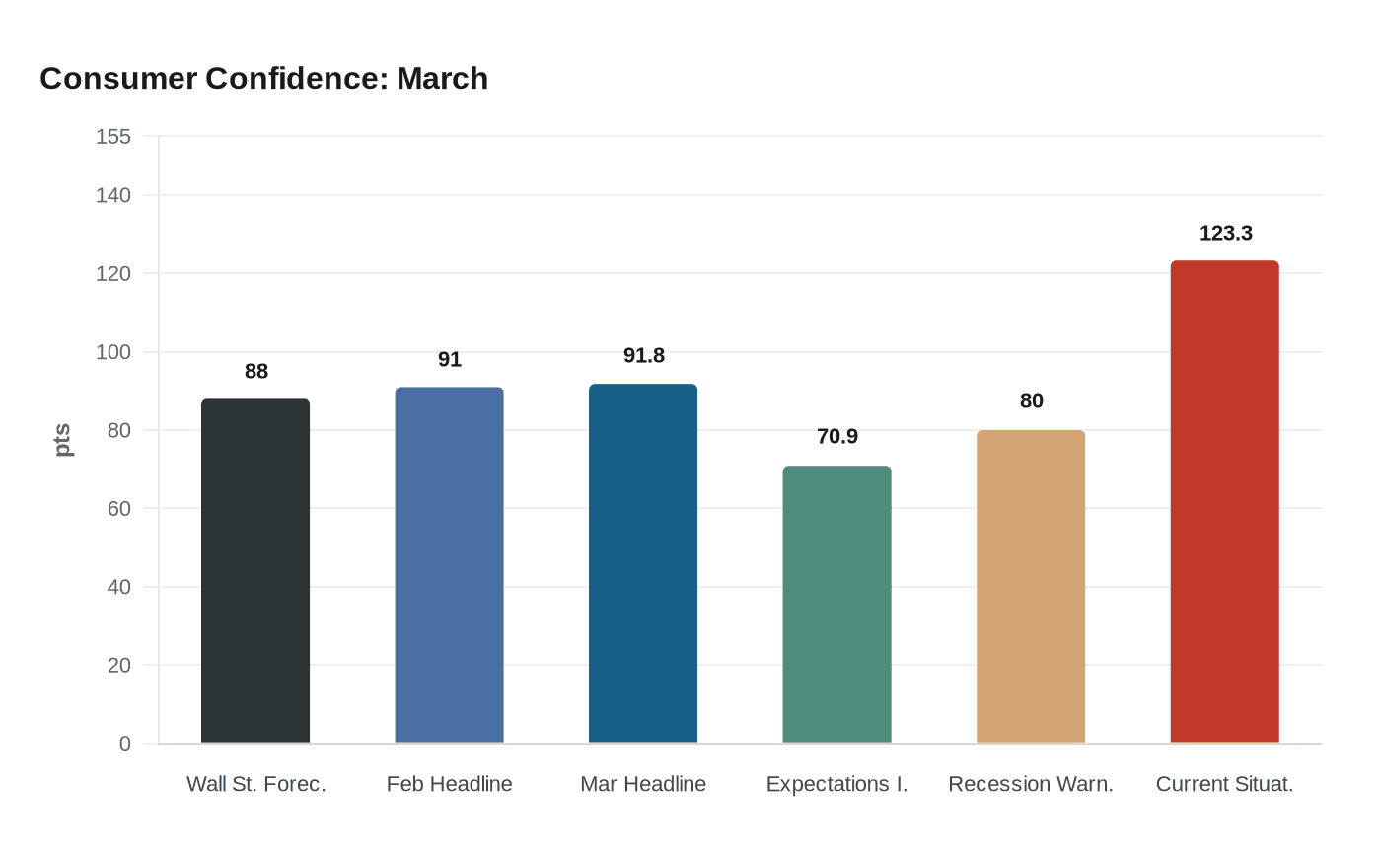
The headline number beat Wall Street expectations, but the underlying data told a more complicated story. The Conference Board's consumer confidence index rose to 91.8 in March from a revised 91.0 in February, topping economists' consensus forecast of 88.0. Yet even as confidence edged higher, households' 12-month inflation expectations climbed to their highest level since August 2025, fueled by a gasoline price surge tied to the war in Iran.
The split between what Americans feel better about and what they fear runs clearly through the sub-indices. The measure of consumers' assessments of their current economic situation jumped 4.6 points to 123.3, reflecting relatively stable views on present-day income and conditions. But a separate index tracking short-term expectations for income, business conditions and the job market fell 1.7 points to 70.9, its 14th consecutive month below 80, a threshold that can serve as an early warning signal for recession.
Dana Peterson, chief economist at the Conference Board, pointed squarely at prices as the dominant concern. "Comments about prices and the cost of goods suggest that the cost of living remained at the top of consumers' minds," Peterson said.

The numbers bear that out. AAA data showed the national average for a gallon of regular gasoline breached $4.00 for the first time in more than three years in the days before the March 31 release, settling at $4.02, up more than a dollar from where prices stood before the war in Iran began. The last time Americans paid that much collectively at the pump was in the months following Russia's invasion of Ukraine, nearly four years ago. A separate government inflation gauge closely monitored by the Federal Reserve had already moved 2.8% higher in January, even before the Iran conflict pushed energy costs sharply upward.
For the Federal Reserve, the combination of sticky inflation readings and a fresh energy price shock creates a complicated policy backdrop. Persistent tariffs and the gasoline spike are two drivers that could keep consumer price pressures elevated and complicate the central bank's deliberations over interest rates. Elevated inflation expectations that become entrenched could prompt investors to reprice rate probabilities, with direct consequences for mortgage rates and auto loan costs.
The critical near-term question is whether higher gas prices begin to crimp broader spending. Heather Long, chief economist at Navy Federal Credit Union, noted that credit card data from March showed consumers were still making purchases across categories even as pump prices climbed. But she framed the sustainability of that behavior as the central risk. "This is the key concern as the war in Iran enters the second month – will the oil price shock turn into a demand destruction shock?" Long wrote. She warned that spending patterns could shift in the second quarter "as the worst of the inflation shock hits consumers."
Confidence readings in the low 90s historically signal mild unease rather than outright pessimism. But with the short-term expectations index stuck below its recession-warning threshold for 14 straight months and gasoline at levels not seen since the immediate aftermath of Russia's Ukraine invasion, the distance between how Americans feel today and what they expect tomorrow has rarely carried more weight for the Fed's next move.
Know something we missed? Have a correction or additional information?
Submit a Tip