Consumers push back against smart appliances as reliability fears grow
Smart appliances promised convenience, but reliability drops, privacy risks, and repair barriers are pushing buyers back toward simpler machines.
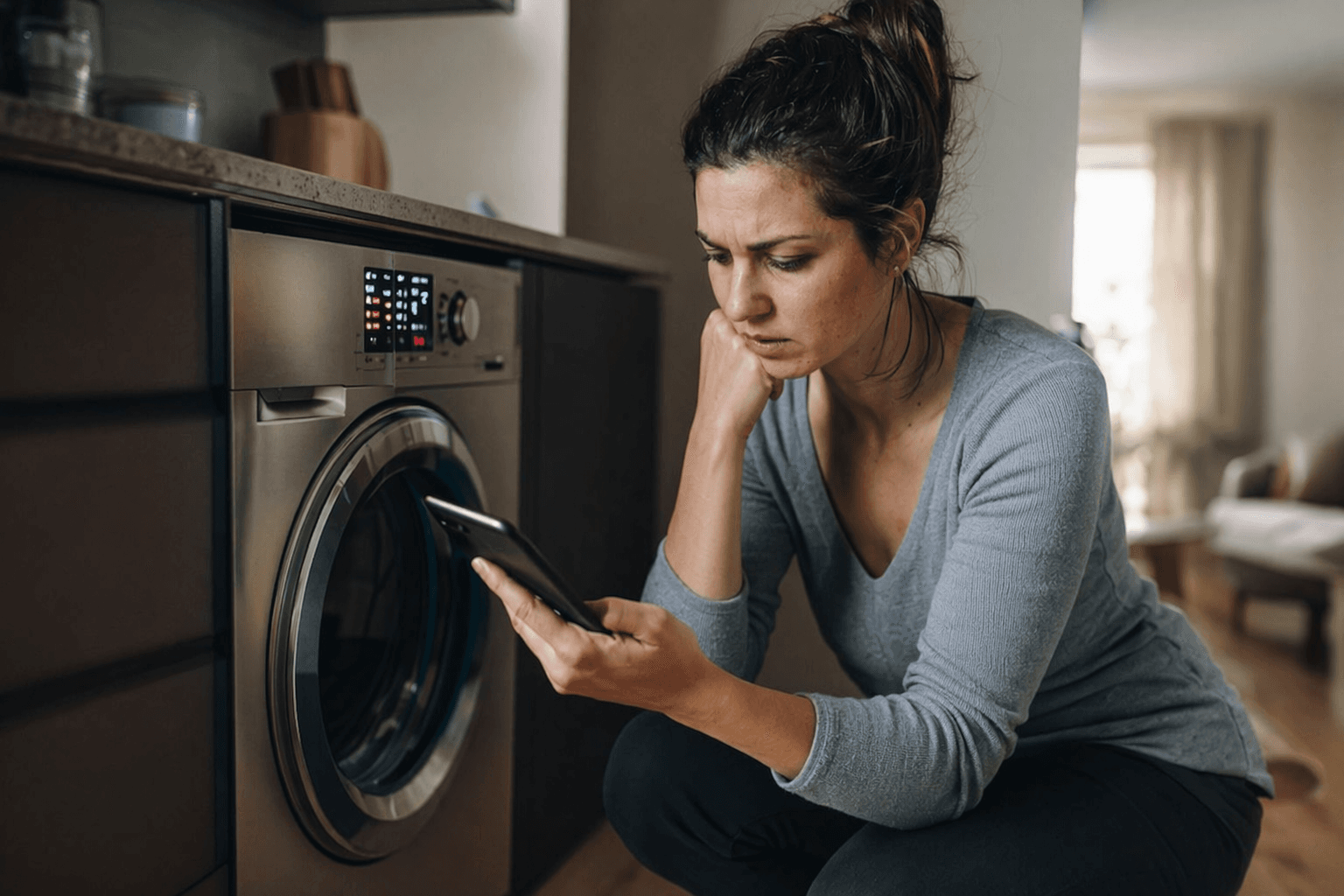
What consumers are losing when the app fails
The backlash against smart appliances is not really about novelty. It is about the loss of basic reliability, ownership, and longevity when everyday machines become dependent on apps, logins, and software updates. As more buyers encounter features that stop working, become harder to repair, or outlast their security support, the promise of convenience is giving way to a more fundamental question: who really controls the appliance once it is in the home?
That skepticism is showing up in the numbers. J.D. Power’s 2025 U.S. Appliance Satisfaction Study found overall satisfaction fell 11 points, to 699 on a 1,000-point scale from 710 in 2024. In the company’s 2025 U.S. Appliance Reliability & Service Study, smart technologies using built-in Wi-Fi and Bluetooth were tied to widespread reliability issues, signaling that the problem is no longer just taste or style. It is consumer confidence in whether the machine will do its job without turning into a software project.
Convenience has come with hidden fragility
Smart appliances were marketed as helpful: refrigerators that suggest recipes, dryers that text when a load is finished, and AI-enabled dishwashers that promise to take the guesswork out of chores. But those connected features also add layers of complexity, and that complexity can become a failure point when software glitches, network issues, or cloud services get in the way of a task as simple as cooling food or drying clothes.
The complaint from consumers is not that technology exists in the home. It is that the technology increasingly decides whether a product remains usable. A traditional appliance can often keep running for years with limited intervention, while an app-dependent model may require a stable connection, a compatible operating system, and ongoing vendor support just to preserve the functions that justified the purchase in the first place.
Privacy and data collection have deepened the unease
Consumer Reports has repeatedly warned that smart appliances collect extensive data about how and when consumers use them. In a 2022 nationally representative survey, the group found that 21% of U.S. adults owned at least one large smart appliance, showing that the issue is not niche. It sits inside a mainstream market where millions of households are now asking what their appliances know about them, and what those devices are sending back.
The privacy problem extends beyond refrigerators and ovens. Consumer Reports found that smart TVs collect personal data and that privacy settings can be hard for consumers to find. That same dynamic carries into appliances, where settings can be buried, disclosures can be vague, and users may not fully understand what information is being collected or how it is being used. The result is a trust gap that starts with convenience and ends with unease about surveillance inside the home.
Software support is now part of the product, but often not part of the deal
A major part of the backlash is the lack of clarity around how long smart features will last. Consumer Reports said appliance companies often do not clearly disclose how long software support will continue, which leaves buyers guessing when a smart appliance may effectively turn dumb. That uncertainty changes the economics of ownership because a machine can still function mechanically while losing the connected features that made it attractive in the first place.

The risk is not only inconvenience. Consumer Reports warned in November 2024 that smart appliances may keep operating long after software security updates end, creating security risks for home Wi-Fi networks. Once a product stops receiving updates, it can become a weak point inside an otherwise secure home. That means the burden shifts to the consumer, who has to track patch status, support timelines, and network exposure for a dishwasher or refrigerator that should have been simple to own.
Repairability has become a fault line
The smart-appliance debate overlaps with the broader right-to-repair movement, which argues that owners should be able to fix and maintain what they own instead of being locked into manufacturer-controlled parts, tools, and software. That movement has roots going back decades, but embedded software has made it easier for companies to block repairs and harder for consumers to act like true owners. When a failed board, locked diagnostic system, or restricted firmware update can stand between a buyer and a working machine, the issue stops being cosmetic and becomes structural.
This is why the frustration around smart appliances has spread beyond the home-improvement aisle and into policy conversations about ownership, repair access, and consumer rights. Buyers are not just paying for hardware anymore. They are often paying for a continuing relationship with the manufacturer, one that can include service subscriptions, app maintenance, and software dependency long after the sale.
The countertrend is a return to manual control
The backlash is also visible in the home-design world. Beth McGroarty, vice president of research at the Global Wellness Institute, told Axios that some homeowners are now creating “dumb homes” with manual switches, dials, and mechanical controls. The trend can also include digital-detox corners, which suggests that the appeal is not merely aesthetic. It is a deliberate move toward spaces that feel more durable, less monitored, and easier to live with.
That shift matters because it shows the market is not rejecting all technology. It is rejecting technology that adds burden without enough reliability to justify it. For many buyers, the most reassuring feature is no app at all.
The market correction is already under way
Smart-home adoption remains a large market, but the value proposition is being tested by a simple consumer calculation: convenience is not a bargain if the product becomes harder to repair, easier to abandon, or vulnerable when support ends. The smartest machine in the house is not the one with the most features. It is the one that still works after the software age has moved on.
As the backlash grows, the pressure on manufacturers is clear. They will have to prove that connected features improve ownership instead of undermining it, because buyers are no longer willing to confuse novelty with durability.
This article was produced by Prism’s automated news system from verified source data, official records, and press releases, then run through automated quality and moderation checks before publishing. The system is built and supervised by the people who set the standards it runs under. Read our full AI policy.
Did this article answer your question?


